Prada acquires Versace for $1.4 billion, boosting Italy’s luxury empire


On April 10, 2025, the Prada Group, a powerhouse in the world of high fashion, finalized its acquisition of Versace, a move valued at 1.25 billion euros, or roughly $1.4 billion. This landmark deal brings together two of Italy’s most iconic brands, signaling a bold step toward establishing a stronger Italian presence in the global luxury sector. Previously owned by Capri Holdings since 2018, Versace returns to Italian hands amid a shifting landscape where discreet luxury has overshadowed its signature bold designs. The transaction comes shortly after Donatella Versace stepped down as creative director in March 2025, ending her nearly 30-year tenure, with Dario Vitale, formerly of Miu Miu, taking the helm.
The $1.4 billion price tag is notably lower than the $2 billion Capri Holdings paid six years ago, reflecting Versace’s recent struggles. In its latest quarter of 2024, Versace reported a 15% revenue drop to $193 million, a decline tied to changing consumer tastes. Meanwhile, Prada has enjoyed steady growth, with revenues climbing 17% in 2024 to $5.8 billion. This financial strength enabled Prada to fund the acquisition through a mix of 1.5 billion euros in new loans, spearheaded by Goldman Sachs, and internal resources, positioning it as a key player in a market long dominated by French and American giants.
Italy’s role in this deal extends beyond corporate strategy. Producing 50% to 55% of the world’s personal luxury goods, the country has long lacked a conglomerate to rival the likes of France’s LVMH or America’s top players. By merging Prada’s minimalist elegance with Versace’s flamboyant heritage, the combined entity now boasts over 6 billion euros in annual revenue, amplifying Italy’s influence in a sector where scale matters.
How the acquisition reshapes luxury dynamics
Prada’s purchase of Versace marks a strategic pivot for Italian fashion on the world stage. Established in 1913 as a Milanese leather goods shop, Prada has grown into a symbol of understated sophistication over its 112-year history. Versace, founded in 1978 by Gianni Versace, carved a different path with its daring aesthetics, a legacy Donatella Versace nurtured for decades. Bringing these contrasting identities under one roof allows Prada to broaden its appeal, targeting both minimalist and maximalist consumers while addressing Versace’s recent challenges in a market favoring subtlety.
The luxury industry has evolved rapidly in recent years. The rise of “quiet luxury”—marked by timeless, logo-free designs—has clashed with Versace’s vibrant prints and bold silhouettes, leading to financial strain. Prada, however, has thrived, posting double-digit growth for four consecutive years. Industry data highlights this disparity: Versace’s operating losses deepened in 2024, while Prada’s profits soared. This acquisition offers Prada a chance to leverage its operational expertise to revitalize Versace without diluting its core identity.
For Italy, the move is a game-changer. Despite its dominance in luxury production, the nation has lagged in building conglomerates capable of matching LVMH’s $300 billion market cap or Kering’s $40 billion valuation. Prada, with a market cap of 14 billion euros, takes a significant leap forward with Versace, though it remains a smaller contender on the global stage.
Versace’s journey and Donatella’s legacy
Versace’s story is one of brilliance and turbulence. Launched by Gianni Versace, the brand gained fame for its Medusa logo and eclectic designs blending art and pop culture. Following Gianni’s murder in 1997, Donatella took over, steering the label through decades of reinvention. Her tenure saw collaborations with global stars like Lil Nas X and BTS, cementing Versace’s status as a celebrity favorite. After nearly 30 years, she exited the creative director role in March 2025, transitioning to brand ambassador as part of this new chapter.
Under Capri Holdings, which acquired Versace for $2 billion in 2018, the brand faced uneven fortunes. The American group aimed to build a luxury powerhouse alongside Michael Kors and Jimmy Choo, but integration faltered amid a softening demand for flashy luxury, particularly in key markets like China. The appointment of Dario Vitale as creative director on April 1, 2025, reflects Prada’s intent to refresh Versace’s direction, drawing on his success at Miu Miu to appeal to younger, trend-savvy audiences.
The sale to Prada underscores Capri’s struggles. Once valued higher, Versace’s worth dropped by about 31% since 2018, a loss tied to market shifts and Capri’s inability to fully harness its potential. This deal allows Prada to step in where Capri stumbled, armed with a stronger foundation and a clear vision.
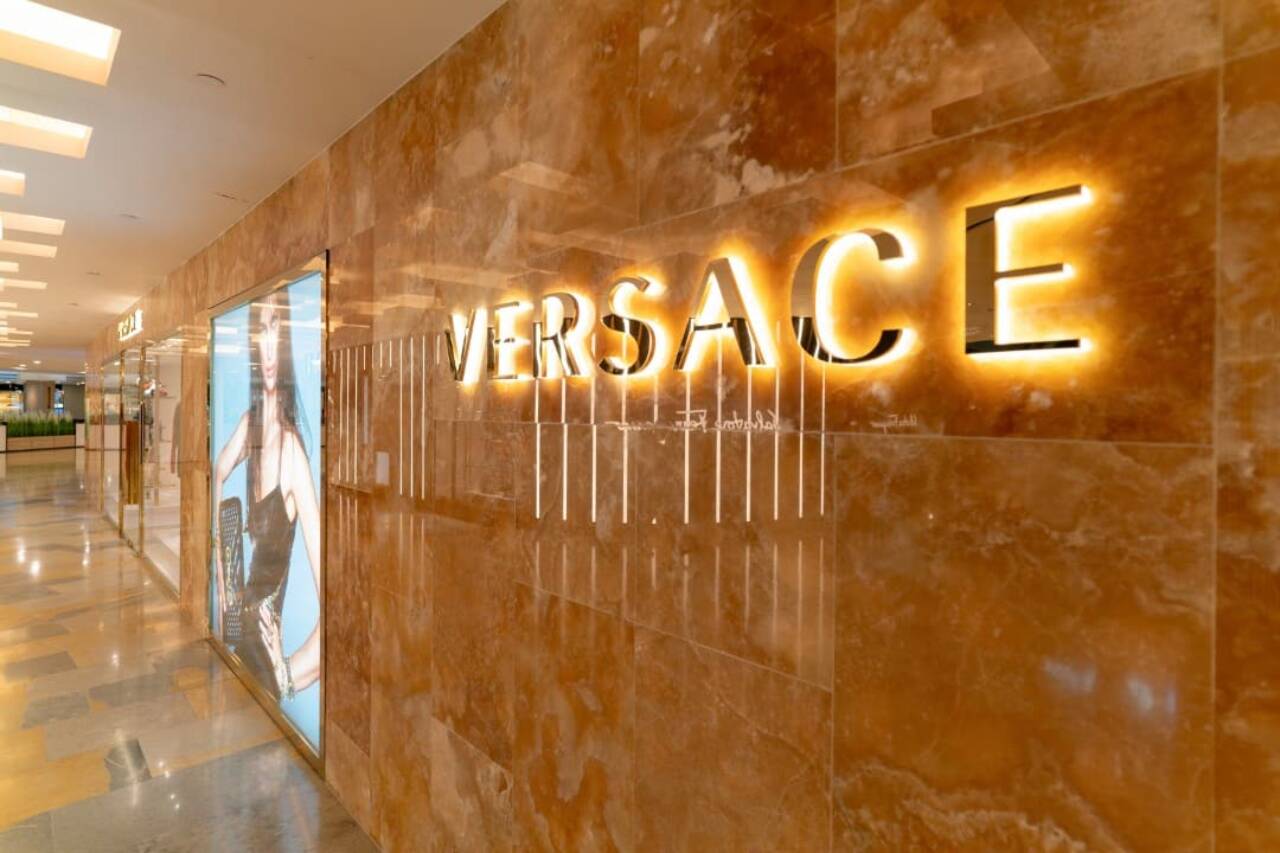
Financial breakdown of the deal
The $1.375 billion acquisition price includes Versace’s existing debt, a figure finalized after weeks of negotiations. Early estimates pegged the deal at up to 1.6 billion euros, but economic headwinds, including new U.S. tariffs announced in April 2025, trimmed the valuation. Capri Holdings, whose stock has plummeted over 33% since early April, saw its market cap shrink to $1.49 billion, hastening the sale at a reduced rate.
Prada secured a 2.5 billion euro credit line from a Goldman Sachs-led banking group to finance the purchase. Of this, 1.5 billion euros covers the acquisition, with the remaining 1 billion earmarked for revitalizing Versace. The deal is slated to close in the second half of 2025, pending regulatory approval.
- Acquisition cost: $1.375 billion, including debt.
- Funding: 2.5 billion euros in loans, with 1.5 billion for the purchase and 1 billion for investment.
- Capri’s 2018 purchase price: $2 billion, a 31% loss in value.
- Versace’s Q4 2024 revenue: $193 million, down 15% year-over-year.
What lies ahead for Versace under Prada
Prada now faces the task of reviving Versace while preserving its bold essence. Leveraging its robust supply chain and retail network, Prada aims to streamline Versace’s operations and boost profitability. CEO Andrea Guerra called the brand’s potential “immense,” while Chairman Patrizio Bertelli emphasized a strategy of honoring Versace’s heritage with modern twists.
Dario Vitale’s leadership will be pivotal. Known for revitalizing Miu Miu with a youthful edge, he steps into Versace at a critical juncture. His debut collection, set for Milan Fashion Week in September 2025, is eagerly awaited as a sign of the brand’s new direction. Analysts predict he’ll temper Versace’s extravagance with contemporary restraint, aligning it with broader market trends.
Looking forward, this acquisition could spark further consolidation. Italian labels like Armani and Dolce & Gabbana, still family-owned, remain prime candidates for future deals. Prada’s strengthened position makes it a frontrunner to spearhead an Italian luxury conglomerate, a dream long held by industry watchers.
Luxury market in a global context
The luxury sector is at a crossroads. After years of Asia-driven growth, particularly in China, global sales of personal luxury goods hit 366 billion euros in 2024, per Bain & Company estimates. Yet, growth has slowed due to inflation, geopolitical tensions, and shifting consumer preferences. This backdrop amplifies the significance of Prada’s move, as brands scramble to adapt.
Italy stands out as a production hub, crafting over half the world’s luxury goods. However, its lack of large-scale conglomerates has hindered its global clout. Prada’s acquisition of Versace narrows this gap, pairing its minimalist ethos with Versace’s flair to challenge French titans like LVMH and Kering, which dominate with vast portfolios and unmatched resources.
Competition remains fierce. LVMH’s stable of brands, including Louis Vuitton and Dior, drives its towering $300 billion valuation, while Kering’s Gucci and Saint Laurent fuel its growth. Prada, even with Versace, must innovate to keep pace in a market where size and agility reign supreme.
Timeline of the deal and next steps
Negotiations kicked off in early 2025, with Prada gaining exclusive access to Versace’s financials in February. Donatella’s departure on March 13 paved the way for a smoother sale, followed by Vitale’s appointment on April 1. The deal’s announcement on April 10 capped months of speculation.
Key milestones include:
- January 2025: Rumors of Prada’s interest in Versace surface.
- February 2025: Prada begins due diligence on Versace’s books.
- March 13, 2025: Donatella Versace steps down as creative director.
- April 1, 2025: Dario Vitale takes over Versace’s creative helm.
- April 10, 2025: Prada confirms $1.375 billion acquisition.
- H2 2025: Deal closure expected post-regulatory approval.
Strategic gains for Prada
Owning Versace gives Prada a dual advantage: market expansion and portfolio diversity. While Prada appeals to understated luxury buyers, Versace draws a flashier crowd, broadening the group’s reach. This synergy could prove vital as consumer loyalty grows harder to secure.
Prada’s manufacturing prowess also plays a role. Its established production network can enhance Versace’s efficiency, cutting costs and boosting margins. The planned 1 billion euro investment signals a long-term commitment to turning Versace around, with a focus on retail growth and digital innovation.
For shoppers, this merger might yield collections blending Prada’s precision with Versace’s audacity. From leather goods to ready-to-wear, the potential for cross-brand inspiration is vast, promising fresh offerings in a crowded market.
Capri Holdings’ shift after the sale
Selling Versace marks a retreat for Capri Holdings. Formed in 2018 to rival global luxury leaders, the group struggled to unify its trio of brands. Its revenue dipped 11.6% in Q3 2025, underscoring broader challenges. CEO John Idol said the sale would refocus efforts on Michael Kors and Jimmy Choo, aiming to stabilize finances amid a shrinking $1.49 billion market cap.
The 31% loss on Versace’s value since 2018 highlights Capri’s missteps. External pressures, like U.S. tariffs in April 2025, further squeezed the group, forcing a sale below initial expectations. Capri now pivots to a leaner strategy, banking on its remaining brands to rebound.
Versace’s new chapter unfolds
Under Prada, Versace enters a phase of reinvention. Dario Vitale’s creative vision will shape its future, balancing heritage with modernity. His September 2025 collection will set the tone, likely blending Versace’s iconic boldness with a nod to today’s subtler tastes.
Fans of the brand, known for outfitting icons like Madonna and Lady Gaga, await its evolution. The Medusa logo and baroque prints remain touchstones, but Prada’s influence may refine their execution. Versace’s ability to adapt will determine its place in a competitive landscape.
Italy’s luxury ambitions grow
Prada’s move could ignite broader consolidation in Italy. Armani, led by 90-year-old Giorgio Armani, and Dolce & Gabbana, staunchly family-run, are among the last major independents. Both have been eyed by conglomerates, and Prada’s bolstered stature positions it as a potential unifier.
Italy’s legacy as a luxury craftsman is unmatched, yet its fragmented industry has limited its reach. This deal fuels hopes of a homegrown titan, capable of standing toe-to-toe with French and American rivals, provided Prada sustains its momentum.
Fun facts about Prada and Versace
The merger unites two storied brands with distinct legacies. Here are some highlights:
- Prada began in 1913 as a leather shop, while Versace launched in 1978 amid a cultural boom.
- Versace’s Medusa logo, picked by Gianni, symbolizes power and allure from Greek myth.
- Prada’s 1984 nylon bag redefined luxury accessories with its utilitarian chic.
- Versace’s green dress, worn by Jennifer Lopez in 2000, spurred the creation of Google Images.
Investments and what’s next
Prada plans to pump 1 billion euros into Versace, targeting retail expansion, production upgrades, and a stronger online presence. These efforts aim to restore profitability and tap growth markets like Asia and North America. The deal’s completion, expected by late 2025, hinges on regulatory green lights, with both brands operating independently until then.
This acquisition not only expands Prada’s empire but also reignites debate over Italy’s role in luxury’s future, as it strives to match the scale of its global peers.