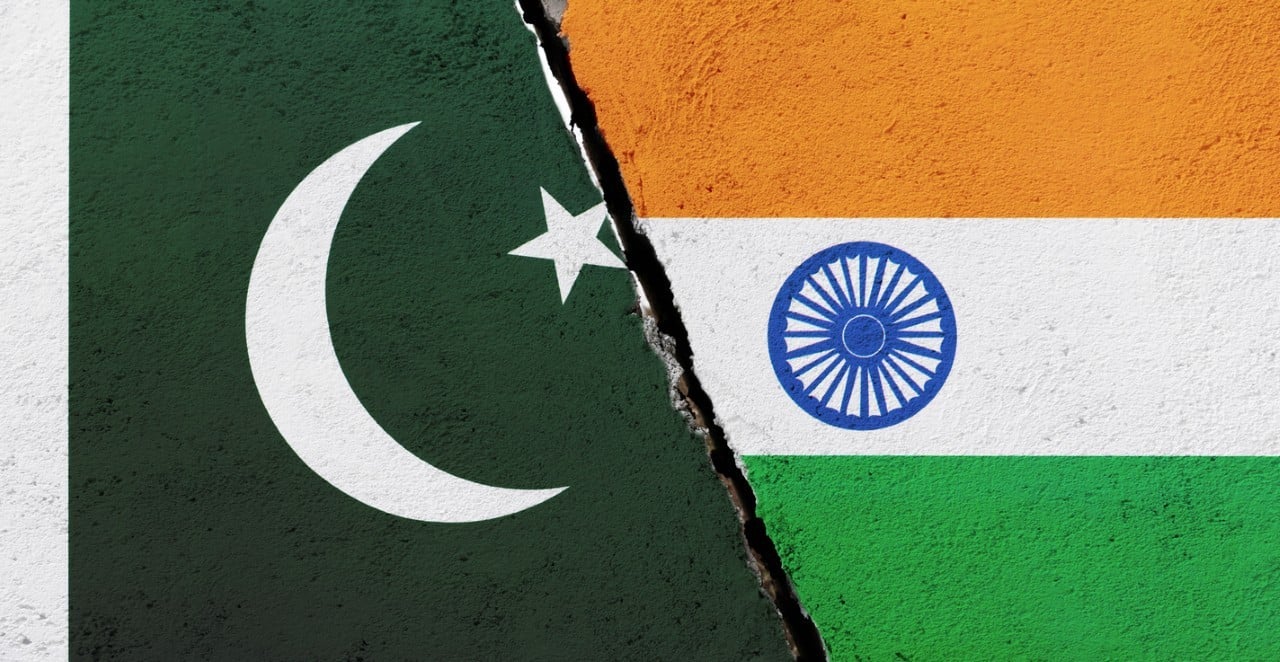
Tensions between India and Pakistan have reached a critical juncture following a series of military engagements sparked by a deadly attack in Kashmir. On May 7, 2025, India launched Operation Sindoor, targeting nine terrorist infrastructure sites in Pakistan and Pakistan-occupied Jammu and Kashmir. The operation, a retaliation for a massacre of 25 Indian civilians and one Nepali citizen in Pahalgam on April 22, has escalated into a broader conflict, with both nations exchanging accusations of aerial and drone attacks. A ceasefire, unexpectedly announced by US President Donald Trump on May 10, 2025, has brought a temporary halt to the hostilities, though uncertainties linger.
The roots of this conflict trace back to long-standing disputes over Kashmir, a region both nations claim in its entirety. Operation Sindoor, named after the red vermilion powder symbolizing marriage in Hindu tradition, was framed by India as a precise strike against terrorist groups Lashkar-e-Tayyiba and Jaish-e-Mohammed. Pakistan, denying involvement in the Pahalgam attack, responded with retaliatory strikes, including Operation Bunyanun Marsoos, intensifying fears of a nuclear confrontation. The ceasefire agreement, while a step toward de-escalation, has raised questions about its durability.
- Key developments in the conflict:
- India’s Operation Sindoor targeted terror bases, killing at least 31 civilians, per Pakistani claims.
- Pakistan’s Operation Bunyanun Marsoos struck Indian sites, escalating the crisis.
- Trump’s announcement downplayed by Indian sources, suggesting limited US mediation.
- Major airlines rerouted flights, avoiding Pakistani airspace due to heightened risks.
This article explores the events leading to the ceasefire, the military and diplomatic maneuvers, and the global response to a conflict that has gripped the world’s attention.
Origins of the crisis
The spark for the current escalation came on April 22, 2025, when gunmen attacked tourists in Pahalgam, a picturesque valley in Indian-administered Kashmir. The assault, which killed 25 Indian citizens and one Nepali national, unfolded in a remote area accessible only by foot or horseback. Indian authorities swiftly attributed the attack to Pakistan-backed militants, specifically Lashkar-e-Tayyiba and Jaish-e-Mohammed, two groups with a history of operating in the region. Pakistan’s denial of involvement did little to quell India’s resolve, leading to the launch of Operation Sindoor two weeks later.
India’s military action, conducted in the early hours of May 7, targeted nine sites identified as terrorist hubs. The 25-minute operation, according to Indian officials, avoided civilian, economic, or military targets, focusing solely on dismantling terrorist infrastructure. However, Pakistani authorities reported significant civilian casualties, claiming 31 deaths and 46 injuries. The stark contrast in narratives has fueled disinformation, with both sides leveraging media to shape public perception.
- Immediate triggers of Operation Sindoor:
- April 22 Pahalgam attack killed 26 civilians, blamed on Pakistan-backed groups.
- India’s strikes targeted Lashkar-e-Tayyiba and Jaish-e-Mohammed bases.
- Pakistan reported civilian losses, escalating retaliatory rhetoric.
Pakistan’s counteroffensive
Pakistan’s response to Operation Sindoor was swift and aggressive. On May 8, the Pakistani military launched Operation Bunyanun Marsoos, named after a Quranic verse meaning “unbreakable wall.” The operation involved strikes on Indian sites, with Pakistan claiming to have downed 25 Indian loitering munition drones and, in earlier statements, five Indian fighter jets. These claims, particularly the jet downings, were met with skepticism, as India denied any such losses.
During a CNN interview, Pakistan’s Defence Minister Khawaja Asif struggled to provide evidence for the jet claims, citing social media posts as proof. The exchange, widely circulated online, drew mockery and highlighted the challenges of verifying information in a conflict rife with propaganda. Pakistan’s military also reported intercepting Indian drones at 26 locations along the Line of Control (LoC) and international border on May 9-10, including an attack on a civilian area in Ferozepur that injured a family.
The tit-for-tat actions have strained an already fragile relationship. Pakistan’s use of Chinese-made J-10C fighter jets, which reportedly downed French-made Rafale jets operated by India, has drawn attention to the role of foreign military technology in the conflict. China’s AVIC Chengdu Aircraft saw a 40% stock surge, underscoring the geopolitical stakes.
Diplomatic ripples
The international community has watched the India-Pakistan conflict with growing alarm, given the nuclear capabilities of both nations. The United States, historically a mediator in such crises, adopted a restrained approach initially. President Trump’s early comments described the situation as “a shame,” with minimal enthusiasm for direct involvement. However, his surprise announcement of a ceasefire on May 10, 2025, via social media caught many off guard. Indian sources downplayed US involvement, suggesting the truce was negotiated bilaterally.
US Secretary of State Marco Rubio has engaged with both nations’ officials, though no public details of these discussions have emerged. Saudi Arabia’s minister of state for foreign affairs visited Islamabad on May 9, potentially to mediate, reflecting the broader regional interest in de-escalation. Major airlines, including those from Europe and the Middle East, have avoided Pakistani airspace since May 6, disrupting global travel routes.
- Global responses to the crisis:
- Trump’s ceasefire announcement followed limited US diplomatic engagement.
- Saudi Arabia’s diplomatic mission aimed to calm tensions.
- Airlines rerouted flights, citing safety concerns over Pakistani airspace.
- Chinese military tech’s role highlighted by Pakistan’s J-10C jet claims.
Kashmir’s enduring conflict
Kashmir remains the epicenter of India-Pakistan tensions, a disputed territory since their independence from Britain in 1947. The region, divided by the Line of Control, has been the site of three wars and numerous skirmishes. The recent violence has reignited debates over sovereignty, with India’s Ambassador to the US, Vinay Kwatra, firmly rejecting references to “Indian-administered” Kashmir during a CNN interview. Kwatra accused Pakistan of harboring terrorists, linking the Pahalgam attack to broader patterns of violence.
On the ground, civilians bear the brunt of the conflict. In Pakistan-administered Kashmir, farmers like Malik Khadim grieve losses, with his brother Malik Farouk reported missing and later identified among casualties. Indian-administered Kashmir has seen 16 civilian deaths from Pakistani shelling since Operation Sindoor began. The human toll underscores the urgency of the ceasefire, though its terms remain unclear.
Military dynamics
India’s 1.2 million-strong army, equipped with 3,750 main battle tanks and over 10,000 artillery pieces, significantly outmatches Pakistan’s forces, which have two-thirds as many tanks and half the artillery. However, Pakistan’s air force, bolstered by Chinese technology, has demonstrated capabilities in intercepting Indian drones. The conflict has become a testing ground for advanced weaponry, with China’s J-10C jets and India’s French-made Rafale jets in the spotlight.
Pakistan’s claims of downing Indian aircraft have been a focal point of disinformation. Satellite images released by Indian media show damage to terror sites in Pakistan’s Bahawalpur, supporting India’s narrative of targeted strikes. Meanwhile, Pakistan’s drone interceptions, including 12 reported on May 8, indicate a robust air defense system. The technological and numerical disparities add complexity to the military balance.
- Military highlights:
- India’s superior tank and artillery numbers give it a ground advantage.
- Pakistan’s J-10C jets showcased Chinese tech’s growing influence.
- Satellite imagery confirmed damage to terror sites in Bahawalpur.
- Pakistan downed 25 Indian drones, per military reports.
Media and misinformation
The conflict has been accompanied by a surge in disinformation, with both sides using media to advance their narratives. Pakistan’s Defence Minister Khawaja Asif’s CNN interview, where he cited social media as evidence, became a lightning rod for criticism. Indian media outlets, meanwhile, have broadcast animations of military jets and explosions, amplifying nationalist sentiment. Social media platforms have been flooded with misleading visuals, including claims of downed jets and drone strikes.
In India, the government’s decision to block access to The Wire’s website on May 9, citing a report on Rafale jets, raised concerns about press freedom. The move, ordered by the Ministry of Information and Broadcasting, underscored the sensitivity of military reporting during the conflict. Both nations’ reliance on propaganda has complicated efforts to discern fact from fiction.
Economic and cultural fallout
The conflict has disrupted more than just military and diplomatic spheres. India’s Indian Premier League (IPL), the world’s richest cricket tournament, was suspended on May 10, 2025, due to security concerns. Thirty-two airports in India shut down temporarily, and blackouts were enforced in border cities like Ferozepur. Rajasthan sealed its border with Pakistan, and Punjab canceled police leaves, signaling heightened alert levels.
Economically, the conflict has impacted regional markets. China’s defense stocks, particularly AVIC Chengdu Aircraft, surged as Pakistan’s use of J-10C jets drew attention. In India, Reliance Industries faced scrutiny after a junior employee mistakenly filed a trademark application for “Operation Sindoor,” prompting a swift rollback. The episode highlighted the intersection of corporate and military spheres in times of crisis.
- Economic and cultural impacts:
- IPL 2025 suspended amid security concerns.
- China’s AVIC Chengdu Aircraft stocks rose 40% due to J-10C jet usage.
- Reliance Industries withdrew erroneous “Operation Sindoor” trademark.
- Border regions faced blackouts and airport closures.
Civilian toll and humanitarian concerns
The human cost of the conflict extends beyond the initial Pahalgam attack. Pakistani shelling in Indian-administered Kashmir has killed 16 civilians, while India’s strikes in Pakistan and Pakistan-occupied Kashmir have resulted in 31 civilian deaths, according to Pakistani reports. Injuries, displacement, and grief have permeated communities on both sides of the Line of Control.
In Pakistan-administered Kashmir, stories like that of Malik Khadim highlight the personal tragedies of the conflict. Indian authorities have reported civilian injuries from drone strikes, including a family in Ferozepur. The ceasefire offers hope for relief, but the lack of clarity on its enforcement raises concerns about further violence. Humanitarian organizations have called for access to affected areas to provide aid.
Global military technology spotlight
The India-Pakistan conflict has inadvertently become a showcase for global military technology. Pakistan’s use of Chinese J-10C jets, which reportedly outperformed India’s Rafale jets, has boosted China’s defense industry. The conflict has also highlighted the role of drones, with Pakistan intercepting 25 Indian loitering munitions. India’s reliance on French and indigenous technology contrasts with Pakistan’s deepening ties to China, a shift solidified through the Belt and Road Initiative.
The performance of these systems has drawn interest from defense analysts worldwide. Saudi Arabia, a key player in the region, has monitored the conflict closely, given its own investments in Chinese and Western military hardware. The technological dimension of the conflict underscores the broader geopolitical realignment in South Asia.
Regional security measures
In response to the escalating tensions, India and Pakistan have implemented stringent security measures. India’s border states, particularly Rajasthan and Punjab, have heightened vigilance, with Rajasthan sealing its border and Punjab canceling police leaves. Drone activity along the LoC and international border has prompted rapid responses, with India intercepting attacks and targeting Pakistani posts.
Pakistan, meanwhile, has fortified its air defenses, as evidenced by its drone interceptions. The military’s Operation Bunyanun Marsoos was framed as a defensive response to India’s “aggression,” though its scope remains unclear. Both nations’ actions reflect the high stakes of the conflict, with nuclear capabilities looming in the background.
- Security measures in place:
- Rajasthan sealed its border with Pakistan.
- Punjab canceled police leaves to maintain alert status.
- India intercepted drone attacks, targeting Pakistani posts.
- Pakistan fortified air defenses, downing 25 Indian drones.
Path to the ceasefire
The ceasefire announcement on May 10, 2025, marked a pivotal moment in the crisis. Trump’s social media post, while unexpected, aligned with diplomatic efforts by the US and Saudi Arabia. Indian sources emphasized that the truce was primarily a bilateral agreement, with limited external mediation. The ceasefire’s terms have not been publicly disclosed, leaving analysts uncertain about its enforcement mechanisms.
Prior to the truce, both nations appeared to be climbing an escalatory ladder, with Pakistan’s drone strikes and India’s retaliatory actions raising fears of a broader war. The ceasefire, while fragile, has paused the violence, allowing space for diplomatic negotiations. However, the deep-seated mistrust between India and Pakistan suggests that sustaining the truce will be challenging.