Earthquake of 6.0 magnitude shakes Crete, raising concerns in Greece
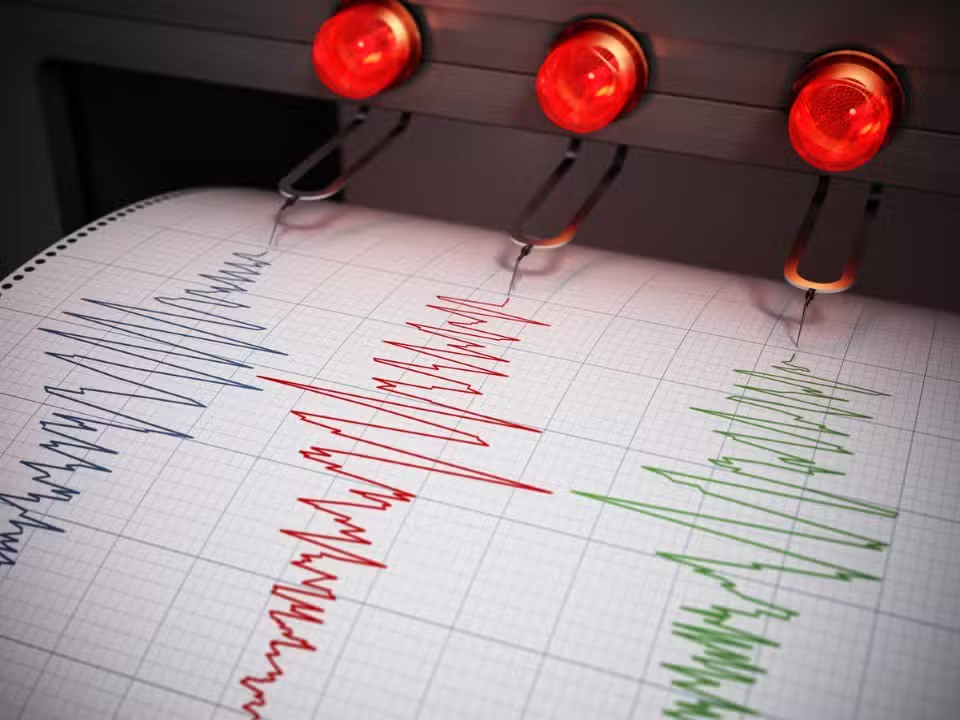
A powerful earthquake struck the Mediterranean Sea near Crete, Greece, sending tremors across a vast region. The event, registering a magnitude of 6.0, occurred in the early hours, catching residents and authorities off guard. Its effects rippled far beyond the island, with reports of shaking as distant as Cairo. This seismic activity underscores Crete’s position on the seismically active Hellenic Arc.
The quake has reignited discussions about preparedness in a country accustomed to frequent tremors. While no immediate injuries were reported, the event has heightened vigilance in Greece and neighboring areas. Key details about the earthquake include:
- Magnitude: 6.0, initially reported as 6.1 by the U.S. Geological Survey.
- Location: 14 miles southeast of Fry, Crete, in the Eastern Mediterranean.
- Time: 1:51 a.m. Eastern European time on May 14, 2025.
- Depth: Approximately 62 kilometers, considered shallow.
Authorities are now assessing potential damage, particularly in vulnerable coastal communities. The event follows a series of tremors in the region, raising questions about seismic patterns.
Seismic activity in Crete
Crete, Greece’s largest island, is no stranger to earthquakes, sitting atop multiple fault lines in the Hellenic Arc. The 6.0-magnitude quake near Fry was felt strongly in Heraklion and other nearby cities, with residents describing a sudden jolt that rattled windows and furniture. Although the epicenter was offshore, the shallow depth amplified its reach, affecting areas as far as Cyprus, Lebanon, and Israel.
Preliminary reports from the U.S. Geological Survey indicate the quake’s intensity reached a “light” shaking level, defined as 4 or higher on the Modified Mercalli Intensity scale. Seismologists are reviewing data to refine the magnitude and assess aftershock risks. The European-Mediterranean Seismological Centre noted that smaller tremors followed, though none exceeded magnitude 4.0 in the immediate aftermath.
Local authorities in Crete responded swiftly, deploying inspection teams to check critical infrastructure, including bridges, schools, and hospitals. No significant structural damage has been reported, but minor landslides occurred in rural areas. The event has prompted a reevaluation of building codes in seismically active zones, with experts urging stricter enforcement.
Regional impact of the quake
The earthquake’s reach extended well beyond Crete, with reports of shaking in several Mediterranean countries. In Cyprus, residents in Nicosia and Limassol described mild tremors that lasted several seconds. Similar accounts emerged from central Israel, including Tel Aviv, where the quake was felt but caused no disruption. In Egypt, Cairo residents reported a faint swaying, particularly in high-rise buildings.
The German Research Centre for Geosciences recorded the quake at a magnitude of 6.3, slightly higher than the U.S. Geological Survey’s estimate. This discrepancy reflects ongoing efforts to reconcile data from multiple seismic networks. The tremor’s effects were also noted in Syria and Lebanon, though no damage was reported in these areas.
The widespread impact has raised concerns about the region’s vulnerability to seismic events. Greece, situated on the convergence of tectonic plates, experiences thousands of quakes annually, most of which are minor. However, the Hellenic Arc’s history of destructive earthquakes, including a 6.3-magnitude event in 2021, keeps authorities on high alert.
Response from Greek authorities
Greek officials acted promptly to address the quake’s aftermath. The Ministry for Climate Crisis and Civil Protection issued a tsunami warning for the Kasos region as a precautionary measure, though no tsunami was detected. Emergency services were mobilized across Crete, with firefighters and civil defense teams conducting inspections in urban centers like Heraklion and Chania.
Schools in affected areas were closed temporarily to allow for safety assessments. The Greek government also activated a public alert system, advising residents to avoid indoor spaces during aftershocks and to stay informed via official channels. Prime Minister Kyriakos Mitsotakis, addressing the nation, called for calm and emphasized the country’s preparedness for such events.
The response included coordination with regional authorities in the South Aegean, where smaller islands like Kasos and Karpathos also felt the quake. Disaster response units were deployed to these areas, and temporary shelters were set up as a precaution. The government’s swift action reflects lessons learned from past seismic events, including the devastating 1999 Athens earthquake.
#earthquake M 6.1 CRETE, GREECE pic.twitter.com/G3BdNQlYCW
— SSGEOS (@ssgeos) May 13, 2025
Historical seismic patterns in Greece
Greece’s location on the Hellenic Volcanic Arc makes it one of Europe’s most earthquake-prone countries. The region has experienced significant quakes throughout history, with some causing widespread destruction. The 6.0-magnitude event near Crete adds to a series of recent tremors in the Aegean Sea, including a swarm of quakes near Santorini earlier in 2025.
Notable historical earthquakes in Crete include:
- 2021: A 6.3-magnitude quake struck near Heraklion, causing minor damage.
- 2008: A 6.4-magnitude event hit the eastern coast, with no major casualties.
- 365 AD: A massive quake, estimated at magnitude 8.0, triggered a tsunami that devastated the Mediterranean.
Seismologists note that Crete experiences approximately 2,300 quakes annually, most below magnitude 3.0. Larger events, like the recent 6.0-magnitude quake, are less frequent but pose greater risks due to the island’s dense population and tourism infrastructure. The Hellenic Arc’s tectonic activity, driven by the subduction of the African plate beneath the Eurasian plate, fuels this persistent seismicity.
Public reaction and safety measures
Residents of Crete and surrounding areas took immediate precautions following the quake. In Heraklion, many left their homes to gather in open spaces, wary of potential aftershocks. Social media posts captured the anxiety of locals, with some sharing videos of swaying chandeliers and rattled shelves. Tourists in coastal resorts reported confusion but followed hotel staff instructions to evacuate temporarily.
The Greek government issued guidelines to reinforce public safety:
- Stay outdoors during aftershocks, avoiding buildings and power lines.
- Keep emergency kits with water, food, and first-aid supplies.
- Monitor official updates from the Geodynamic Institute of Athens.
- Avoid coastal areas until tsunami warnings are lifted.
Public awareness campaigns have gained traction, with local schools conducting earthquake drills in recent months. The quake has also prompted discussions about retrofitting older buildings, particularly in rural areas where construction standards may lag.
Tourism and economic considerations
Crete, a major tourism hub, faces potential challenges following the earthquake. The island attracts millions of visitors annually, drawn to its beaches, archaeological sites, and vibrant culture. While the quake caused no major disruptions to tourism infrastructure, hoteliers and tour operators are monitoring the situation closely.



In the immediate aftermath, some cruise ships adjusted their itineraries to avoid Crete’s eastern ports, opting for safer routes to Chania or Rhodes. The Crete Tourism Organization issued a statement reassuring visitors that the island remains open for business, with airports and ferries operating normally. However, bookings for late May have shown a slight decline, reflecting traveler caution.
Local businesses, particularly in Fry and nearby towns, reported minor losses due to canceled reservations. The quake’s timing, just before the peak summer season, has heightened concerns about its economic ripple effects. Authorities are working to restore confidence by highlighting Crete’s robust safety protocols and ongoing infrastructure assessments.
Scientific monitoring and predictions
Seismologists are closely monitoring the region for signs of further activity. The Geodynamic Institute of Athens reported over 295 quakes across Greece in the 24 hours following the Crete event, though most were below magnitude 2.0. The institute’s director, Vasilis Karastathis, noted that while the frequency of tremors has stabilized, a larger quake cannot be ruled out.
Advanced seismic networks, including those operated by the European-Mediterranean Seismological Centre, provide real-time data to track aftershocks. These systems have improved Greece’s ability to respond to earthquakes, with alerts issued within minutes of detection. However, scientists emphasize that predicting the exact timing or size of quakes remains impossible.
Research into the Hellenic Arc’s tectonic dynamics continues, with studies focusing on stress accumulation along fault lines. The recent quake has spurred calls for increased funding for seismic research, particularly in mapping underwater faults near Crete. Such efforts could enhance early warning systems and inform urban planning in vulnerable areas.
Infrastructure resilience
The quake has spotlighted the importance of resilient infrastructure in Crete. Modern buildings in urban centers like Heraklion are designed to withstand moderate quakes, adhering to strict codes introduced after the 1999 Athens disaster. However, older structures in rural villages remain a concern, with some showing cracks after the recent tremor.
Inspection teams are prioritizing schools, hospitals, and public buildings, with preliminary reports indicating no major structural failures. The Crete Regional Authority has allocated funds for retrofitting projects, targeting heritage sites and low-income housing. Engineers are also assessing bridges and roads, particularly in areas prone to landslides.
The event has renewed focus on earthquake-resistant design:
- Reinforced concrete frames to absorb seismic energy.
- Flexible foundations to reduce ground motion impact.
- Regular audits of public and private buildings.
- Use of lightweight materials in new constructions.
These measures aim to minimize damage in future quakes, ensuring Crete’s infrastructure can withstand the region’s seismic realities.
Environmental and geological effects
The earthquake triggered minor geological changes, including small landslides in Crete’s hilly regions. No significant coastal flooding was reported, and the tsunami warning for Kasos was lifted within hours. Environmental agencies are monitoring marine ecosystems near the epicenter, as underwater quakes can disrupt habitats.
Geologists note that the quake released significant seismic energy, potentially altering stress patterns along nearby faults. This could influence the likelihood of future tremors, though the exact impact remains unclear. The Hellenic Arc’s complex geology, shaped by millions of years of tectonic activity, continues to challenge researchers seeking to understand its behavior.
Marine surveys are underway to assess the seabed near Fry, where the quake’s epicenter was located. Preliminary data suggests minimal disruption to underwater features, but scientists are cautious about long-term effects on coastal erosion and sediment stability.
International response and solidarity
The quake drew attention from neighboring countries, with Cyprus and Turkey offering technical support for damage assessments. The European Union’s Civil Protection Mechanism was activated to provide resources if needed, reflecting the region’s interconnected approach to disaster response.
Seismic experts from Italy and France have collaborated with Greek counterparts to analyze the quake’s data, sharing insights on fault behavior. This international cooperation underscores the importance of cross-border efforts in addressing seismic risks in the Mediterranean.
Social media platforms saw an outpouring of support, with users in Egypt, Israel, and beyond sharing messages of solidarity. The event has highlighted the shared vulnerability of Mediterranean nations to earthquakes, fostering a sense of regional unity.
Ongoing vigilance in Crete
As Crete recovers from the 6.0-magnitude quake, residents and authorities remain on high alert. Aftershocks, though minor, continue to unsettle communities, prompting ongoing safety checks. The Geodynamic Institute of Athens has increased monitoring efforts, deploying additional sensors to track seismic activity in real time.
Local governments are engaging with communities to address concerns, hosting town halls to share updates on infrastructure and preparedness. Schools are expected to reopen once inspections are complete, with temporary classes held outdoors in some areas. The focus remains on ensuring public safety while minimizing disruption to daily life.
The earthquake serves as a reminder of Crete’s dynamic geological environment. With its rich history and vibrant tourism sector, the island faces the challenge of balancing growth with resilience. Authorities are committed to strengthening preparedness, drawing on lessons from this event to safeguard lives and livelihoods.
Veja Tambem em Internacional

Cúpula de defesa asiática começa com China e dúvidas sobre prioridades dos EUA em destaque

Drone russo atinge edifício na Romênia e fere duas pessoas, país avalia Artigo 4 da Otan

CBS projeta lucro de US$ 15 milhões após acordo com Byron Allen e fim do ‘Late Show’
Diver australiano integra equipe internacional para resgatar vítimas presas em caverna inundada no Laos

Drones atingem 3 petroleiros no Mar Negro, ao largo da costa norte da Turquia, relata agência

Incêndio florestal perto de Varsóvia mobiliza 45 unidades de bombeiros e aeronaves especializadas contra chamas

Temu recebe multa de 200 milhões de euros da União Europeia por venda de brinquedos e carregadores inseguros

Descoberto túnel profundo sob cidade levanta questões sobre construção e propósito antigo

Terremoto de magnitude de 4,7 atinge Puerto Vallarta com epicentro no Oceano Pacífico

Prática de Alibi de Homologação em motos KTM Enduro vira alvo de investigação na Europa

Dubai gerencia fluxo recorde de passageiros no Eid com tecnologia moderna nos aeroportos