
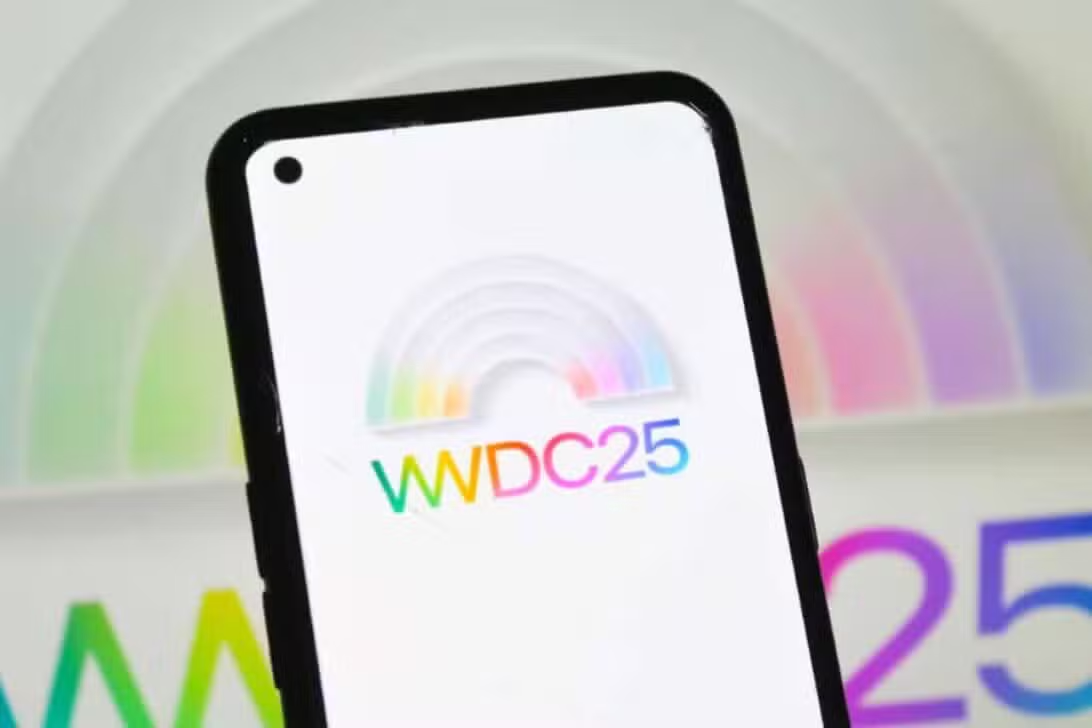
On Monday, June 9, 2025, Apple will kick off WWDC 2025, its annual developer conference, with announcements set to reshape the iPhone ecosystem. Held at Apple Park in Cupertino, California, at 2 p.m. (Brasília time), the event will introduce the rebranded iOS, possibly named iOS 26, featuring a new visual identity inspired by visionOS. The conference will also showcase updates to other operating systems, including iPadOS, macOS, and watchOS, alongside advancements in artificial intelligence (AI) focused on productivity and energy efficiency. The iOS name change reflects a strategy to align systems with their launch year, while the revamped design aims to modernize the user experience.
WWDC 2025 will mark the start of a new era for Apple devices. The anticipated features are expected to roll out in beta versions for developers immediately after the keynote, with public releases slated for September. Additionally, the company plans to integrate more sophisticated AI capabilities, though the most significant upgrades, particularly for Siri, are scheduled for 2026.
Key changes expected include:
- A new name for iOS, potentially iOS 26, moving away from sequential numbering.
- A visual overhaul with translucent elements inspired by visionOS.
- AI enhancements, such as intelligent battery management.
- Updates to native apps, including Health and a new gaming hub.
The conference will be streamed live on Apple’s website, Apple TV app, and YouTube channel, allowing users and developers to follow the announcements in real time.
New name for iOS
Apple plans to retire the traditional iOS naming convention, which followed a numerical sequence since its debut in 2007. According to reports, the iPhone’s operating system will now be identified by its launch year, adopting the name iOS 26 in 2025. This approach aims to unify the naming of all Apple systems, including iPadOS 26, macOS 26, and watchOS 26, making it easier for users to understand. The change also reflects Apple’s intent to align its products with a more intuitive naming logic, similar to that used by car manufacturers and sports game franchises.
The decision to rename iOS is more than symbolic. It accompanies a significant system overhaul, touted as the most substantial since iOS 7 in 2013. The new visual identity will draw from visionOS, the operating system of the Apple Vision Pro, featuring rounded icons, translucent menus, and smoother animations. This aesthetic aims to create a cohesive experience across Apple devices, from the iPhone to the mixed reality headset.
The shift to iOS 26 also includes updates to native apps. The Control Center, for instance, will feature a redesigned layout with streamlined tabs, while the Camera app will introduce floating menus for easier navigation. These changes, though visual, are designed to enhance usability and efficiency, particularly on newer devices like the iPhone 16 lineup.
Visual overhaul in focus
WWDC 2025 will showcase one of the most significant visual redesigns of iOS in over a decade. The design, inspired by visionOS, will incorporate transparent elements and more intuitive navigation. App icons will feature rounded edges, while the system will adopt fluid animations for screen transitions. This approach aims to modernize the iPhone interface while maintaining familiarity for users.
Beyond iOS, other Apple operating systems will also receive visual updates. iPadOS 26 will offer improved window management and enhanced multitasking, bringing the tablet experience closer to that of a laptop. macOS 26 and watchOS 26 will adopt the same visual language, creating a unified identity across the brand’s ecosystem.
The visual changes extend beyond aesthetics. Apple plans to optimize on-screen interactions, introducing more natural gestures and improved haptic feedback. These innovations are particularly relevant for devices with larger displays, such as the iPhone and iPad Pro models, which require more dynamic interfaces.
Advances in artificial intelligence
While WWDC 2025 won’t deliver a revolutionary leap in artificial intelligence, Apple will introduce incremental improvements that reinforce its commitment to the technology. A key highlight is intelligent battery management, which uses machine learning to analyze user patterns and optimize power consumption. This feature is critical for future devices, such as the rumored “iPhone Air,” which may have a smaller battery due to its slimmer design.
Other AI advancements include:
- Siri enhancements, with potential integration of alternative language models like Google’s Gemini.
- Productivity tools, such as automatic text suggestions in apps.
- Photo editing features, enabling more precise removal of unwanted objects.
- Personalized notification management based on user behavior.
Apple Intelligence, launched in 2024, will continue to expand, but the most significant upgrades, such as a more conversational Siri, are planned for iOS 27 in 2026. The company opted to delay these updates to ensure greater reliability and avoid criticism of its virtual assistant.
New gaming hub
Apple will replace the outdated Game Center with a unified gaming app. The new platform, pre-installed on iOS 26 devices, will centralize libraries, recommendations, leaderboards, and social interactions. The goal is to create a more integrated environment for gamers, capitalizing on the growing interest in mobile gaming.
The app will also support augmented reality features, particularly on devices compatible with the Apple Vision Pro. Additionally, Apple plans to reduce audio latency in games, ensuring a more immersive experience. These changes reflect Apple’s ambition to strengthen its presence in the gaming market, competing with platforms like Google Play and Steam.
Updates to the Health app
The Health app will gain features focused on wellness. Apple plans to integrate educational videos and personalized recommendations, though these are expected to reach users only in 2026. The updated app will also feature a redesigned interface, prioritizing simplified navigation and quick access to health data.
Anticipated features include:
- Advanced sleep tracking with detailed pattern analysis.
- Integration with wearables, like the Apple Watch, for real-time data.
- Fitness goal tracking tools with personalized reminders.
These updates underscore Apple’s investment in the digital health sector, a growing market that blends technology and wellness.
Device compatibility
iOS 26 will support models starting from the iPhone 11, including the 2020 and 2022 SE versions. This ensures that most users can access the new features, though advanced AI capabilities will be exclusive to devices with A17 Pro chips or later, such as the iPhone 15 Pro and iPhone 16 lineup.
The broad compatibility reflects Apple’s strategy to keep its ecosystem accessible, even with significant innovations. However, the company also encourages adoption of newer models, which offer better performance for advanced AI and multitasking features.
Integration with the Apple ecosystem
WWDC 2025 will emphasize integration across Apple devices. iOS 26, iPadOS 26, and macOS 26 will share features that streamline task continuity, such as transferring files between iPhone, iPad, and Mac with a single gesture. watchOS 26 will enhance synchronization with the iPhone, particularly for notifications and health data.
Apple also plans to expand support for HomeKit, its home automation platform. New smart home devices may be introduced, leveraging iOS 26’s revamped interface to manage lights, cameras, and connected appliances.
WWDC 2025 schedule
The conference will run from June 9 to 13, combining in-person events at Apple Park with online sessions. In addition to the keynote, WWDC will feature workshops, engineer meetups, and the “State of the Union” presentation for developers. These activities aim to empower app creators to explore the new operating systems.
Apple will also provide tools to facilitate app adaptation to iOS 26. Updated development kits and support for new media formats will be available immediately after the event, encouraging the creation of innovative experiences.
Preparation for future launches
While WWDC 2025 focuses on software, the event will also preview hardware launches planned for September. The rumored “iPhone Air,” with an ultra-thin design, may benefit from iOS 26’s battery optimizations. Additionally, Apple is working on updates for the next iPad, Mac, and Apple Watch models, creating a more cohesive ecosystem.
The company is also enhancing the Apple Vision Pro, with visionOS 26 updates that complement iOS’s new aesthetic. These changes reinforce Apple’s vision of unifying design and functionality across its products.