Strawberry Moon shines bright: Best time to see the June phenomenon
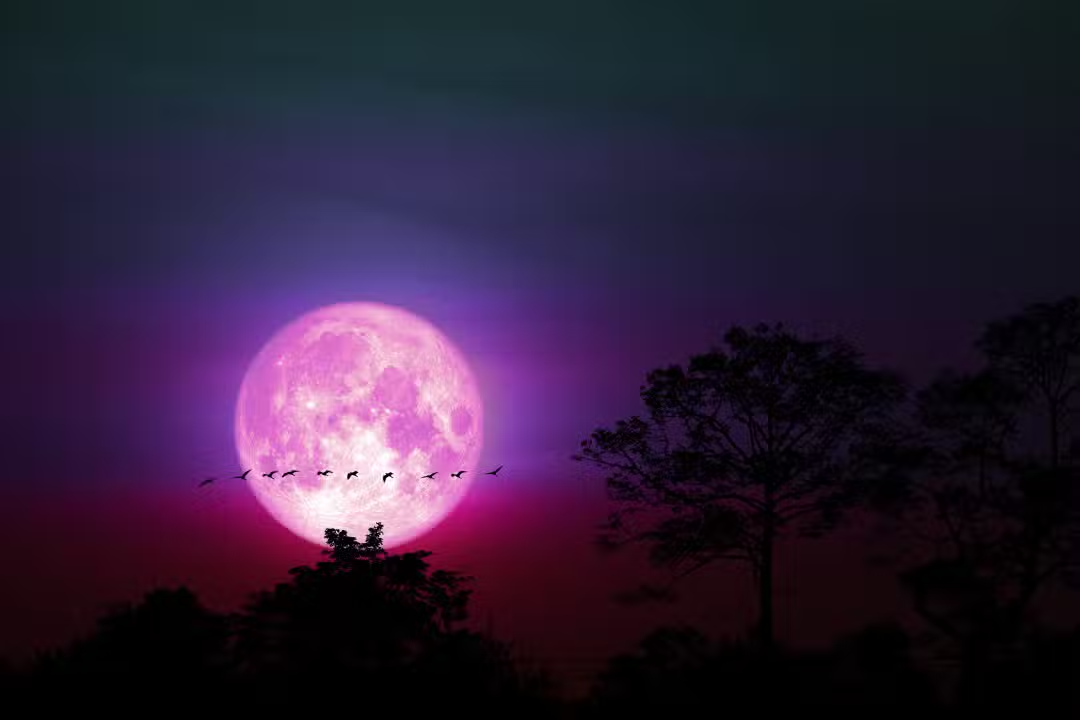
The Strawberry Moon, the name given to June’s full moon, will captivate Brazilian skies between June 10 and 11, 2025, peaking in the early hours of Wednesday at 4:46 AM, Brasília time. Unlike the Northern Hemisphere, where the moon will appear at its lowest point in nearly two decades, in Brazil it will be higher, making observation easier across various regions. The event, coinciding with the major lunar standstill, a rare 18.6-year cycle, draws astronomers and enthusiasts alike. To make the most of it, choose locations with an unobstructed horizon and low light pollution, such as beaches or rural areas. The name “Strawberry Moon” originates from Native American tribes in North America, tied to the wild strawberry harvest, but it doesn’t indicate a red hue, except at the horizon, where atmospheric light creates reddish tones.
The phenomenon, visible nationwide, begins to stand out at dusk on June 10, when the moon rises large and bright. Beyond its visual beauty, the 2025 Strawberry Moon aligns with the occultation of the star Antares in some parts of the world, an additional spectacle for observers in the South Pacific. Astronomers recommend using binoculars to capture details of the lunar surface, such as craters and lunar seas.
Here are some practical tips for observing the event:
- Choose a spot with a clear view of the eastern horizon, where the moon rises.
- Avoid urban areas with heavy artificial lighting.
- Use apps like Stellarium or Sky Map to locate the moon precisely.
- Arrive at the site before sunset to set up properly.
Origin of the name and its cultural significance
The term “Strawberry Moon” stems from Algonquin tribes, who linked June’s full moon to the wild strawberry harvest in the Northern Hemisphere. Though Brazil is in winter during the event, the name has been globally adopted for its poetic charm. Other Native peoples also named June’s full moon, such as Hot Moon, tied to the start of summer, or Corn Green Moon, related to crops.
This cultural richness reflects the historical connection between lunar cycles and agricultural activities. In Brazil, where seasons are opposite, the Strawberry Moon takes on a symbolic meaning, celebrated for its aesthetics and for marking longer, clearer winter nights in the Southern Hemisphere. The full moon also features in religious celebrations, like the Hindu Vat Purnima festival, which occurs in June and involves devotional rituals.
Why is the moon higher in Brazil?
In the Southern Hemisphere, the 2025 Strawberry Moon will appear higher in the sky, unlike the Northern Hemisphere, where it will follow its lowest path since 2006. This is due to the major lunar standstill, a phenomenon caused by nodal precession, which shifts the moon’s orbital tilt every 18.6 years. The moon’s orbit, tilted 5.1° relative to the ecliptic, combined with Earth’s 23.4° axial tilt, causes it to reach higher or lower points in the sky in regular cycles.
In Brazil, this setup results in a full moon that rises and sets further north on the horizon, creating ideal viewing conditions. Regions like the Northeast, with often clear skies in June, offer prime views. In cities like São Paulo and Rio de Janeiro, elevated spots like Ibirapuera Park or Dona Marta Lookout are good options, though rural areas are preferable to avoid light pollution.

Tips for an unforgettable observation
Planning your Strawberry Moon observation can turn the experience into a memorable moment. Astronomers suggest some strategies to maximize enjoyment:
- Arrive at the observation site before dusk to watch the moonrise.
- Bring binoculars or a simple telescope to explore lunar surface details.
- Use astronomy apps to identify nearby constellations, like Ophiuchus, where the moon will be positioned.
- Avoid using flashlights or bright phone screens to preserve night vision.
- Consider capturing the moment with a camera or phone in night mode to record the phenomenon’s beauty.
Location choice is key. Coastal areas, like beaches on the southern or northeastern coast, offer wide, unobstructed horizons. In urban settings, lookouts and parks with elevated views are viable alternatives, provided artificial lighting is minimal.
Additional phenomena on the same night
Beyond the Strawberry Moon, the night of June 10 to 11 holds other astronomical events. In the South Pacific, observers will witness the occultation of Antares, the brightest star in Scorpius, as the moon passes in front of it. In Brazil, though this event won’t be visible, the full moon will be in the constellation Ophiuchus, considered by some astronomers as the 13th zodiac constellation.
However, the full moon’s brightness may hinder sightings of fainter celestial objects, like stars and meteors. For those wanting to explore the night sky beyond the moon, the recommendation is to wait for the New Moon on June 25, when darker skies are ideal for spotting June’s Boötid meteors.



Curiosities about the lunar orbit
The 2025 Strawberry Moon’s orbit will be near its apogee, the farthest point from Earth, at about 406,000 kilometers. This means it won’t be a supermoon, when the full moon coincides with perigee, but it will still offer a stunning display. The moon’s slightly elliptical orbit causes its distance to vary throughout the month, affecting its appearance and brightness.
Another intriguing aspect is the “giant moon effect,” seen when the moon is near the horizon. Terrestrial objects, like trees or buildings, create an optical illusion, making the moon appear larger than usual. This effect is purely visual and doesn’t change the moon’s actual size, but it adds a special charm to the observation.
Best places in Brazil to observe
In Brazil, the observation site can make all the difference. Regions with low humidity and clear skies, like the Northeast’s interior or the Central-West, are ideal. Cities like Fortaleza, Natal, and Brasília offer good weather conditions in June, but nearby rural areas provide a more immersive experience.
In the Southeast, places like Serra da Mantiqueira or Itatiaia National Park are alternatives to escape light pollution. In the South, cities like Florianópolis and Porto Alegre have coastal lookouts that favor observation, especially if the sky is clear. Checking the weather forecast is crucial, as clouds can obstruct visibility.
Cultural meanings around the world
The Strawberry Moon transcends astronomy, carrying meanings across cultures. In Europe, it’s called the Honey Moon, possibly linked to honey harvests in June or wedding traditions. In Buddhism, June’s full moon marks Sri Lanka’s Poson Poya festival, celebrating Buddhism’s introduction to the country.
In Brazil, while there’s no specific tradition tied to the Strawberry Moon, the event attracts photographers, amateur astronomers, and curious onlookers eager to capture or simply enjoy the spectacle. The full moon also inspires local events, like group observations at planetariums and astronomy clubs, which host educational activities during the period.
How to prepare for the event
Preparing to observe the Strawberry Moon involves simple steps. Besides choosing a suitable location, bring chairs, blankets, and, if possible, a star chart or astronomy app. For photographers, using a tripod and adjusting exposure to capture the moon without overexposure is essential.
Astronomers also suggest watching the moon during its rise, around 6 PM on June 10, when it displays golden or reddish hues due to atmospheric light scattering. This moment is ideal for photos and appreciating the horizon’s visual effect. After the peak in the early hours of June 11, the moon will remain visible but with less color intensity.
June’s astronomical events
June 2025 will be a rich month for celestial events. Beyond the Strawberry Moon, the winter solstice in the Southern Hemisphere will occur on June 20, marking the official start of the season. On June 17, Mars will be close to the star Regulus, creating a visible pair to the naked eye. These events complement the astronomical calendar and offer more opportunities for night sky enthusiasts.
The Strawberry Moon, however, remains the month’s highlight, blending beauty, science, and culture in a single phenomenon. Whether with binoculars, the naked eye, or through photographs, the event promises to be a moment of connection with the universe, accessible to all who look up on the nights of June 10 and 11.
Veja Tambem em EUA

Pesquisa no Texas aponta republicanos à frente para governador e procurador-geral, democratas em vantagem mínima no Senado

EUA atacam radares iranianos; Irã responde com mísseis a base americana no Kuwait, em nova escalada

Homem morre sete dias após ser baleado por proprietário em imóvel invadido em Oklahoma City, EUA

Incêndio devasta The Tiny Turtle e afeta dois negócios na Minutemen Causeway em Cocoa Beach

Diferença no benefício médio do Social Security entre 62, 67 e 70 anos chega a 60% em 2026

Pesquisa aponta que 69% dos trabalhadores nos EUA temem não economizar o suficiente para a aposentadoria

Gerenciamento de US$ 2 milhões a US$ 5 milhões em aposentadoria: milionários enfrentam desafios inesperados, revela análise

Agente do ICE, Christian Castro, é detido no Texas por tiroteio e falso testemunho em Minneapolis

Justiça federal condena ex-superintendente de Des Moines a 2 anos de prisão por falsa cidadania americana

M&M’s anuncia parceria com Love Island USA e lança pacotes interativos temáticos da série

Aumento da gasolina nos EUA: americanos ajustam rotinas, diminuem viagens e buscam alternativas para economizar