Model and tennis player: Carson Branstine’s journey at Wimbledon
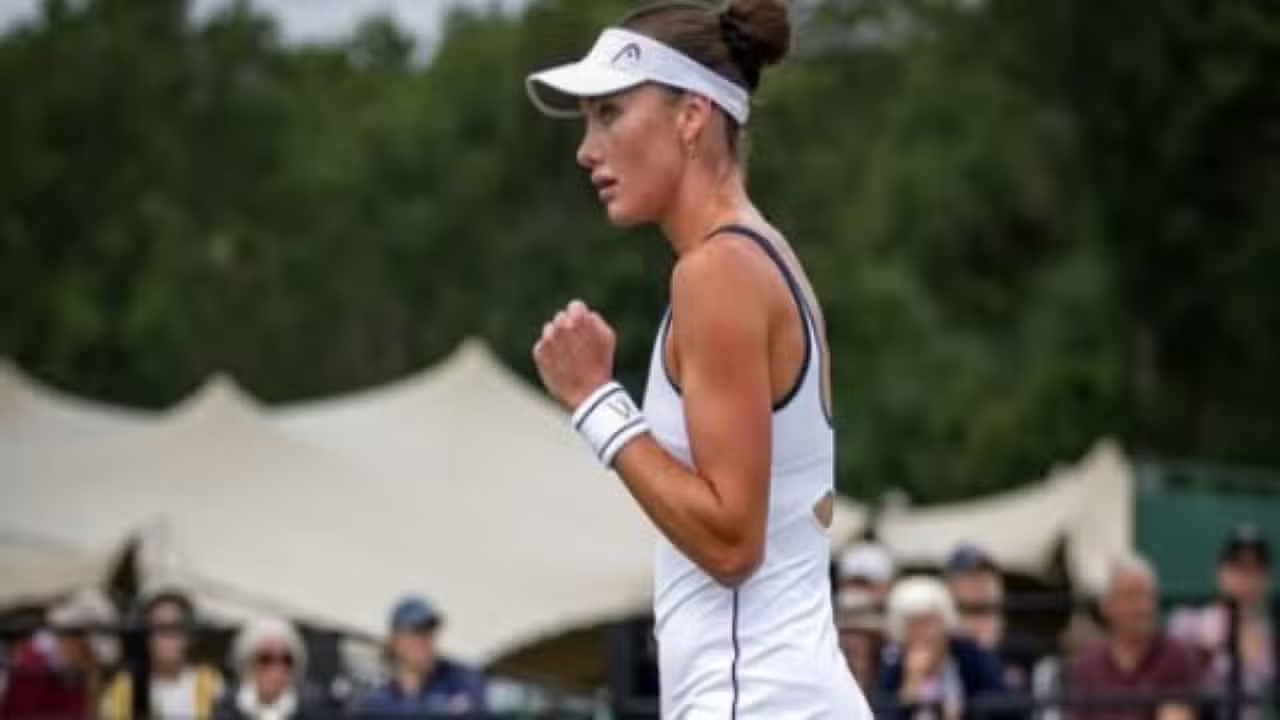
Carson Branstine, a 24-year-old Canadian tennis player, made her debut in the main draw of Wimbledon 2024, facing world number one Aryna Sabalenka in the first round. Though eliminated early, her story of resilience and versatility captured the attention of fans and media alike. Beyond her athletic pursuits, Carson is a professional model, a career that funds her travels and competitions. Her journey includes overcoming financial struggles, such as delivering food in Los Angeles to afford tournaments, and achieving milestones, like earning £66,000 (approximately $84,000) in her Grand Slam debut. Blending talent on the court, modeling work, and a degree in Law makes her a unique figure in the sport.
Carson’s path is defined by financial challenges and determination. Even without sponsorships early in her career, she found ways to keep competing. Her story reflects the grit of athletes who juggle multiple careers to chase their dreams.
- Key moments in Carson’s journey:
- Wimbledon debut after qualifying rounds.
- Balancing tennis with modeling work.
- Overcoming financial hardships independently.
- Earning a degree in Society, Ethics, and Law.
Promising start on the courts
Carson Branstine began playing tennis at a young age but, like many individual sport athletes, struggled to fund her career. Without major sponsors, she relied on prize money and side jobs. Her Wimbledon debut in July 2024 was a turning point. Facing Aryna Sabalenka, a title favorite, brought her visibility despite the loss. The £66,000 prize for reaching the first round was her biggest career payout, a significant sum for a player who once scraped by to afford gas.
Her road to the Grand Slam was tough. Carson battled through qualifying rounds, defeating seasoned opponents to earn her main-draw spot. Her resolve on the court mirrors the strength she showed in finding ways to support her ambitions off it.
Modeling by necessity and passion
In addition to tennis, Carson Branstine is a professional model, working with agencies that value her look and charisma. In interviews, she shared that modeling stemmed from both need and enjoyment. “I love being in front of the camera. It’s fun, I love fashion,” she told the British newspaper The Telegraph. Modeling allowed her to cover travel and tournament costs without relying on her parents, a choice that underscores her independence.
Juggling both careers brought financial stability but also challenges. Carson notes similarities between the two: in tennis and modeling, pressure to perform and public scrutiny are constant. “You’re often an object, and people sometimes forget you’re a person too,” she said. Her ability to thrive in both worlds has made her a role model, especially for young athletes seeking alternative ways to fund their careers.
Overcoming financial struggles
Carson’s story is filled with moments of hardship. In a British media interview, she recalled a defining moment: weeks before her first WTA final in Cancún, her bank account dwindled to just $26. Desperate but determined not to ask her parents for help, she cried but quickly found a solution. After training, she drove around Los Angeles delivering food to raise funds.
- Challenges Carson faced:
- Lack of sponsors early in her career.
- High costs of tournaments and travel.
- Need to take on side jobs.
- Pressure to stay financially independent.
This experience shaped her mindset. “Don’t overthink. Just do it,” she told herself at the time. Delivering food, though exhausting, was a temporary fix that kept her in the game. Her story resonates with athletes facing similar financial barriers in high-cost sports like tennis.
Academic background and versatility
Beyond tennis and modeling, Carson Branstine holds a bachelor’s degree in Society, Ethics, and Law, with a focus on Philosophy and Sports Management. Her academic background sets her apart, showing she’s not confined to courts or cameras. During quieter tennis periods, she worked as an assistant in law offices, managing yet another career in her busy schedule.
This versatility highlights her ability to adapt to different environments. Sports management, for instance, could be a future path, given her practical and theoretical experience in the field. Her academic journey also inspires young athletes to prioritize education alongside demanding careers.



Reception at Wimbledon
Carson’s Wimbledon debut didn’t go unnoticed. British media spotlighted her not just for her on-court performance but also for her beauty, dubbing her the “most beautiful debutante” of the tournament. Carson remains grounded, acknowledging that modeling agencies hired her for her appearance, not her tennis. “I wasn’t hired because of my tennis,” she said, showing maturity in handling fame.
The media attention brought both visibility and criticism. Some questioned whether her image overshadowed her athletic talent. Carson, however, takes the spotlight in stride, focusing on the hard work and passion that brought her to this stage.
Routine of a multitasking athlete
Balancing tennis, modeling, and studies demands a disciplined routine. Carson trains daily, often traveling to tournaments on a tight budget. In between, she attends photoshoots or works on academic projects. Her time-management skills are a model for other athletes facing similar demands.
- Activities in Carson’s routine:
- Intensive tennis training.
- Photoshoots for fashion campaigns.
- Studies and work in sports management.
- Tournament travel without financial backing.
This hectic schedule doesn’t deter her from tackling new challenges. In 2024, beyond Wimbledon, Carson competed in smaller tournaments, gaining experience and prize money to plan her professional future.
Comparisons with other athletes
Carson Branstine’s story echoes those of other tennis players who balanced parallel careers. Anna Kournikova, for example, was among the first to blend tennis and modeling, though with more financial support. More recently, fellow Canadian Eugenie Bouchard took a similar path, appearing in ad campaigns. Carson stands out for her lack of major sponsors and her need to self-fund her career.
Unlike Kournikova and Bouchard, who reached the top of the world rankings, Carson is still early in her professional journey. Yet her story already inspires, showing it’s possible to compete at a high level with limited resources.
Future in tennis and beyond
At 24, Carson Branstine has room to grow in the professional circuit. Her Wimbledon debut, though without a win, was a significant step. The £66,000 earned in 2024, including her Grand Slam prize, provides a financial foundation for more tournaments. Her modeling experience and academic background also open doors to opportunities outside tennis.
She plans to keep competing in WTA and ITF events, aiming to climb the rankings. Off the court, she could explore sports management or expand her modeling career, fields where she’s already shown promise. Her journey, defined by resilience and versatility, exemplifies how passion and effort can overcome obstacles.
Veja Tambem em Esportes

PSG x Arsenal pela final da Liga dos Campeões da UEFA: Onde assistir ao vivo e escalações prováveis

Onde assistir Sport x Náutico pelo Brasileirão Série B

Athletic Club x Fortaleza na Arena Joaquim Portugal pela Série B 2026

Onde assistir Avaí x Criciúma na Ressacada pela 11ª rodada do Brasileirão Série B

Casper Ruud vence Tommy Paul em cinco sets na terceira rodada do Roland Garros

Atlético-GO x Goiás pela 11ª rodada do Brasileirão Série B: onde assistir ao vivo o derby goiano

Santos x Vitória pelo Brasileirão Betano: onde assistir ao vivo e escalações prováveis

Onde assistir Bahia x Botafogo pela 18ª rodada do Brasileirão Betano com prováveis escalações

Grêmio x Corinthians: onde assistir ao vivo pela 18ª rodada do Brasileirão

Athletico x Mirassol pelo Brasileirão 2026: onde assistir e escalações

Onde assistir Flamengo x Coritiba ao vivo no Brasileirão Betano pela 18ª rodada