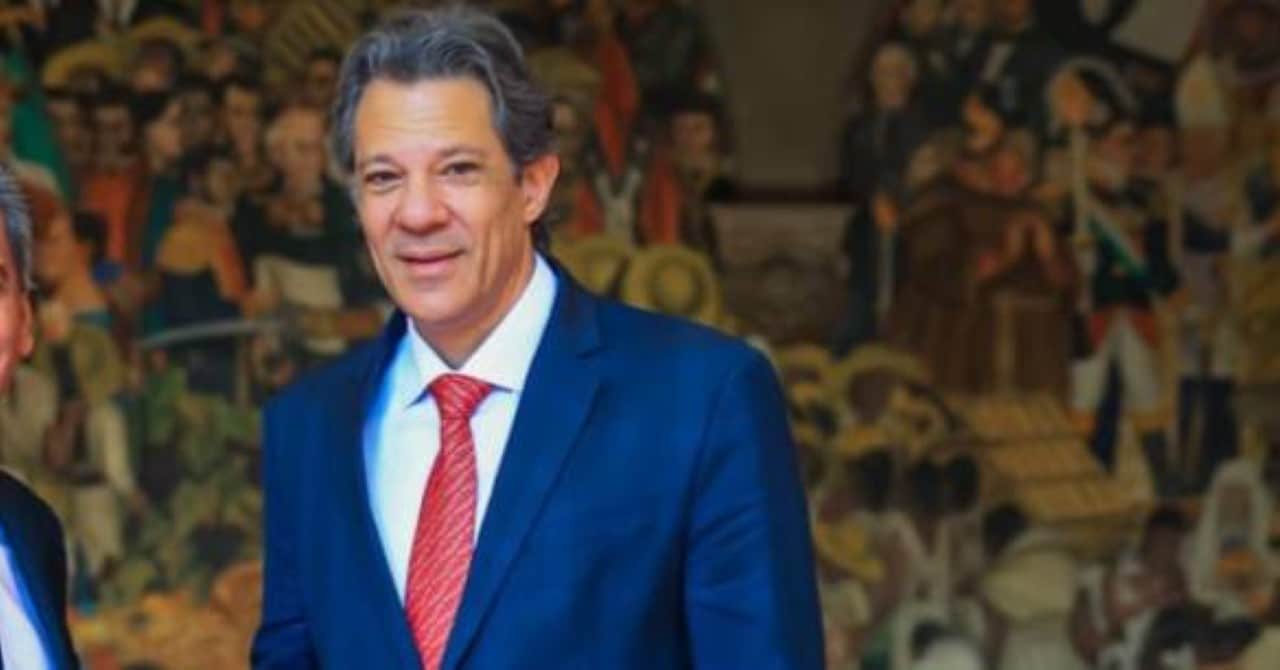
The Brazilian government, led by Finance Minister Fernando Haddad, announced on July 21, 2025, that it will not abandon negotiations with the United States to reverse the 50% tariff on Brazilian products proposed by President Donald Trump, set to take effect from August 1. The measure, impacting sectors like coffee, orange juice, meat, and aviation, could significantly affect Brazilian exports, which reached US$ 40.3 billion to the US in 2024. Haddad emphasized that Brazil is preparing a contingency plan to support affected companies without resorting to new public spending and ruled out immediate retaliation against American citizens and firms. The strategy includes redirecting exports to other markets and seeking support from the World Trade Organization (WTO). The minister warned that the tariff will also harm US consumers and industries, raising prices for essential products.
Trump’s decision, announced in a letter to President Luiz Inácio Lula da Silva on July 9, blends commercial and political issues, citing alleged Brazilian trade barriers and the trial of former President Jair Bolsonaro. Brazil refutes claims of a US trade deficit, highlighting a US surplus of US$ 1.7 billion in the first half of 2025. While negotiations continue, the Brazilian government is working with businesses to minimize losses.
- Most affected sectors: coffee, orange juice, beef, steel, and aviation.
- Alternatives under study: export redirection and credit lines.
- Tariff timeline: set for August 1, 2025.
- Strategy: diplomatic dialogue and potential WTO action.
Negotiations with the US in focus
The Brazilian government prioritizes diplomacy, even with the threat of tariffs that could reduce the competitiveness of Brazilian products in the US, the second-largest destination for national exports. Haddad stressed that Brazil will not leave the negotiation table, seeking agreements to avoid escalating a trade war. He noted that the US is the main market for Brazilian manufactured goods, such as Embraer aircraft, which accounted for US$ 2.7 billion in exports in 2024. Losing access to this market could lead to significant economic impacts, including job cuts.
The minister emphasized that Brazil’s strategy involves dialogue with US authorities and mobilizing companies from both countries. The American Chamber of Commerce (Amcham Brazil) reported that 3.2 million jobs in Brazil depend on exports to the US. Representatives from companies like Amazon, Coca-Cola, and General Motors expressed support for bilateral negotiations, fearing mutual losses if the tariff is implemented.
- US companies in Brazil: General Motors, Johnson & Johnson, Caterpillar.
- Job impact: 24,300 jobs generated per R$ 1 billion exported.
- Brazilian proposal: letter sent to the US in May with trade suggestions.
Brazilian sectors under pressure
The 50% tariff threatens key sectors of the Brazilian economy, already facing a 10% surcharge since April 2025. Coffee, with about 8 million bags exported annually to the US, could raise the cost of breakfast in America, according to Haddad. Orange juice, with 41.7% of Brazilian exports destined for the US, faces an “unsustainable” scenario, per the National Association of Citrus Juice Exporters (CitrusBR). Beef, with a \subseteq
System: 196% surge in exports in 2025, is also targeted, with meatpackers considering redirecting sales to Asian markets.
The aviation industry, led by Embraer, is particularly vulnerable. The company, which sends 60% of its sales to the US, imports 45% of its components from American suppliers. BTG Pactual estimates that the 50% tariff could lead to losses of hundreds of millions of dollars for Embraer, impacting margins and competitiveness.
- Top exported products: crude oil (US$ 7.5 billion), steel (US$ 5.3 billion), coffee (US$ 1.16 billion).
- Impact on Embraer: potential cost increase of US$ 78 million with a 10% tariff.
- Alternatives: Asian and European markets for beef and orange juice.
Contingency strategies in development
The Brazilian government is working on a contingency plan to mitigate the tariff’s effects without increasing public spending. Haddad cited the aid to Rio Grande do Sul, where credit lines and tax incentives were used, as an example. A task force, including business leaders from sectors like orange juice, steel, and aviation, is mapping impacts and proposing solutions. Measures include redirecting exports to markets like China, which already absorbs 40% of Brazil’s soy, 19% of its oil, and 17% of its iron ore.
However, redirecting manufactured goods, such։
System: as aircraft, is more complex due to specific contracts and high US demand. The government is also considering appealing to the WTO, arguing that the tariff violates international trade rules. The Economic Reciprocity Law, enacted in April, allows Brazil to impose surcharges on US goods and services, but Haddad emphasized that the priority is avoiding retaliations that could escalate the conflict.
- Support measures: credit lines and tax incentives.
- Alternative markets: China, Europe, and Mercosur countries.
- WTO recourse: evaluation of the tariff’s legality.
Bilateral impacts of the tariff
The 50% tariff affects not only Brazil but also the US. American consumers may face higher prices for coffee, orange juice, and meat, which heavily rely on Brazilian imports. The Brazilian Coffee Exporters Council (Cecafé) noted that the US will struggle to replace Brazilian coffee, potentially increasing consumer costs. Additionally, US industries supplying components to Embraer could lose revenue due to the interdependent production chain.
The National Confederation of Industry (CNI) estimates that the tariff could reduce Brazil’s GDP by 0.16% (R$ 19.2 billion) and the US GDP by 0.37%, with global trade losses of US$ 483 billion. Sectors like agricultural machinery (-23.61% in exports) and aviation (-22.33%) are among the most vulnerable. Brazil, however, maintains a US trade surplus, with US$ 90.28 billion accumulated since 2009, contradicting Trump’s claim of an “unfair” trade relationship.
- US impact: higher prices for coffee, juice, and meat.
- Global losses: US$ 483 billion in world trade, per CNI.
- US surplus: US$ 1.7 billion in the first half of 2025.
Business sector reactions and outlook
Brazilian and American business leaders are mobilizing to push for a negotiated solution. Amcham Brazil highlighted that bilateral trade grew by 4.4% in Brazilian exports and 11.5% in US imports in the first half of 2025, showing resilience despite the 10% tariff applied in April. Companies like General Motors and Caterpillar, with a long presence in Brazil, fear losses in their supply chains. Vice-President Geraldo Alckmin led meetings with representatives from these firms, reinforcing efforts to secure agreements that avoid the tariff.
The orange juice sector, represented by CitrusBR, warned that the tariff, combined with an existing surcharge, could make exports unviable. Brazilian meatpackers are seeking alternative markets, but diversification requires time and investment. Diplomatic pressure also involves Brazilian lawmakers, such as Renan Calheiros, who supported the Economic Reciprocity Law as a sovereignty tool but urged balance in negotiations.
- Business support: Amazon, Coca-Cola, GM, and Caterpillar oppose the tariff.
- Orange juice sector: 41.7% of exports destined for the US.
- Diplomatic pressure: Brazilian letter sent to the US in May.