Commercial plane with dozens of passengers crashes in Russia, leaving no survivors


A commercial Antonov An-24, operated by Angara Airlines, crashed in the Amur region of eastern Russia on Thursday morning, July 24, 2025, killing all 49 people on board, including 43 passengers and six crew members. The aircraft, en route from Blagoveshchensk to Tynda, lost contact with air traffic control during its approach to landing in a remote area near the Chinese border. Hours later, a Mi-8 helicopter located the wreckage in flames about 15 km from Tynda, according to Russia’s Ministry of Emergency Situations. Preliminary reports indicate no survivors, and authorities have launched an investigation into the crash’s causes, with human error in low-visibility conditions being one hypothesis. The tragedy reignites debates about the safety of aging aircraft in operation across Russia.
The Amur region, known for its rugged terrain and challenging weather, relies heavily on regional flights to connect isolated cities. The Antonov An-24, a Soviet-era twin-engine plane, is widely used on these routes due to its ability to operate on short runways and in extreme climates. However, the advanced age of the aircraft, built in 1976, raises concerns about maintenance and safety.
- Flight details: The plane was operating a route between Blagoveshchensk and Tynda, a vital link in Russia’s far east.
- Passenger breakdown: There were 43 passengers, including five children, and six crew members.
- Crash site: Wreckage was found on a hillside 15-16 km from Tynda, in a dense forest area.
- Initial response: Rescue teams, including 25 personnel and five equipment units, were deployed to the site.
Details of the Amur tragedy
The crash of the Antonov An-24 shocked the Amur region and raised questions about the safety of regional aviation in Russia. The plane, operated by the Siberian-based Angara Airlines, lost radar contact moments before its scheduled landing in Tynda. According to regional governor Vasili Orlov, all available resources were mobilized for the search, which culminated in a Mi-8 helicopter from Rossaviatsiya locating the burning fuselage.
Rescue operations faced challenges due to the crash site’s conditions. The area, marked by dense forests and mountainous terrain, required helicopters for initial wreckage identification. Reports indicate the fuselage was engulfed in flames, suggesting a high-impact collision. The local civil protection agency reported no survivors sighted during the aerial inspection, though ground teams continue to investigate.
- Initial observations: The fuselage was found on a hillside, with visible flames from a distance.
- Weather conditions: Low visibility is cited as a possible contributing factor to the crash.
- Ongoing rescue: Ground teams face challenges due to the rugged terrain.

History of the Antonov An-24
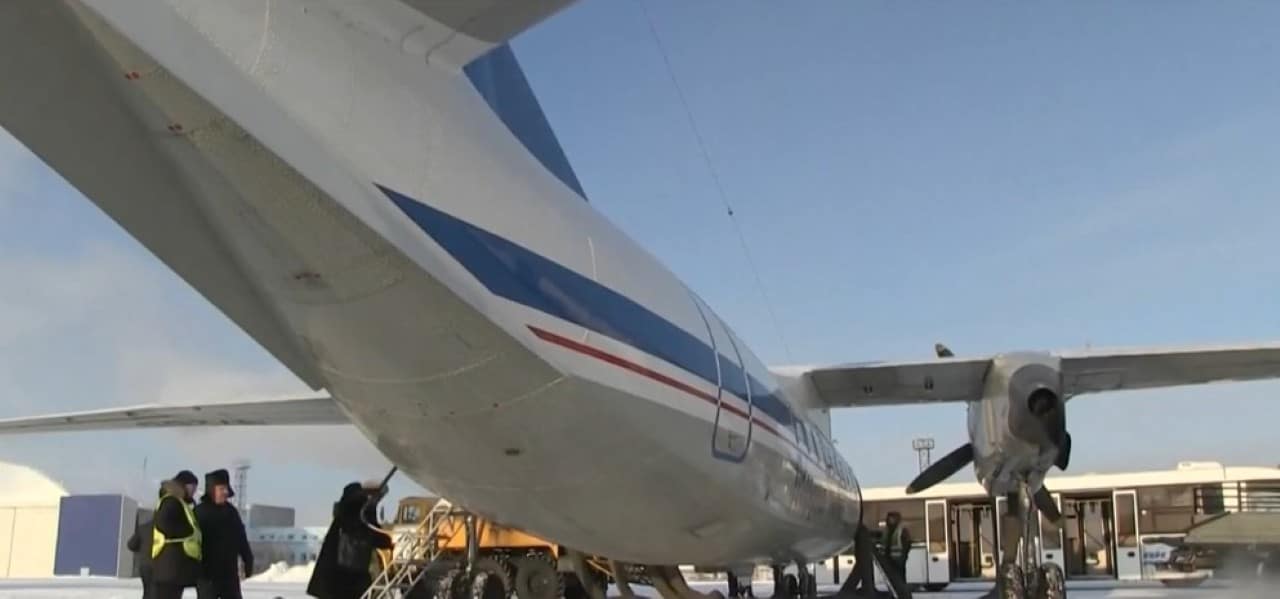
The Antonov An-24, nicknamed the “flying tractor” for its durability, is a twin-engine aircraft developed in the 1950s by Ukraine’s Antonov company during the Soviet era. Designed for harsh conditions, it became a cornerstone of Russian regional aviation, particularly in remote areas like the far east. However, the fleet of An-24s in Russia, including the crashed model built in 1976, faces criticism due to its advanced age and high maintenance costs.
Angara Airlines, based in Irkutsk, operates a fleet of 10 An-24s, all built between 1972 and 1976. These planes are crucial for connecting remote regions, but the lack of spare parts, exacerbated by Western sanctions following the 2022 Ukraine invasion, has complicated maintenance. Production of the Ladoga, a potential An-24 replacement, is not expected until 2027, forcing regional airlines to extend the service life of older models.
Possible causes of the crash
Russian authorities have opened an investigation to determine the crash’s causes, with preliminary reports pointing to possible human error during the landing approach. Low visibility, common in the Amur region during summer, may have played a critical role. Other factors, such as mechanical failures or maintenance issues, are also under consideration, given the aircraft’s history.
The Antonov An-24 has been involved in other accidents in Russia, many linked to its age and the extreme conditions of regional routes. In 2019, another Angara Airlines An-24 made an emergency landing in Nizhneangarsk after an engine failure, resulting in two deaths. Repeated incidents with this model heighten scrutiny on Russia’s regional aviation safety.
- Initial hypotheses: Crew error in low-visibility conditions.
- Technical factors: Potential mechanical failure due to the aircraft’s age.
- Model history: Previous An-24 accidents raise concerns about its operation.
- Ongoing investigation: Authorities are seeking the black box to clarify the incident.
Reactions and regional impact
The tragedy prompted swift action from the Amur community and authorities. Governor Vasili Orlov used his Telegram channel to update the public, confirming the mobilization of resources for search and rescue operations. President Vladimir Putin was briefed on the crash and is receiving updates, according to the Kremlin.
The crash also sparked widespread reactions on social media, with images of the burning wreckage circulating widely. Residents of Tynda, a city of about 35,000, expressed solidarity with the victims’ families. The region’s reliance on regional flights makes such tragedies particularly impactful, as many remote communities depend solely on air transport.
Russia’s regional aviation under pressure
Aviation in Russia’s far east faces unique challenges due to vast distances and limited infrastructure. Air and helicopter crashes are relatively common in the region, where harsh weather and remote terrain complicate operations. The aging fleet of aircraft, like the An-24, exacerbates these risks, especially amid sanctions limiting access to modern parts and technology.
Angara Airlines, like other regional operators, has requested government approval to extend the service life of its Antonovs, citing a lack of viable alternatives. This decision, while practical, has drawn criticism from experts who call for fleet modernization to ensure passenger safety. The July 24 tragedy may intensify this debate, pushing for regulatory changes and aviation investments.
- Regional challenges: Remote terrain and harsh weather complicate air operations.
- Western sanctions: Limited spare parts affect aircraft maintenance.
- Aging fleet: An-24s operate beyond their designed service life.
- Future alternatives: Ladoga production is slated for 2027.
Rescue efforts and next steps
Rescue operations continue in Amur, with teams struggling to access the crash site. In addition to the Mi-8 helicopter that located the wreckage, four other aircraft are on standby to support the effort. The region’s civil protection agency reported that 25 personnel and five equipment units were deployed, but dense vegetation and rugged terrain are slowing progress.
The investigation, led by the Ministry of Emergency Situations and Rossaviatsiya, aims to recover the aircraft’s black box to clarify the crash’s circumstances. Preliminary data suggest the plane attempted a second landing approach, possibly indicating issues during the maneuver. Identifying victims and contacting their families are also priorities for authorities.
History of accidents in the far east
Russia’s far east has a history of air accidents due to the region’s challenging conditions. In 2021, an Antonov An-26 crashed in Kamchatka, killing 28 people. The combination of aging aircraft, limited maintenance, and harsh weather contributes to these incidents. The Amur tragedy underscores the need to review regional airline operations and invest in aviation infrastructure.
The reliance on models like the An-24, while justified by the lack of alternatives, exposes passengers to heightened risks. Gradual replacement with modern aircraft like the Ladoga is seen as critical, but production delays keep this timeline distant. Until then, operators like Angara Airlines face pressure to maintain safe operations with limited resources.
- Previous accidents: A 2021 An-26 crash in Kamchatka killed 28 people.
- Regional conditions: Weather and geography challenge far east aviation.
- Lack of alternatives: Modern fleet options are limited by sanctions and production delays.