Trump deploys nuclear submarines after Putin’s ally threatens nuclear action
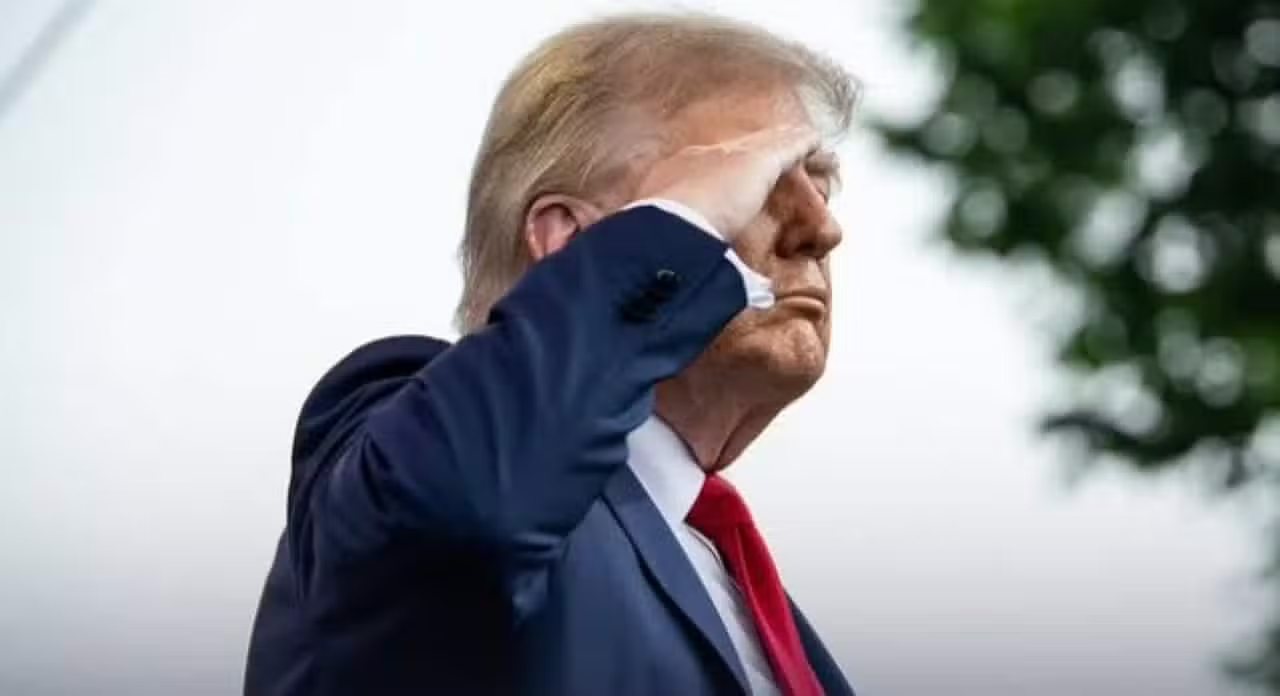
U.S. President Donald Trump announced on Friday (1st) the deployment of two nuclear submarines to strategic regions in response to threats from former Russian President Dmitry Medvedev, an ally of Vladimir Putin. The statement comes a day after Medvedev referenced the Soviet-era “Dead Hand” nuclear system, designed for automatic missile launches if Russia’s leadership is attacked. Trump shared the decision on his social media platform, Truth Social, emphasizing the severity of Russian provocations. The move heightens tensions between Washington and Moscow amid the Ukraine war, which has caused thousands of deaths in 2025. The deployment aims to bolster U.S. defensive posture while Trump pushes for a Russia-Ukraine ceasefire, threatening sanctions if no agreement is reached.
The verbal escalation began after Trump criticized Medvedev for remarks on tariffs targeting Russian oil buyers. The former Russian president, now deputy chairman of Russia’s Security Council, responded by referencing the destructive power of “Dead Hand.” The exchange of provocations underscores the fragile U.S.-Russia relationship, with Trump mourning war losses and urging peace talks.

- Key points of the escalation:
- Trump ordered the deployment of nuclear submarines following Russian threats.
- Medvedev referenced the “Dead Hand” system as a potential retaliation.
- The Ukraine war has claimed 112,500 Russian and 8,000 Ukrainian soldiers in 2025.
- Trump proposed a 60-day truce, with sanctions threatened if rejected.
The current tension highlights the fragility of international negotiations, with both sides holding firm. The submarine deployment is seen as a U.S. show of strength against Russian provocations.
Response to Russian threats
Trump’s announcement followed Medvedev’s suggestion on Telegram that Russia could use the “Dead Hand” system in response to U.S. policies. Developed during the Soviet era, this mechanism enables automatic nuclear missile launches without human command if Russia’s leadership is neutralized. Mentioning the system, described as an “apocalyptic weapon,” escalated the rhetoric between the powers. Trump stressed that words carry weight and could lead to serious consequences, signaling U.S. readiness to respond.
The deployment of nuclear submarines, though not detailed in terms of location, reinforces U.S. deterrence strategy. The U.S. submarine fleet, including Ohio-class models, is equipped with long-range ballistic missiles capable of striking targets thousands of miles away. This capability is a cornerstone of U.S. nuclear defense, designed for immediate response to threats.
- Deployment details:
- Two nuclear submarines were sent to “appropriate regions.”
- Exact locations were not disclosed for strategic reasons.
- The U.S. nuclear fleet includes 14 Ohio-class submarines.
- Each submarine can carry up to 20 Trident II missiles with nuclear warheads.
Origin of the provocations
The current tension stemmed from Trump’s proposal to impose up to 100% tariffs on buyers of Russian oil as part of sanctions to pressure Moscow into a Ukraine ceasefire. Medvedev called the measure an “ultimatum,” accusing the U.S. of escalating the conflict. In response, Trump criticized the former Russian president, labeling him a “failure” and warning about the dangers of his statements.
Medvedev, known for his aggressive rhetoric, has been one of the Kremlin’s most combative voices. Since the Ukraine war began in 2022, he has frequently made controversial statements, criticized by Western diplomats as reckless. His reference to “Dead Hand” was seen as an attempt to bolster Russia’s stance amid U.S. economic and diplomatic pressure.
The “Dead Hand” system, or Perimeter, was designed to ensure nuclear retaliation even in extreme scenarios. It operates with sensors detecting nuclear attacks and, in the absence of human command, automatically launches missiles. While its existence is acknowledged, its current operability remains debated.
Ukraine war and peace efforts
Alongside the nuclear escalation, Trump reiterated his call for a ceasefire in the Russia-Ukraine war. He highlighted the human toll, with 112,500 Russian and 8,000 Ukrainian soldiers killed in 2025 alone. These figures exclude civilians and missing persons, worsening the conflict’s impact. The U.S. president blamed the war on his predecessor, Joe Biden, and claimed he is working to stop it.
On Tuesday (29th), Trump issued a 10-day ultimatum for Russia to accept a 60-day truce, threatening severe economic sanctions if refused. The proposal, presented to the UN, reflects U.S. mediation efforts but faces resistance. Vladimir Putin, responding indirectly, said expectations for talks are “exaggerated” and signaled continued military operations.



- 2025 conflict data:
- Russia: 112,500 soldiers killed since January.
- Ukraine: 8,000 soldiers killed in the same period.
- Trump proposed a 60-day truce, with a deadline of August 8.
- Sanctions could include up to 100% tariffs on Russian oil.
Trump-Putin relationship
The Trump-Putin relationship has fluctuated during the U.S. president’s second term. Initially, Trump praised Putin, expressing optimism about a peace deal. However, stalled negotiations prompted a shift in tone. Three weeks ago, Trump called Putin “useless,” marking a departure from his earlier approach.
The clash with Medvedev, a close Putin ally, adds a new chapter to this dynamic. While Trump pressures Russia with sanctions and military displays, Medvedev maintains a defiant stance, reinforcing the Kremlin’s resistance narrative. Diplomats note that Medvedev’s statements partly reflect Moscow’s strategy to project strength amid battlefield challenges in Ukraine.
The deployment of two nuclear submarines, though limited, signals U.S. willingness to counter Russian provocations with concrete actions. Withholding the regions of deployment maintains strategic ambiguity, a common tactic in nuclear operations.
“Dead Hand” system in focus
Medvedev’s mention of the “Dead Hand” system brought it back into the spotlight. Developed in the 1980s during the Cold War, it was created to ensure Soviet nuclear retaliation in case of a surprise attack. The system operates with sensors monitoring nuclear explosions, radiation, and communications. If Russia’s leadership is destroyed, it can automatically launch missiles.
Though its existence is confirmed, debates persist about its current functionality. Defense experts suggest the system was modernized in the 2000s, but its activation in a real conflict remains uncertain. Medvedev’s reference to “Dead Hand” is seen as a reminder of Russia’s nuclear capabilities amid growing international pressure.
- “Dead Hand” features:
- Automated nuclear retaliation system.
- Triggered by radiation and explosion sensors.
- Designed to operate without human intervention.
- Reportedly modernized in the 2000s, per Russian reports.
Global context and next steps
The nuclear submarine deployment comes at a critical juncture for international relations. The Ukraine war, ongoing for over three years, continues to destabilize global energy and food markets. Trump’s proposed sanctions on Russian oil buyers, such as China and India, could heighten economic tensions, while nuclear rhetoric raises the risk of military escalation.
The international community is closely monitoring developments. The UN, which received the U.S. truce proposal, has yet to make progress in negotiations. Meanwhile, the submarine deployment strengthens U.S. deterrence but also pressures Russia to respond to Trump’s demands.
The exchange of threats between Trump and Medvedev reflects the complexity of the current geopolitical landscape. With both sides holding firm, the risk of misunderstandings or unintended escalations remains high. The global community hopes negotiations advance before nuclear rhetoric turns into concrete actions.
Veja Tambem em EUA

Pesquisa no Texas aponta republicanos à frente para governador e procurador-geral, democratas em vantagem mínima no Senado

EUA atacam radares iranianos; Irã responde com mísseis a base americana no Kuwait, em nova escalada

Homem morre sete dias após ser baleado por proprietário em imóvel invadido em Oklahoma City, EUA

Incêndio devasta The Tiny Turtle e afeta dois negócios na Minutemen Causeway em Cocoa Beach

Diferença no benefício médio do Social Security entre 62, 67 e 70 anos chega a 60% em 2026

Pesquisa aponta que 69% dos trabalhadores nos EUA temem não economizar o suficiente para a aposentadoria

Gerenciamento de US$ 2 milhões a US$ 5 milhões em aposentadoria: milionários enfrentam desafios inesperados, revela análise

Agente do ICE, Christian Castro, é detido no Texas por tiroteio e falso testemunho em Minneapolis

Justiça federal condena ex-superintendente de Des Moines a 2 anos de prisão por falsa cidadania americana

M&M’s anuncia parceria com Love Island USA e lança pacotes interativos temáticos da série

Aumento da gasolina nos EUA: americanos ajustam rotinas, diminuem viagens e buscam alternativas para economizar