Moon phase today: how the waxing crescent Moon affects your life on 8/31
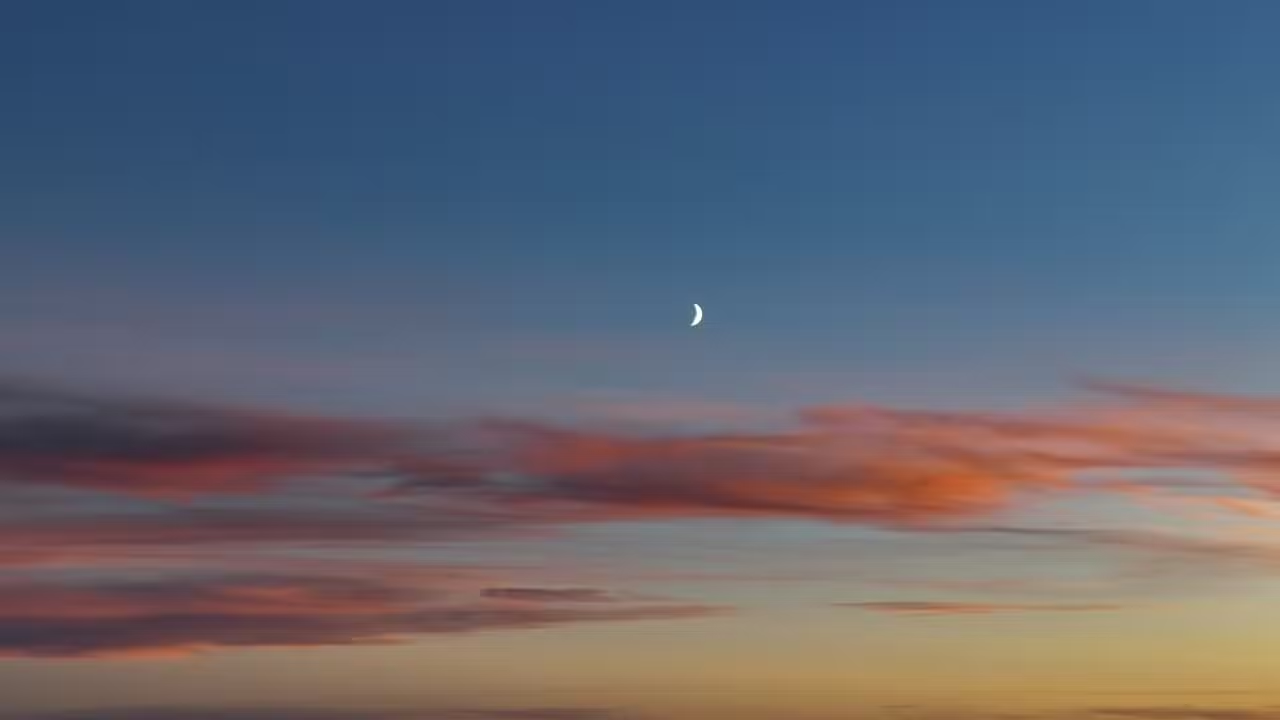
On this Sunday, August 31, 2025, the crescent moon shines in the sky with 49% visibility, marking a moment of rising energy and renewal, just six days from the full moon. Observed across Brazil, this lunar phase, occurring at the end of the month, sparks curiosity about its effects on agriculture, tides, and even human behavior. Positioned between the new moon and the full moon, the crescent is seen as an ideal time to start projects and plan changes. Although lacking scientific consensus, the moon’s influence is valued in various cultures for its connection to natural and personal cycles. This article explores the August 2025 lunar calendar, the meanings of each phase, and fascinating facts about the celestial body that has captivated humanity for centuries.
The crescent moon, visible tonight, symbolizes growth and progress, serving as a milestone in the roughly 29.5-day lunar cycle. Astronomers and enthusiasts observe the sky to track the gradual changes in lunar illumination, which is nearly halfway to the full moon today.
- Renewed energy: Many report increased motivation during the crescent moon.
- Boosted agriculture: Crops planted now may grow more vigorously.
- Balanced tides: The lunar influence on tides is subtle but noticeable in coastal areas.
The current phase, with its growing light, is just one part of the lunar cycle that has guided human activities for millennia, from agricultural practices to spiritual rituals.
What the crescent moon represents
The crescent moon, present this Sunday, is the second phase of the lunar cycle, starting after the new moon on August 23. During this period, the moon gains visibility each night, with its illuminated portion growing until it reaches the full moon on September 6. This phase is associated with the development of ideas and projects, making it a time to put plans into action. In agriculture, tradition suggests that seeds planted during the crescent moon germinate more strongly, capitalizing on the cycle’s rising energy. Along the coast, tides begin to gain amplitude, preparing for their peak during the full moon.
Culturally, the crescent moon is seen as a period of optimism. In many traditions, it’s a time to set intentions and pursue personal growth. While science doesn’t confirm direct impacts on mood, studies suggest that lunar light may influence sleep patterns, especially in areas with minimal artificial lighting.
August 2025 lunar calendar
August 2025 featured a dynamic lunar cycle, with phases guiding everything from agricultural practices to cultural celebrations. Below are the key dates of this month’s lunar calendar:
- Crescent moon: Began on August 1 at 9:41 AM, marking the start of lunar growth.
- Full moon: Occurred on August 9 at 4:55 AM, with 100% visibility and peak energy.
- Waning moon: Recorded on August 16 at 2:12 AM, starting the decrease in lunar light.
- New moon: Happened on August 23 at 3:06 AM, a time for introspection and new beginnings.
These phases, calculated based on the moon’s orbit around Earth, are tracked by astronomers and used in various fields, such as fishing, which considers tides, and agriculture, which follows lunar traditions for planting.

How lunar phases affect daily life
Each lunar phase has unique characteristics that indirectly influence human activities. The new moon, for instance, is ideal for planning and starting projects, as it marks the beginning of a new cycle. The full moon, approaching the current date, is associated with culminations, often linked to celebrations due to its high energy.
The waning moon is seen as a time for reflection and closure, suitable for completing tasks or letting go of unwanted habits. The crescent moon, highlighted today, is a balance between the start and the peak, encouraging practical actions to achieve goals.



- Strategic planning: The crescent moon favors executing ideas started during the new moon.
- Agriculture and fishing: Lunar phases guide planting and maritime activities in traditional communities.
- Personal well-being: Many use the phases for meditation and setting personal goals.
- Astronomical observation: The crescent is ideal for beginners, with partial visibility and clear details.
These influences, though rooted in tradition, continue to shape practices in various cultures, especially in regions where the moon guides the rhythm of life.
Fascinating facts about the moon
The moon has always been at the center of myths and stories. In different cultures, it’s associated with deities, fertility, and life cycles. In Brazil, indigenous and riverside communities still use the lunar calendar to guide planting and harvesting, a practice dating back centuries.
Scientifically, the moon’s gravitational pull affects tides. During the crescent moon, tides begin to intensify, peaking at the full moon. NASA notes that the moon’s elliptical orbit causes its distance from Earth to vary, averaging 356,500 km at perigee and 406,700 km at apogee.
- Hemispheric difference: In the Southern Hemisphere, the crescent moon appears with the illuminated part on the left.
- Cultural myths: The full moon is tied to legends, like werewolf transformations.
- Nature’s impact: The moon influences the behavior of nocturnal animals, such as owls and wolves.
- Space exploration: Missions like Apollo studied the moon, revealing its rocky composition.
These facts highlight the moon’s ongoing relevance in both science and popular culture.
The moon in the sky on August 31
This Sunday, the crescent moon will be visible in the sky from dusk, with 49% of its surface illuminated. For observers in Brazil, the celestial body can be seen more clearly in areas with low light pollution, such as rural regions. Binoculars or amateur telescopes reveal details like craters and lunar seas, especially in the illuminated region.
The next full moon, scheduled for September 6, will offer an even brighter spectacle, with the moon fully illuminated. Until then, the crescent moon will continue to grow, providing ideal nights for observation and reflection. Astronomers recommend watching the sky around 7:00 PM, when the moon is in a favorable position for viewing.
Today’s crescent moon is not just an astronomical event but also an invitation to explore its connections with nature and culture. Whether to plan a new project, observe the sky, or follow ancient traditions, the current lunar phase offers a unique opportunity to connect with the cosmos.
Veja Tambem em EUA

Pesquisa no Texas aponta republicanos à frente para governador e procurador-geral, democratas em vantagem mínima no Senado

EUA atacam radares iranianos; Irã responde com mísseis a base americana no Kuwait, em nova escalada

Homem morre sete dias após ser baleado por proprietário em imóvel invadido em Oklahoma City, EUA

Incêndio devasta The Tiny Turtle e afeta dois negócios na Minutemen Causeway em Cocoa Beach

Diferença no benefício médio do Social Security entre 62, 67 e 70 anos chega a 60% em 2026

Pesquisa aponta que 69% dos trabalhadores nos EUA temem não economizar o suficiente para a aposentadoria

Gerenciamento de US$ 2 milhões a US$ 5 milhões em aposentadoria: milionários enfrentam desafios inesperados, revela análise

Agente do ICE, Christian Castro, é detido no Texas por tiroteio e falso testemunho em Minneapolis

Justiça federal condena ex-superintendente de Des Moines a 2 anos de prisão por falsa cidadania americana

M&M’s anuncia parceria com Love Island USA e lança pacotes interativos temáticos da série

Aumento da gasolina nos EUA: americanos ajustam rotinas, diminuem viagens e buscam alternativas para economizar