Extreme heat in Singapore GP forces F1 teams to adapt car setups
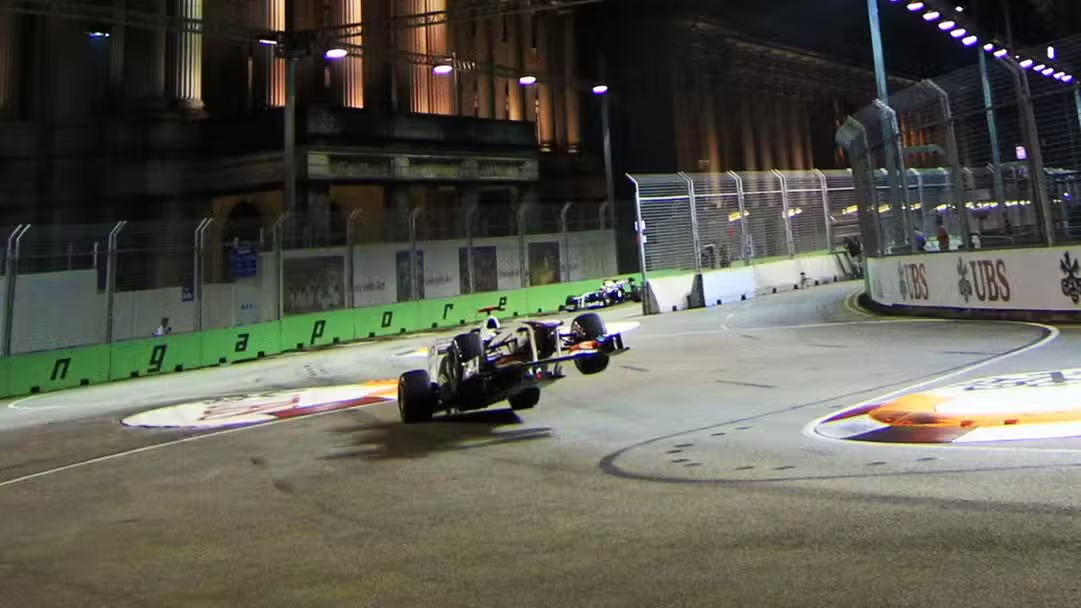
Formula 1 issued an extreme heat alert for the Singapore Grand Prix, scheduled for this weekend, with temperatures expected to reach 31°C. The FIA, the sport’s governing body, activated the Heat Hazard rule, requiring cooling vests or additional ballast in cars. The measure aims to protect drivers’ health on one of the most physically demanding circuits. Race director Rui Marques notified teams on Thursday (2).
The Marina Bay circuit, known for high humidity and a challenging layout, is a grueling test. The rule, introduced after the 2023 Qatar GP where drivers faced dehydration and illness, seeks to minimize risks. Teams must install cooling systems, including pumps and coolant reservoirs.
- Mandatory measure: Cooling vests or 0.5 kg ballast in the cockpit.
- Flexibility: Drivers can opt out of vests but face a weight penalty.
- Extreme conditions: High heat and humidity in Singapore increase physical strain.
Race Week returns! 🙌
— Formula 1 (@F1) September 29, 2025
We're back for the Singapore Grand Prix, and getting ready to race under the stars ✨#F1 #SingaporeGP pic.twitter.com/ViKkVRVB7L
New heat regulations
The Heat Hazard rule was developed after severe incidents in Qatar, where drivers like Esteban Ocon reported vomiting and low blood pressure. The cooling system, first tested by George Russell in Bahrain, proved effective in maintaining comfort and focus.
Some drivers find the vests uncomfortable due to the tight cockpit space.
Team strategies
Teams face a strategic choice: use the cooling vest or add ballast. The extra weight can impact performance on a circuit where every fraction of a second matters.
Engineers are working to integrate cooling systems without compromising aerodynamics. The equipment is mandatory, even for drivers not using vests, adding technical complexity.
Testing and adaptations
George Russell, who tested the vest in Bahrain, praised its ability to maintain mental sharpness despite electrical issues, securing second place.
Other drivers reported challenges with the vest’s fit in the cockpit. The FIA adjusted the rule to allow ballast as a fair alternative.
Tests in 2024 showed the system lowers body temperature by up to 2°C, though adaptation varies among drivers.



Heat history in F1
The Singapore GP has always been a test of endurance due to its tropical climate. In 2023, it recorded some of the season’s highest physical strain rates.
Humidity, often reaching 80%, combined with the twisty layout, demands exceptional fitness.
The Qatar incident prompted the FIA to prioritize preventive measures.
The Heat Hazard rule is seen as a significant safety advancement.
Next steps
The FIA will monitor the rule’s effectiveness in Singapore to assess potential adjustments. The forecast of intense heat on Saturday and Sunday keeps teams on alert.
Post-race analysis will evaluate the rule’s impact on performance.
Circuit context
The Singapore GP, held at night, still faces intense heat due to high humidity. The 62-lap race, with 19 corners, demands high concentration.
Physical preparation and hydration are critical to combat fatigue. The 2025 edition marks Singapore’s 17th time hosting F1, reinforcing its status as a grueling challenge.
Veja Tambem em Internacional

Cúpula de defesa asiática começa com China e dúvidas sobre prioridades dos EUA em destaque

Drone russo atinge edifício na Romênia e fere duas pessoas, país avalia Artigo 4 da Otan

CBS projeta lucro de US$ 15 milhões após acordo com Byron Allen e fim do ‘Late Show’

Diver australiano integra equipe internacional para resgatar vítimas presas em caverna inundada no Laos
Drones atingem 3 petroleiros no Mar Negro, ao largo da costa norte da Turquia, relata agência

Incêndio florestal perto de Varsóvia mobiliza 45 unidades de bombeiros e aeronaves especializadas contra chamas

Temu recebe multa de 200 milhões de euros da União Europeia por venda de brinquedos e carregadores inseguros

Descoberto túnel profundo sob cidade levanta questões sobre construção e propósito antigo

Terremoto de magnitude de 4,7 atinge Puerto Vallarta com epicentro no Oceano Pacífico

Prática de Alibi de Homologação em motos KTM Enduro vira alvo de investigação na Europa

Dubai gerencia fluxo recorde de passageiros no Eid com tecnologia moderna nos aeroportos