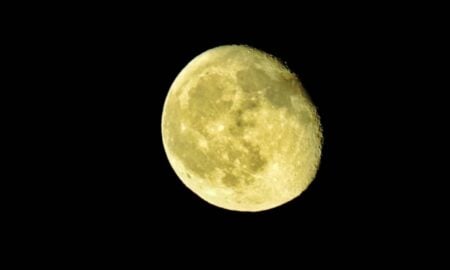
Lunar calendar November 2025: Full Moon 5, Waning 12, New 20 and Waxing 28 exact times


Moon phase calendar for November 2025 starts with the Full Moon on the 5th, at 10:19 am. This marking represents the point of maximum illumination of the natural satellite. The cycle proceeds with regular transitions, encompassing waning, new and waxing throughout the month.
Astronomers calculate these dates based on the lunar orbit in relation to the Sun and Earth. The synodic month maintains an average length of 29.5 days, allowing predictability in observations.
- Full Moon: November 5th at 10:19am
- Winging Moon: November 12th at 2:28 am
- New Moon: November 20th at 3:47am
- Crescent Moon: November 28th at 3:58am
Fully lit home
The Full Moon appears when the satellite is positioned opposite the Sun. The entire visible side receives direct sunlight, creating an intense glow in the night sky.
Observers notice the complete lunar disk without significant shadows. This configuration makes it easier to identify surface formations such as craters and plains.

Transition to waning
After the peak of illumination, the Moon begins to gradually reduce its visible portion. The waning phase begins on the 12th at 2:28 am.
At this stage, only half of the disk initially remains illuminated. The light area progressively decreases until it forms a thin crescent.
New Moon Period
The New Moon occurs on the 20th at 3:47 am. The satellite aligns itself between the Sun and Earth, making the illuminated face invisible from Earth’s perspective.
During the day, amateur astronomers detect subtle outlines against the blue sky. At night, the absence of the moon favors the view of distant celestial objects.
Return to crescent
The Crescent Moon ends its cycle on the 28th at 3:58 am. A thin illuminated slice reappears on the western horizon after sunset.
This portion grows daily until it reaches the crescent moon. The phenomenon marks preparation for the next complete cycle.
Detailed orbital mechanics
The lunar orbit has an inclination of approximately 5 degrees in relation to the ecliptic. This feature prevents eclipses in all full or new phases.
Perigee and apogee vary distances, influencing apparent size. November 2025 records average values without significant supermoons.
Apparent retrograde motion occurs due to Earth’s rotation. The Moon moves 13 degrees per day in the sky relative toto the fixed stars.
Duration of individual phases
Each main phase lasts about 7.38 days on average. Divisions include waxing and waning quarters with smooth transitions.
Minimal variations arise from the elliptical orbit. Transition points maintain minute accuracy in modern calculations.
Observatories use ephemerides for accurate predictions. Free software replicates this data for general use.
Visibility by hemisphere
Times are based on an adjusted universal time zone. Observers adapt local markings according to longitude.
In the southern hemisphere, the Full Moon has an inverted orientation. Craters like Tycho stand out near the terminator.
Atmospheric conditions influence clarity. Cities with low light pollution offer better results.
Tools for observation
70mm refracting telescopes reveal superficial details. 10×50 binoculars show major lunar seas.
Mobile applications indicate position in real time. Star maps complement night session planning.
Lunar photography requires a tripod and controlled exposure. Low ISO preserves contrast in full phases.
Visible lunar formations
Mare Tranquillitatis is located in the northeast portion of the disc. Apollo 11 landed in this region in 1969.
Copernicus Crater displays bright rays at Full Moon. Ejecta system extends for hundreds of kilometers.
Apennine Mountains form a chain close to the terminator. Heights reach 5 kilometers above average level.
Gravitational influence
Ocean tides intensify during high and new phases. Alignment amplifies combined forces of attraction.
Terrestrial effects remain within normal parameters. Oceanographic studies monitor coastal variations.
Artificial satellites adjust orbits considering perturbations. Space missions plan windows based on phases.
Synodic versus sidereal cycle
Synodic period measures 29.53 days between identical New Moons. Sidereal period completes 27.32 days to return to the stars.
Difference results from Earth’s movement around the Sun. Two extra days compensate for annual orbital displacement.
Accurate calculations use modified Kepler equations. Observatories maintain historical databases.
Annual variations
Dates change annually due to the Gregorian calendar. Leap years affect minimum alignment.
November 2025 features default configuration with no rare events. Supermoons occur in adjacent months.
Records maintain continuity since Babylonian observations. Modern telescopes refine millimeter precision.
Activity planning
Photographers schedule sessions in specific phases. Full Moon naturally illuminates nighttime landscapes.
Biological researchers study animal behavior. Some species synchronize reproduction with cycles.
Astronomical tourism organizes events on key dates. Hotels offer packages with equipment included.
Monitoring technology
Satellites like the Lunar Reconnaissance Orbiter map the surface. Resolution reaches details of 1 meter.
Ground stations track position in real time. Global networks share data openly.
Algorithms predict phases for future decades. Accuracy maintains error of less than 1 minute.
Education and outreach
Schools include lunar calendars in curricula. Practical activities involve direct observation.
Museums display samples returned by Apollo missions. Interactive exhibits explain orbital mechanics.
Weekly podcasts update celestial events. Online communities exchange images and experiences.
Night Sky Preservation
Light pollution reduces visibility in urban areas. Initiatives promote smart lighting.
Certified dark parks attract observers. Regulations limit unnecessary artificial light.
Campaigns raise awareness about astronomical importance. Preservation benefits research and leisure.
Historical cultural connection
Ancient civilizations based calendars on lunar phases. Egyptian records date back to 3000 BC
Traditional festivals maintain lunar synchrony. Harvests are guided by seasonal markings.
Mythologies associate personalities with phases. Narratives vary across global cultures.
Current scientific research
Artemis missions plan human return. Lunar phases guide launch schedules.
Geological studies analyze collected regolith. Composition reveals early solar history.
Experiments test cultivation in lunar soil. Results inform future colonies.
Affordable digital tools
Free apps show current stage instantly. Notifications warn of imminent transitions.
Augmented realitysuperimposes information on the sky. Users point devices for identification.
Collaborative platforms aggregate global observations. Image banks grow daily.
Long-term defaults
Metonic cycles repeat configurations every 19 years. November 2044 will replicate 2025 approximately.
Nodal precession moves the line of nodes slowly. Eclipses migrate over centuries.
Computer models simulate millions of years. Paleoclimatology uses lunar data.
No equipment observation
Projection technique uses a box with a hole. Inverted image forms on inner surface.
Old method allows measurement of angular diameter. Historical comparisons validate atmospheric expansions.
Projected shadows indicate the height of mountains. Simple experiments replicate Galilean discoveries.
Calendar integration
Lunar months influence religious systems. Ramadan begins with visible crescent.
Lunisolar calendars add intercalary months. Balance keeps seasons aligned.
Civil systems adopt solar standards exclusively. Lunar references remain in traditions.
Optical Phenomenaassociated cos
Lunar halo is formed by atmospheric ice crystals. 22 degree radius surrounds bright disk.
Optical illusions increase in size near the horizon. Psychological effect explains altered perception.
Circumhorizontal arcs occur under specific conditions. Colors separate by selective refraction.
Modern Accurate Measurements
Laser interferometry measures distances to the millimeter. Apollo reflectors allow continuous calculations.
Removal speed registers 3.8 cm per year. Orbital expansion results from momentum transfers.
Data contributes to tests of general relativity. Pericenter precession confirms Einsteinian predictions.