
NASA and ATLAS prepare for unprecedented 2025 observations of newly discovered comet 3I Atlas

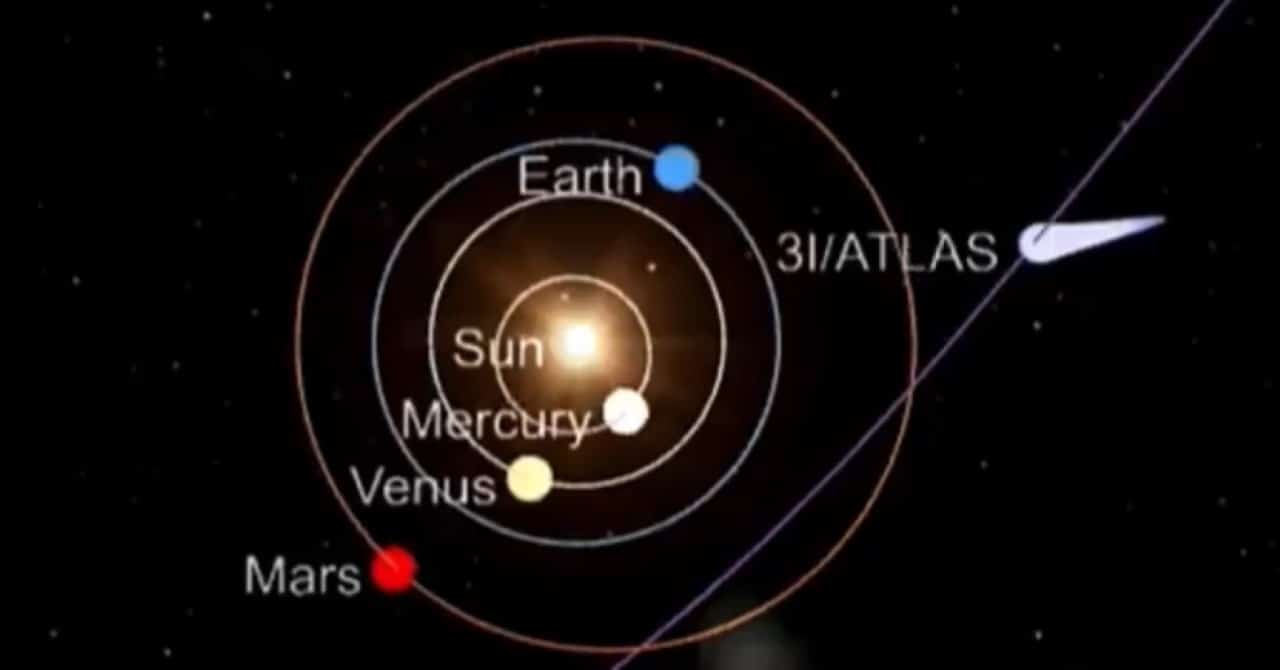
Astronomers are buzzing with anticipation following the recent discovery of comet 3I Atlas by the Asteroid Terrestrial-impact Last Alert System (ATLAS). This new celestial object, identified through the dedicated Hawaii-based survey, has quickly garnered significant attention from the scientific community due to its unique trajectory and potential for groundbreaking research.
NASA, in collaboration with international partners, is already finalizing ambitious plans for an extensive observational campaign throughout 2025. This initiative aims to leverage a suite of powerful instruments, both space-based and terrestrial, to gather unprecedented data on the comet’s composition, origin, and dynamic behavior as it approaches the inner solar system.
The study of comet 3I Atlas promises to offer invaluable insights into the early conditions of our solar system and the processes that shaped its evolution. Scientists hope to unlock secrets about the primordial material from which planets formed, potentially revealing new details about the distribution of water and organic molecules in the cosmos.
A groundbreaking celestial visitor
The initial detection of comet 3I Atlas by the ATLAS network provided crucial early warning, allowing researchers ample time to prepare for its detailed examination. Its designation, while not indicating an interstellar origin like some previous “I” comets, signifies a significant discovery within the ATLAS catalog for 2025, marking it as a high-priority target.
Early photometric data suggests 3I Atlas exhibits characteristics that distinguish it from many previously observed comets, hinting at a potentially pristine composition. This distinctiveness makes it an exceptionally valuable subject for understanding the diverse population of icy bodies residing in the outer reaches of our solar system.
Unveiling the comet’s secrets in 2025
NASA’s observational strategy for 2025 involves a multi-pronged approach, integrating data from various telescopes to achieve a comprehensive understanding of 3I Atlas. The James Webb Space Telescope (JWST) is slated to provide high-resolution infrared spectroscopy, crucial for identifying molecular species and volatile compounds within the comet’s coma.
Complementing JWST’s capabilities, the Hubble Space Telescope will contribute high-resolution optical and ultraviolet imaging, enabling detailed studies of the comet’s nucleus and the morphology of its dust and gas tails. Ground-based observatories, including those in Hawaii and Chile, will offer continuous monitoring of its brightness, activity, and trajectory.
Scientists anticipate collecting data on the comet’s rotation rate, active regions, and the potential presence of complex organic molecules. These observations are critical for building a complete picture of its physical characteristics and how it interacts with solar radiation and the solar wind.
The ATLAS system: A vigilant eye on space
The Asteroid Terrestrial-impact Last Alert System (ATLAS) plays a critical role in planetary defense and astronomical discovery, routinely scanning the night sky for moving objects. Funded by NASA, the system comprises multiple telescopes designed to detect potentially hazardous asteroids and comets days to weeks before any potential impact.
Beyond its primary mission of impact warning, ATLAS has proven to be an incredibly effective tool for discovering new comets and near-Earth objects. Its wide field of view and automated scanning capabilities ensure that few celestial wanderers go unnoticed, providing astronomers with invaluable lead time for follow-up observations.
Scientific objectives and potential revelations
The scientific community harbors high expectations for the data to be collected from comet 3I Atlas. Researchers aim to determine if the comet harbors ancient material from the solar system’s formation, preserved largely unchanged for billions of years. This includes analyzing isotopic ratios of elements like hydrogen and nitrogen, which can indicate the comet’s birthplace and evolutionary path. Furthermore, the presence and abundance of specific organic molecules could offer clues about the delivery of prebiotic ingredients to early Earth, advancing our understanding of the origins of life. The comet’s behavior as it outgasses and interacts with the solar environment will also be closely studied to refine models of cometary activity.
Public interest and viewing opportunities
While specific details are still being finalized, NASA and other astronomical organizations plan to share updates regarding comet 3I Atlas’s visibility. Depending on its trajectory and brightness, there may be opportunities for amateur astronomers and the general public to observe the comet through binoculars or small telescopes during certain periods in 2025, fostering public engagement with space science.
Broader implications for space exploration
The study of comet 3I Atlas extends beyond mere curiosity, contributing significantly to broader goals in space exploration. Understanding cometary dynamics and composition is vital for future missions that might involve sampling or even diverting such objects.
Comparisons with previously studied comets, including those visited by spacecraft like Rosetta, will allow scientists to place 3I Atlas within a larger context of cometary diversity. This comparative analysis helps refine theories on the formation and evolution of both our solar system and exoplanetary systems.
Furthermore, insights gained from 3I Atlas will feed into models for planetary defense, enhancing our ability to track and characterize potentially hazardous objects. Every new comet discovery refines our understanding of the cosmic neighborhood and the potential threats or resources it holds.
The meticulous observations planned for 2025 underscore the ongoing commitment to unraveling the mysteries of our universe, with comet 3I Atlas poised to become a focal point of astronomical research for the coming year.





