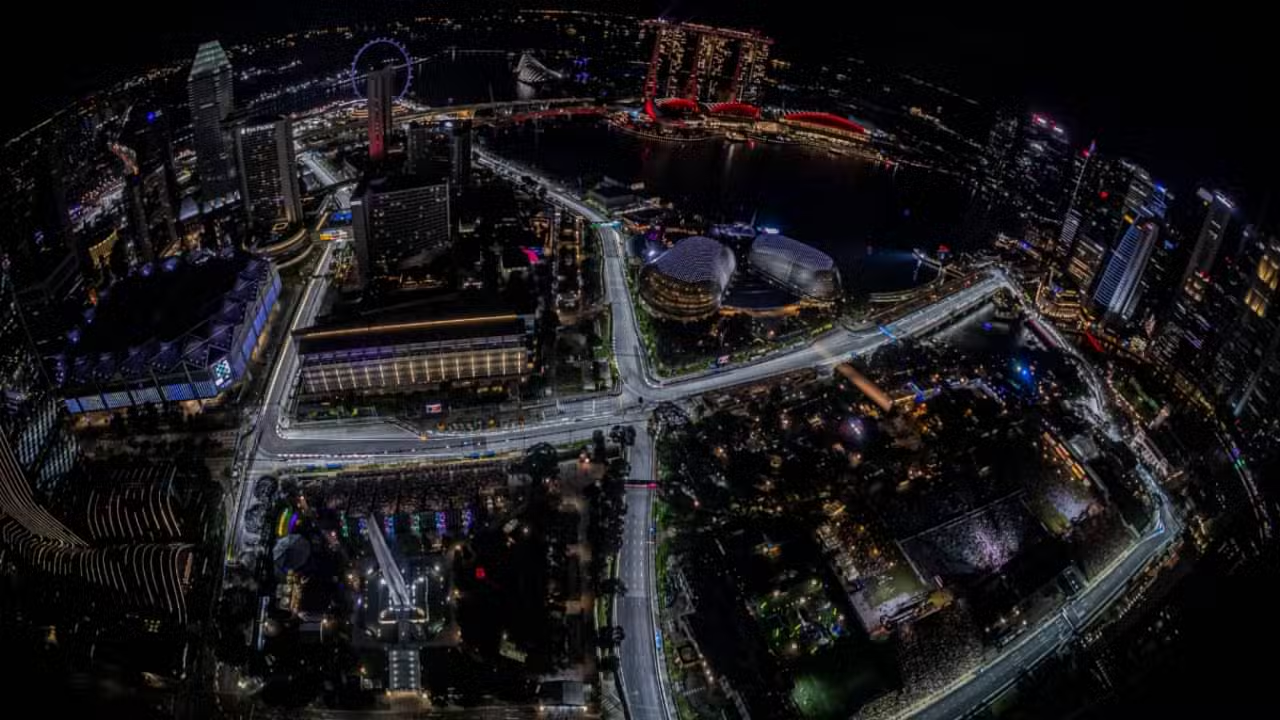
The FIFA 2025 Copa Árabe final, played at Estádio of Lusail, at Catar, registered a decisive moment in the 48th minute of the second half. Ali Olwan, Jordânia striker, headed firmly after an assist from Mohannad Abutaha and equalized the score at 1-1 against Marrocos. The game, which began with an early goal from Oussama Tannane in the 4th minute for the Moroccans, gained new balance with the Jordanian reaction at the beginning of the second half.
The confrontation continues in the 53rd minute of the second half, with both teams looking for the advantage to win the title. Jordânia demonstrates resilience by overcoming the initial disadvantage, while Marrocos maintains pressure in search of the second goal. Estádio of Lusail, with a capacity for around 89 thousand fans, hosts the match at 4pm local time at
Morocco opened the scoring early, exploiting speed in attack. The team managed by Tarik Sektioui reached the final after a convincing 3-0 victory over Emirados Árabes Unidos in the semi-finals. Já to Jordânia, led by Jamal Sellami, advanced with a 1-0 victory over Arábia Saudita, showing defensive solidity throughout the tournament.
Main moves of the confrontation
The match started with intensity on both sides. Marrocos dominated the initial actions and converted after just 4 minutes, with Oussama Tannane receiving the ball from Amin Zahzouh and finishing with precision. Jordânia responded with isolated attempts, but found it difficult to break through the opponent’s block in the first half.
- 4′: Oussama Tannane scores for Marrocos, assisted by Amin Zahzouh, making it 1-0.
- 12′: Karim El Berkaoui shoots hard, but the Jordanian goalkeeper saves; corner followed for Marrocos.
- 21′: Mohannad Abutaha tries for Jordânia, demanding intervention from the Moroccan goalkeeper.
- 48′: Ali Olwan heads in a cross from Mohannad Abutaha and equalizes for Jordânia at 1-1.
- 51′: Marwane Saadane takes a risk from outside the area, seeking to regain the advantage for Marrocos.
- 53′: Amer Jamous commits a foul, interrupting the Moroccan counterattack; game remains disputed.
Stay up to date with all the latest football matches with live, minute-by-minute coverage from the Mix Vale news portal! Acompanhe in real time the main plays, goals and decisive moments of the most important games. Para doesn’t miss any updates, subscribe to Mix Vale notifications for free and receive news instantly, directly on your device. Não miss any details of your favorite team!www.mixvale.com.
The trajectory of the selections until the decision
Morocco reached the final undefeated in the knockout stage, demonstrating tactical organization and efficiency in transitions. The team overcame opponents with controlled ball possession and quick counterattacks, characteristics marked by the presence of players like Oussama Tannane and Mohamed Rabie Hrimat. Nas semi-finals, the 3-0 triumph highlighted collective superiority.
Jordânia, in turn, surprised with a solid campaign, based on compact defense and taking advantage of opportunities. The team eliminated Arábia Saudita with a single goal, showing discipline to neutralize rival attacks. Jogadores like Ali Olwan and Mohannad Abutaha emerged as offensive references, contributing to the team’s first final in the competition.
Both teams use balanced formations, with Marrocos in 4-2-3-1 and Jordânia in 3-4-2-1. Substitutions at half-time, such as the addition of Odeh Fakhoury and Adham Alquraishi to Jordânia, changed the dynamism of the midfield.
Tactical changes in the second half
The start of the complementary stage brought immediate changes to Jordânia, with two substitutions before the whistle. Odeh Fakhoury replaced Mohammad Abu Zraiq, and Adham Alquraishi replaced Issam Smeeri, reinforcing the defensive and midfield sector. Essas changes coincided with a greater volume of Jordanian play, culminating in the equalizer.
Morocco responded with high pressure, creating corners and mid-range shots. Achraf El Mahdioui, who entered the first half in place of Karim El Berkaoui, added quality to the distribution. Balance prevails, with tactical fouls interrupting the rhythm at key moments.
The refereeing, led by Glenn Nyberg, maintains control with moderate cards. The game flows with few prolonged interruptions, allowing continuous development of actions.
Individual match highlights
There Olwan consolidates itself as the protagonist of Jordânia with the equalizing goal, demonstrating opportunism in the area. Sua constant movement challenges the Moroccan defense, made up of names like Marwane Saadane and Soufiane Bouftini. Do on the opposite side, Oussama Tannane leads the attacks, with vision of the game and precision in passing.
Mohannad Abutaha contributed twice, with decisive assistance and individual tries. Goalkeeper Yazeed Abulaila, from Jordânia, makes important saves, while the Moroccan archer prevents rival advances. Amin Zahzouh, assistant on the first goal, maintains influence in midfield.
The match reflects the high technical level of the competition, with balanced duels in all sectors. Possession of the ball alternates, with no clear dominance of one team.
Tournament context in Estádio of Lusail
The Estádio of The competition brings together 16 teams, with a group stage and knockout stages defining the champion.
Morocco is looking for its second title, after winning it in 2012. Jordânia is aiming for its first cup, consolidating its recent rise in regional football. The tournament serves as preparation for future commitments, including qualifiers for the Copa of the Mundo.
The public present carefully follows each move, reflecting support for both nations. The atmosphere remains intense, with constant encouragement from the fans.
Recent actions in the second half
In the 51st minute, Marwane Saadane risked a well-placed shot, passing close to the Jordanian goal. The answer came with pressure from Jordânia, forcing tactical fouls. Amer Jamous stopped advancing after 53 minutes, receiving a verbal warning.
Corners alternate, with Mahmoud Mardi taking the penalty for Jordânia and Oussama Tannane for Marrocos. Defesas save imminent goals, keeping the tie. The high pace suggests the possibility of more emotions in the final minutes.
Teams adjust marking, prioritizing defensive security while looking for spaces. The confrontation remains open, with the potential for a definition in stoppage time.
Formations and starting lineups
Morocco lined up in 4-2-3-1, with Y. Benabid in goal, defensive line of H. Boulacsout, S. Bouftini, M. In the middle, A. Bach and M. R. Hrimat; attackers K. El Berkaoui (replaced), O. Tannane, A. Zouhzouh and W. Azaro.
Jordan opted for 3-4-2-1, with Y. defenders A. Nasib, S. A. Rosan and H. A. Dahab. Meio-field with I. Smeeri (replaced), N. M. Al-Rashdan, A. Jamous and M. A. advanced M. A. Zrayq (replaced), M. Al-Mardi and A. Olwan.
Tactical choices influence development, with Marrocos prioritizing possession and Jordânia exploiting counterattacks. Substituições gradually alter balance.
Perspective of the current balance
At 53 minutes, the draw reflects partial justice due to the volume of play. Marrocos started out dominant, but Jordânia grew in the final stage. Accumulated Faltas indicate increasing tension, with the referee controlling without excess.
Chances created were equal, with decisive saves from both goalkeepers. The winner will depend on efficiency in the remaining finishes. The final keeps expectations high until the final whistle.