Nasa and 3I Atlas reveal new comet’s 2025 trajectory, offering unprecedented solar system insights

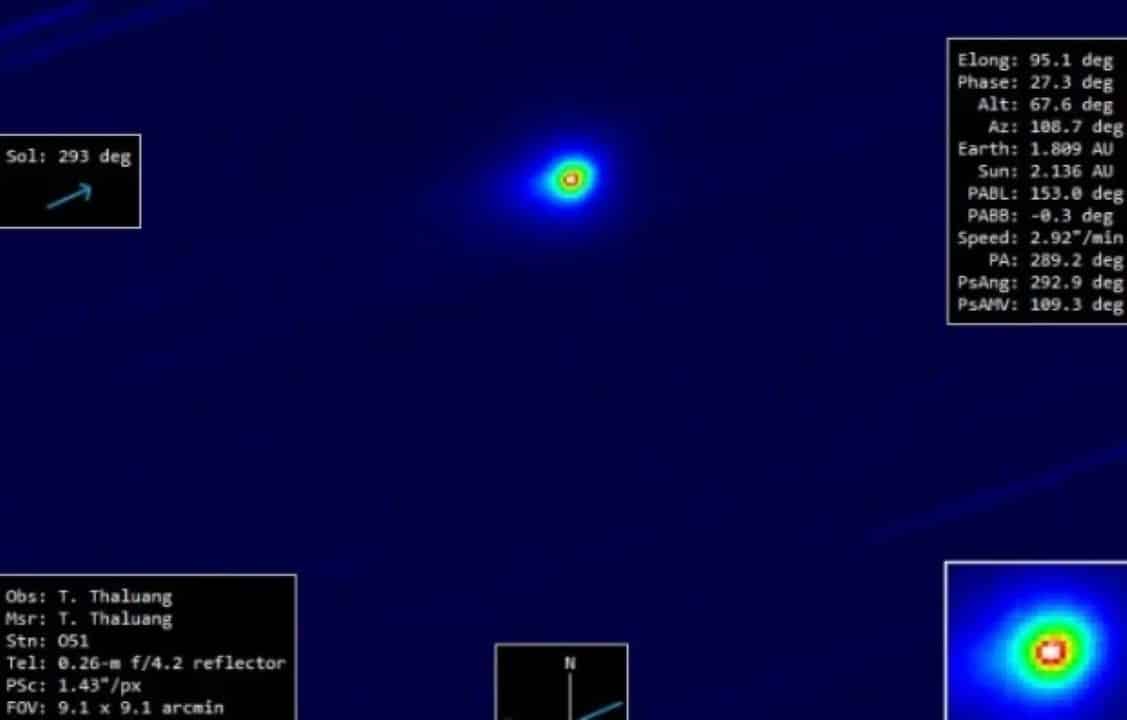
A newly identified celestial body, designated Comet 3I Atlas, has captured the attention of astronomers worldwide following its detection by an advanced iteration of the ATLAS (Asteroid Terrestrial-impact Last Alert System) survey. The discovery, announced in early 2025, marks a significant moment for planetary science, promising fresh data on the solar system’s ancient history.
Initial observations confirm the comet’s unique trajectory and composition, suggesting it may originate from beyond the classical Kuiper Belt. This distant origin makes 3I Atlas a prime candidate for studying pristine materials from the solar system’s formative stages, largely untouched by solar radiation and other environmental factors.
Nasa has promptly initiated a comprehensive observation campaign, mobilizing ground-based telescopes and coordinating with international partners to monitor the comet’s approach. This collaborative effort aims to gather as much data as possible before 3I Atlas reaches its closest point to Earth later in the year, providing a critical window for scientific exploration.
3I Atlas survey identifies new deep-space comet near earth in 2025
The updated ATLAS survey, comprising a network of robotic telescopes, made the pivotal detection during its routine scan for near-Earth objects. This latest generation of the system boasts enhanced sensitivity and wider field-of-view capabilities, proving instrumental in identifying faint, fast-moving objects from the outer solar system.
Astronomers first flagged the comet in late January 2025, noting its unusually elongated orbit and distinct spectral signature. Subsequent follow-up observations from multiple observatories confirmed its cometary nature and designated it 3I Atlas, signifying its interstellar origin and detection source.
Nasa initiates rapid observation protocols for unique celestial visitor
Following the confirmation, Nasa swiftly activated its inter-agency Comet Observation Program, diverting resources to ensure continuous monitoring. This rapid response underscores the scientific community’s excitement about 3I Atlas, which represents a rare opportunity to study a potentially pristine object from the Oort Cloud or even beyond.
Specialized teams are now analyzing preliminary photometric and spectroscopic data to ascertain the comet’s size, rotation, and initial composition. These early analyses are crucial for planning more detailed observations and potential future missions, should the comet’s trajectory and characteristics warrant further investigation.
The agency is also coordinating with space-based assets, including the Hubble Space Telescope and the James Webb Space Telescope, to capture high-resolution images and gather detailed spectral information. These advanced instruments will provide unparalleled insights into the comet’s coma and tail development as it approaches the inner solar system.
Preliminary data reveals comet’s extraordinary trajectory and composition
Early spectroscopic analysis of Comet 3I Atlas indicates a high abundance of volatile compounds, including water ice, carbon monoxide, and methane, consistent with objects formed in the coldest, outermost regions of protoplanetary disks. Its trajectory suggests a highly eccentric orbit, hinting at a potential gravitational perturbation event in its distant past, possibly from a rogue star or another massive object in the galaxy. This unique path will bring it relatively close to Earth in mid-2025, offering an invaluable, albeit brief, opportunity for detailed study before it recedes back into the vast emptiness of deep space for millennia.
Scientific community mobilizes for unparalleled research opportunities
The discovery has ignited significant interest across the global scientific community. Researchers from various disciplines, including astrobiology, planetary geology, and astrophysics, are pooling their expertise to develop comprehensive study plans. The comet’s composition could offer clues about the chemical building blocks available during the solar system’s genesis.
International observatories in Chile, Hawaii, and South Africa are dedicating significant telescope time to track 3I Atlas. This coordinated global effort ensures continuous data collection, mitigating challenges posed by weather conditions or geographical limitations. The sheer volume and diversity of data expected will fuel scientific papers for years.
Understanding the comet’s volatile content will help scientists refine models of planet formation and the delivery of water and organic molecules to early Earth. Such insights are fundamental to the ongoing search for life beyond our planet. The data could also reveal whether interstellar comets contribute to the seeding of planetary systems.
Furthermore, its unusual trajectory provides a natural laboratory for studying orbital mechanics under extreme conditions. Scientists are particularly keen to observe how its nucleus reacts to increasing solar radiation, looking for signs of outgassing and sublimation that can reveal its internal structure and density.
Key objectives for studying comet 3I Atlas in the coming months
Nasa and its partners have outlined several primary objectives for the intensive study of Comet 3I Atlas over the next few months as it nears its perihelion. These objectives are designed to maximize the scientific return from this rare astronomical event:
- Characterize the comet’s nucleus: Determine its size, shape, rotation rate, and surface features using high-resolution imaging.
- Analyze chemical composition: Identify the types and proportions of volatile and refractory materials present in its coma and tail.
- Map its trajectory with precision: Refine orbital parameters to understand its origin and future path, including any potential gravitational interactions.
- Study outgassing processes: Observe how solar heating affects the release of gases and dust from the nucleus, providing insights into its interior.
Public viewing prospects and global astronomical collaboration details
For the general public, Comet 3I Atlas is anticipated to be visible with small telescopes and possibly even binoculars during its closest approach in late summer 2025, depending on its brightness and the prevailing sky conditions. Astronomers are preparing detailed viewing guides and public outreach events to engage enthusiasts.
Beyond individual observations, the international astronomical community is fostering unprecedented collaboration. Data sharing agreements and joint research initiatives are being established, ensuring that findings from various instruments and regions contribute to a unified understanding of 3I Atlas.
Future missions and long-term implications for solar system understanding
While no dedicated mission to 3I Atlas has been announced for 2025, the extensive data gathered will inform future mission concepts for comet rendezvous or sample return. The insights gained from this observation period could pave the way for robotic probes designed to study similar objects in greater detail.
The long-term implications of studying 3I Atlas extend to understanding the origins of water on Earth and the potential for life elsewhere. Each comet offers a unique time capsule, and 3I Atlas, with its deep-space origins, promises to unlock secrets about the early universe and our cosmic neighborhood.