
President Trump: Second Venezuela attack likely unnecessary after Maduro’s 2025 capture

The White House confirmed this past Saturday, in early 2025, that a planned second military strike on Venezuela would likely be unnecessary following the successful capture of Venezuelan President Nicolás Maduro. President Donald Trump, speaking from Palm Beach, Florida, praised the precision and effectiveness of an overnight operation carried out by elite American forces that resulted in Maduro and his spouse being removed from their residence. This development marks a significant shift in the strategic outlook, as the administration had previously anticipated the need for follow-up actions to fully achieve its objectives within the tumultuous South American nation. The swift conclusion of the initial phase has prompted a reassessment of ongoing military planning efforts.
The initial action, which President Trump referred to as the “first wave,” was deemed overwhelmingly successful. Reports indicate that the specialized units executed the mission without reported casualties or loss of equipment on the U.S. side, a point of emphasis for the President during his address to the press. The operation’s efficiency seemingly bypassed the necessity for a more extensive engagement.
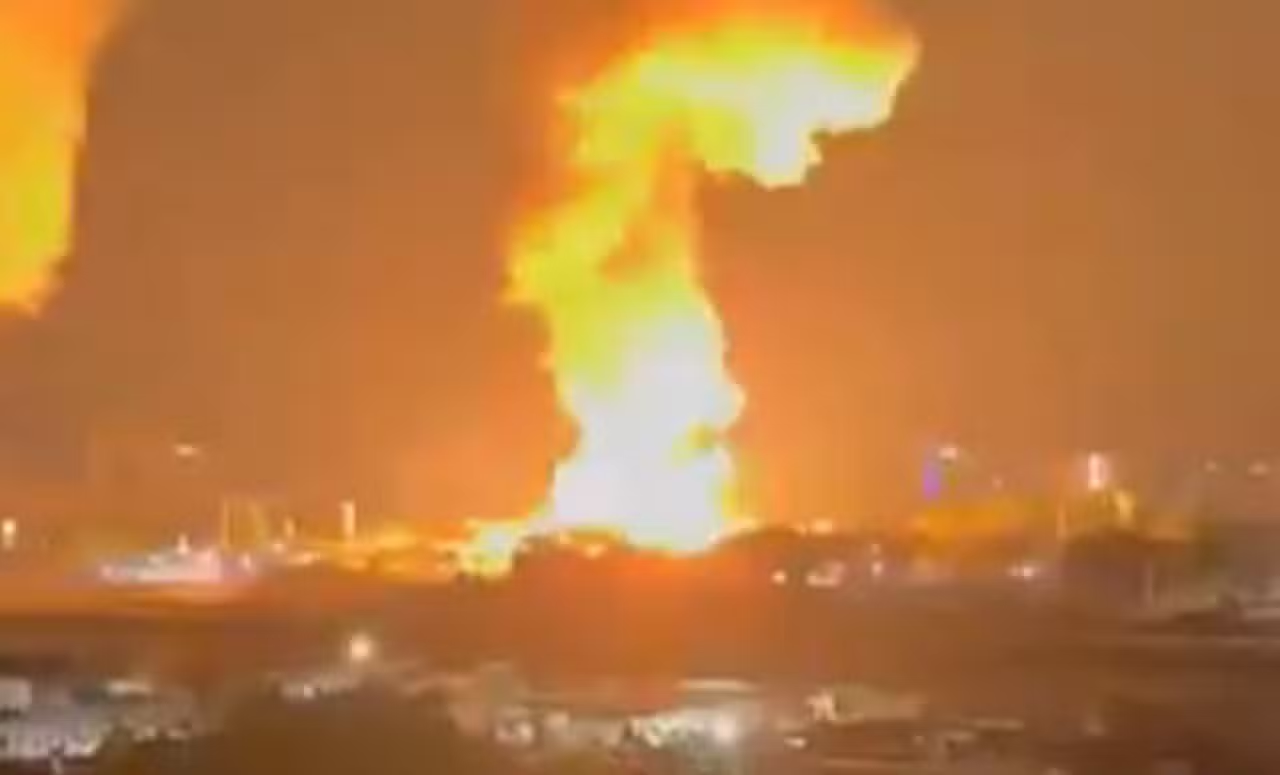
The specific objectives of the operation included:
– Targeting the Venezuelan leader and his wife.
– Apprehending individuals facing international indictments.
– Ensuring the secure removal of the targets from Venezuelan territory.
Operation details and initial success
American elite forces conducted the pre-dawn raid with remarkable speed and accuracy, entering Maduro’s private quarters and securing him and his wife without prolonged engagement. The operation underscored the U.S. military’s capacity for targeted, high-stakes missions, avoiding broader conflict while achieving specific objectives. This level of precision was highlighted by President Trump as a testament to the preparation and execution involved.
Reports from the administration indicated no American troops or equipment were lost during the intricate operation, a factor that Trump cited as a key indicator of its success. This achievement stands in contrast to the complexities often associated with such sensitive international interventions, reflecting a careful strategic approach to minimize direct military footprint while maximizing impact.
Preparedness for a larger military response
President Trump reiterated the U.S. military’s robust state of readiness for any eventuality, stating that the nation was fully prepared to launch a “second wave” of attacks if circumstances had demanded it. This contingency planning included preparations for an even more significant deployment of assets and personnel, designed to secure broader strategic goals in Venezuela.
Despite this extensive preparation, the President articulated a shift in outlook, confirming that such a follow-up operation would “probably not be necessary.” The decisive outcome of the initial action meant that the prior assumption of needing a subsequent, larger engagement had been largely negated by the swift and effective execution of the first phase.
Maduro’s capture and international implications
Nicolás Maduro’s apprehension represents a profound geopolitical shift, potentially reshaping the political landscape of Venezuela and its standing on the global stage. For years, Maduro has been the subject of numerous international allegations, including charges related to drug trafficking, which provided a significant backdrop to the U.S. actions. His removal could usher in a period of considerable uncertainty or, conversely, open pathways for political transition that international bodies and regional powers have long sought. The implications extend to regional alliances and the dynamics of power within Latin America, where various nations have held differing stances on the Venezuelan crisis.
Planning for potential subsequent actions
Before the successful apprehension of Maduro, U.S. military planners had advanced several scenarios for follow-up operations within Venezuela. These plans accounted for various contingencies, including potential resistance or the need to secure critical infrastructure following the initial strike.
However, the rapid and precise conclusion of the “first wave” has led to a significant revision of these strategic considerations. The U.S. government now believes these subsequent military actions will likely not be required, given the successful achievement of the primary objective. This reassessment reflects an adaptable and responsive military strategy.
This strategic recalibration underscores the administration’s preference for minimal engagement when core objectives are met. The focus now shifts from military execution to managing the aftermath and supporting potential transitions within Venezuela, without the need for further direct intervention.
Caracas reports power outages
Following the operation that led to Maduro’s capture, reports emerged from Caracas indicating significant power outages across parts of the city. President Trump confirmed these reports, noting that the lights had been cut in the Venezuelan capital shortly after the high-profile apprehension of the former leader. The exact cause and extent of these outages remain under assessment.
Long-standing drug trafficking allegations
The accusations of drug trafficking against Nicolás Maduro have a long and documented history, with U.S. authorities having pursued these charges for years. These indictments painted Maduro as a key figure in a transnational narco-terrorism network, deeply implicating his regime in illicit activities that undermined regional stability.
These severe allegations formed a critical component of the U.S. justification for taking decisive action, providing a legal and moral framework for targeting the Venezuelan leadership. The U.S. Department of Justice had previously issued indictments, highlighting the persistent nature of these claims.
International efforts to address drug trafficking in the region have frequently cited Venezuela as a problematic area under Maduro’s rule. His capture is anticipated to disrupt these networks significantly, potentially impacting global drug routes and operations.
The culmination of these long-standing accusations in Maduro’s capture could lead to further investigations and expose the full extent of the alleged criminal enterprise, altering the dynamics of drug enforcement in the Western Hemisphere.
Regional stability and diplomatic reactions
Maduro’s capture, executed as a precise military operation, is poised to trigger a cascade of diplomatic reactions across the Americas and globally. While some nations are expected to welcome the development as a step towards restoring democracy and addressing criminality, others may express concerns regarding sovereignty and the precedent of military intervention.
The stability of the broader Latin American region remains a significant consideration, with U.S. officials closely monitoring potential fallout or shifts in power dynamics among neighboring countries. The long-term implications for regional cooperation and the future of Venezuelan governance are now at the forefront of international discussions.
Veja Tambem em Últimas Notícias

Government expenditure on CFMEU administrator security reaches $3.8m, Minister Watt also protected

Governo federal reforça programa de transferência de renda com novas diretrizes para famílias
NASA desvenda segredos do cometa interestelar 3I/Atlas, fascinando a comunidade científica
Myanmar president’s india visit bolsters diplomatic ties amid isolation challenges
Deadly Russian missile and drone attacks hit Kyiv and Dnipro, claiming at least 10 lives
Unearthing pirate legends: Nassau harbor shipwrecks reveal musket balls and burnt hulls
Novo ciclo do Bolsa Família em 2026 detalha regras e benefícios complementares aos cidadãos
ニューメキシコ州国有林でロスアラモス研究所職員の遺体確認、拳銃も発見され捜査進む

NASA aprofunda estudos sobre o Cometa Interestelar 3I/Atlas e sua trajetória singular
Beijing intensifies scrutiny of phantom kitchens, tackling fierce food delivery platform competition
Pressure from Trump leads Israel to pause potential Beirut attack, aiding Iran diplomacy