
What is the phase of the Moon today (04) and the lunar calendar for January with the peak of the flood on the fourth


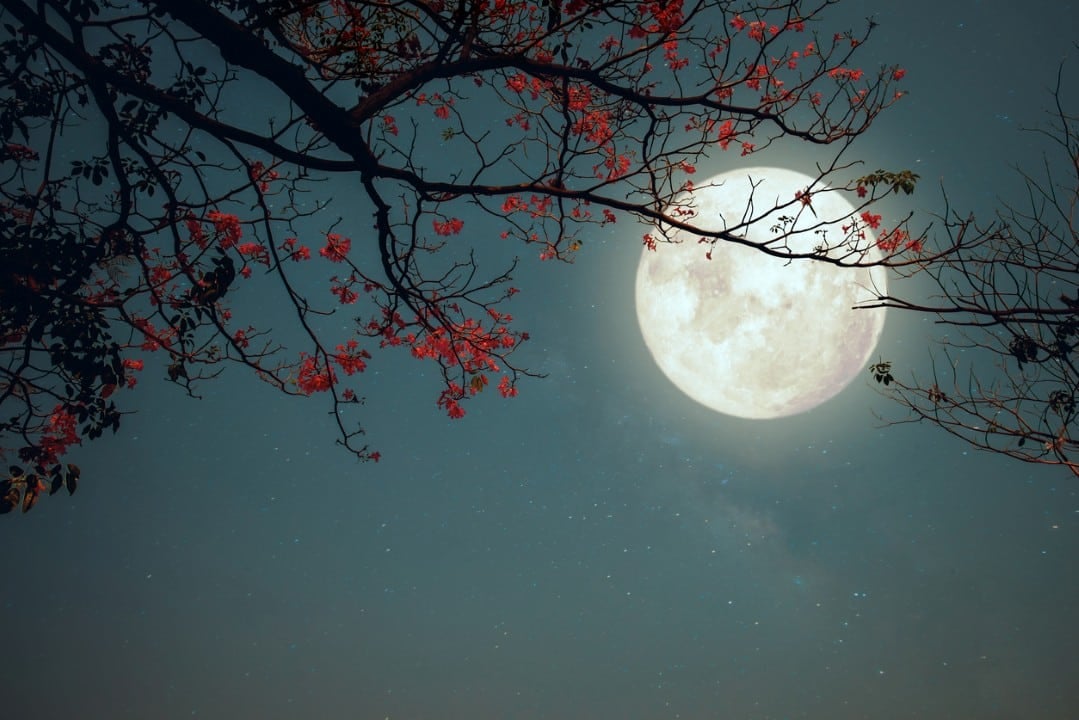
The sky this Sunday, January 4, 2026, presents one of the most awaited moments by observers and astronomy enthusiasts with the transition to the full phase. The natural satellite of Terra reaches its maximum brightness on this date, illuminating the night period intensely and allowing the visualization of details of the lunar surface with the naked eye in areas with little cloud cover. Este phenomenon marks the first major astronomical event of the year, influencing tides and biological behavior in different regions of the planet.
The current phase is characterized by the opposition between Sol and Lua, which means that the side facing our planet receives total illumination. Especialistas point out that visibility will be privileged throughout the night, especially in places away from the light pollution of large cities. Além From a visual aspect, the January lunar calendar follows a rigorous sequence of transformations that help in planning agricultural and nautical activities around the globe.
Visible transformations on the lunar disk during the month
Astronomical observation at the beginning of 2026 reveals that Lua Cheia this January 4th has specific orbital positioning characteristics. The satellite appears on the eastern horizon shortly after sunset and remains visible until dawn the next day, crossing the local meridian at midnight. Este perfect alignment ensures that 100% of the lunar disk is reflecting sunlight to ground-based observers.
Technical data collected by observatories indicate that the distance between Terra and its satellite directly influences the apparent size of Lua in the sky. Durante this period, the orbit remains at a stability that favors high exposure photography to capture lunar craters and maria. Local weather conditions are the only factor that can prevent the full appreciation of this cycle, which renews itself approximately every 29.5 days.
Main dates and changes in the lunar calendar for January
The January 2026 lunar cycle presents four fundamental moments for those who systematically follow changes in the night sky. Cada transition occurs at specific times, respecting the celestial mechanics that govern the Solar system and the gravitational interaction between the bodies.
- Lua Cheia takes place exactly this Sunday, January 4th, with full illumination of the disc.
- Quarto Minguante is scheduled for January 10th, when only half of the satellite will be visible.
- Lua Nova, a moment of invisibility in the night sky, will take place on January 18, 2026.
- Quarto Crescente closes the main cycle of the month on January 26th, preparing the return of luminosity.
These dates are crucial for researchers who use natural light to study nocturnal fauna. The transition between the waning and new phases is especially important for astronomers seeking to observe deep-sky objects, such as galaxies and nebulae, without the interference of light reflected by Lua.
Impacts of full lighting on Earth observation
The intensity of the light reflected by Lua Cheia this January 4th significantly changes the perception of the nighttime environment in rural and urban areas. With the satellite at its peak, natural lighting is capable of casting clear shadows on the ground, facilitating movement in places without electrical infrastructure. Este brightness also masks stars of lower magnitude, making constellations less obvious to casual observers.
Researchers from meteorological institutes emphasize that the presence of Lua Cheia coincides with variations in tides, known as spring tides. Durante this alignment, the gravitational forces of Lua and Sol add up, resulting in more pronounced rises and falls in sea level. Marinheiros and fishermen should be aware of these flow changes, which are more intense on lunar peak days like today.
Orbital cycles and the precision of celestial mechanics
The translational movement of Lua around Terra is not a perfect circle, which generates constant variations in its speed and proximity. Neste beginning of January, the satellite travels through a section of its orbit that maintains a balanced view, without the effects of an extreme supermoon or micromoon. The regularity of these movements allows astronomical calendars to be calculated years in advance and to the nearest minute.
Understanding the lunar phases goes beyond aesthetic curiosity and meets fundamental needs of different sectors of modern society. Da navigation to the regulation of biological systems in marine ecosystems, the position of the Lua in the sky is a reliable indicator of weather and natural phenomena. Today’s Lua Cheia serves as a reminder of the ongoing connection between Terra and its immediate space neighbors in the vast solar system.
Constant monitoring of satellite visibility
Astrophysics experts recommend that those interested in following the lunar calendar use real-time monitoring applications. Essas tools indicate the exact moment when Lua rises and sets in each geographic coordinate, automatically adjusting to the local time zone. Para who is in Brasil or anywhere in the world, observation today is favored by the satellite’s position in the summer or winter sky, depending on the hemisphere.
The historical record of lunar phases demonstrates that the predictability of these events is one of the bases for the organization of human civilizations. Desde From ancient calendars to modern GPS systems, the lunar reference remains a pillar of guidance. Acompanhar the full phase of January 4th is to participate in an ancient tradition of observing the cosmos that continues to evolve with technology.
Importance of the phenomenon for contemporary science
The full phase is not just a visual spectacle, but an opportunity to carry out experiments that depend on high nighttime luminosity. Sensores of satellites that monitor the Earth’s surface use the lunar reflection to calibrate night vision and fire monitoring equipment. The constant light provided at this time of the month allows for more efficient data collection in remote regions of the planet.
Furthermore, the interaction between the Earth’s atmosphere and the light reflected by Lua is studied to better understand the chemical composition of the upper air layers. Durante to Lua Cheia, the light passes through the atmosphere more densely, allowing spectrographic analyzes that reveal the presence of aerosols and polluting particles. Portanto, today’s sky offers a natural laboratory for scientists from different areas around the world.



