
Mike Fincke and Zena Cardman perform historic EVA to install kits on ISS solar panels

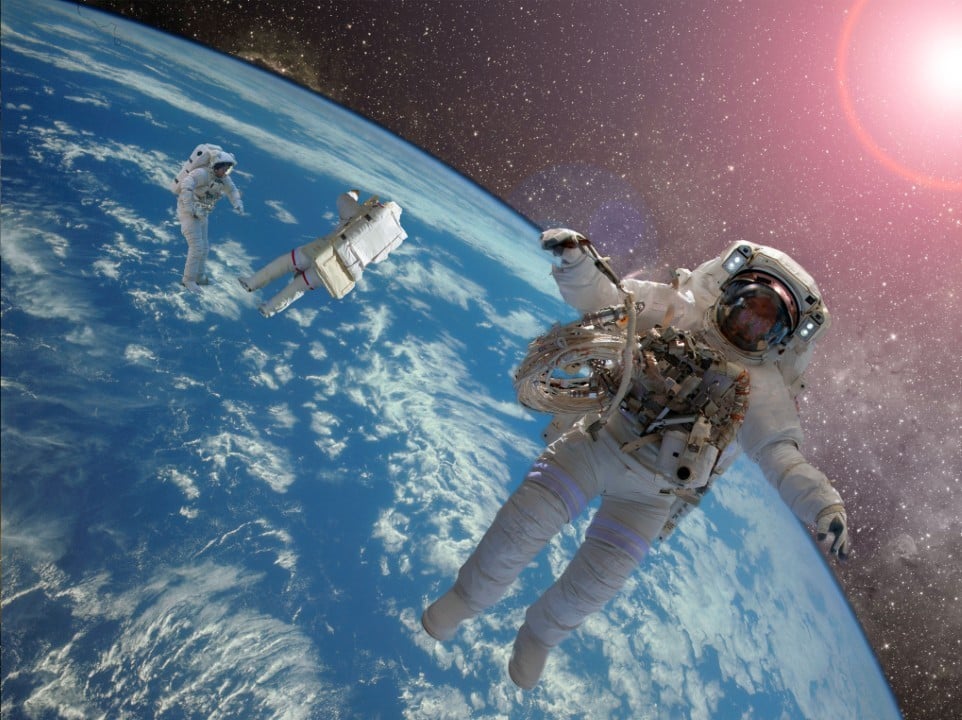
North American astronautsMike Fincke e Zena Cardmancarry out the first extravehicular activity (EVA) of the year on January 8, 2026, inStation Espacial Internacional(ISS). The operation prepares the station’s structure to receive new roll-up solar panels (iROSA), which increase the power generation capacity.
The spacewalk lasts about six and a half hours and begins at 8 a.m. Eastern Time (Estados Unidos) (10 a.m. Eastern Time). Essa EVA marks the 278th in support of the assembly and maintenance of the ISS and represents the debut of Cardman in external activities, while Fincke completes its tenth, tying the record among astronauts of Nasa.
The Expedição 74 team completes intense preparations in the preceding days, including procedural reviews and spacesuit checks. Esses new solar panels complement existing ones, degraded over more than two decades of operation, and provide additional energy for scientific experiments and station systems.
Preparations for extravehicular activity
The ISS crew dedicates the days before EVA to rigorous training and checks. Mike Fincke and Zena Cardman, assisted by colleagues Chris Williams (Nasa) and Kimiya Yui (Jaxa), review each step of the operation in simulations coordinated with mission control at
Astronauts inspect spacesuits, including SAFER emergency jetpacks, designed for rescue in the event of accidental disconnection. Essas checks follow protocols established to minimize risks in a hostile space environment.
The operation involves exit through airlock Quest and specific tasks in the station’s external structure. Nasa broadcasts the EVA live through its official channels, allowing real-time monitoring of the maneuvers.

Main tasks in the external structure
Fincke and Cardman focus their efforts on preparing energy channel 2A, located on the ISS side truss. Eles install a modification kit and route essential power and data cables for future integration of the new iROSA panels.
- Installation of jumper cables for temporary connections.
- Collection of microbial samples on external surfaces, to analyze the survival of microorganisms in space.
- Photographic record of station components, helping to plan future maintenance.
These actions pave the way for delivery of the panels on a future cargo mission. iROSA represent advanced technology, with a flexible design that facilitates transport and deployment.
The operation takes place in conditions of microgravity and exposure to extreme temperature variations. Precise coordination between the duo and internal support ensures efficient execution of tasks.
Upgrades to the ISS power system
Estação Espacial Internacional operates with original solar panels installed since the early 2000s, which have suffered natural degradation over time. The new iROSA roll-up arrays, developed in partnership with specialized companies, are positioned ahead of existing panels and increase total energy production by up to 30% in complete configurations.
Each iROSA unit generates more than 20 kilowatts, supporting growing demands from scientific experiments and life support systems. Essa modernization extends the operational lifespan of the ISS, a key platform for microgravity research.
To date, six iROSA have been installed in previous canals, with the next ones focusing on remaining sections. The upgrades include preparations for controlled deorbit of the station in the future, according to long-term plans.
iROSA technology tests concepts applicable to future missions, including commercial low-orbit stations and deep exploration.
Internal support during operation
While Fincke and Cardman work externally, Chris Williams and Kimiya Yui remain inside the ISS for direct support. Eles assist with putting on suits, control airlock pressurization cycles and monitor safety systems in real time.
The duo maintains constant communication with the spacewalkers and controllers in Terra, intervening in any adjustments. Essas internal functions follow standardized protocols, developed over hundreds of previous EVAs.
Support covers verification of astronauts’ vital parameters and external environmental conditions. The international collaboration between Nasa and Jaxa highlights the operation, with Yui contributing expertise in joint procedures.
Scientific research in parallel
The Expedição 74 maintains an intense schedule of experiments even during preparations for EVA. Recentemente, crew members install cassettes for growing protein crystals in a specific processor, part of a pharmaceutical laboratory in space.
These studies explore crystallization in microgravity, enhancing the production of purer medicines. Atividades include detailed image capture for terrestrial monitoring.
Other research covers cellular biology and long-term effects of space exposure on organisms. The ISS serves as a unique laboratory for advances in human health and space technologies.
The combination of operational maintenance and science demonstrates the versatility of the orbital platform. Resultados contribute to Artemis missions and future explorations.
Broadcast and public monitoring
Nasa offers complete coverage of EVA on its digital channels, starting hours before the scheduled time. Transmissão includes camera footage of the suits and station, with expert commentary.
The public accesses the event via NASA+, YouTube and other official platforms. Essa opening reflects the agency’s commitment to scientific dissemination.
A second EVA is scheduled for January 15, with additional maintenance tasks. Detalhes about participating astronauts will be confirmed soon.
These operations mark the active start of 2026 for the international space program.



