
The region of San Juan and Mendoza is shaken by a 5.1 magnitude earthquake this Thursday in Argentina

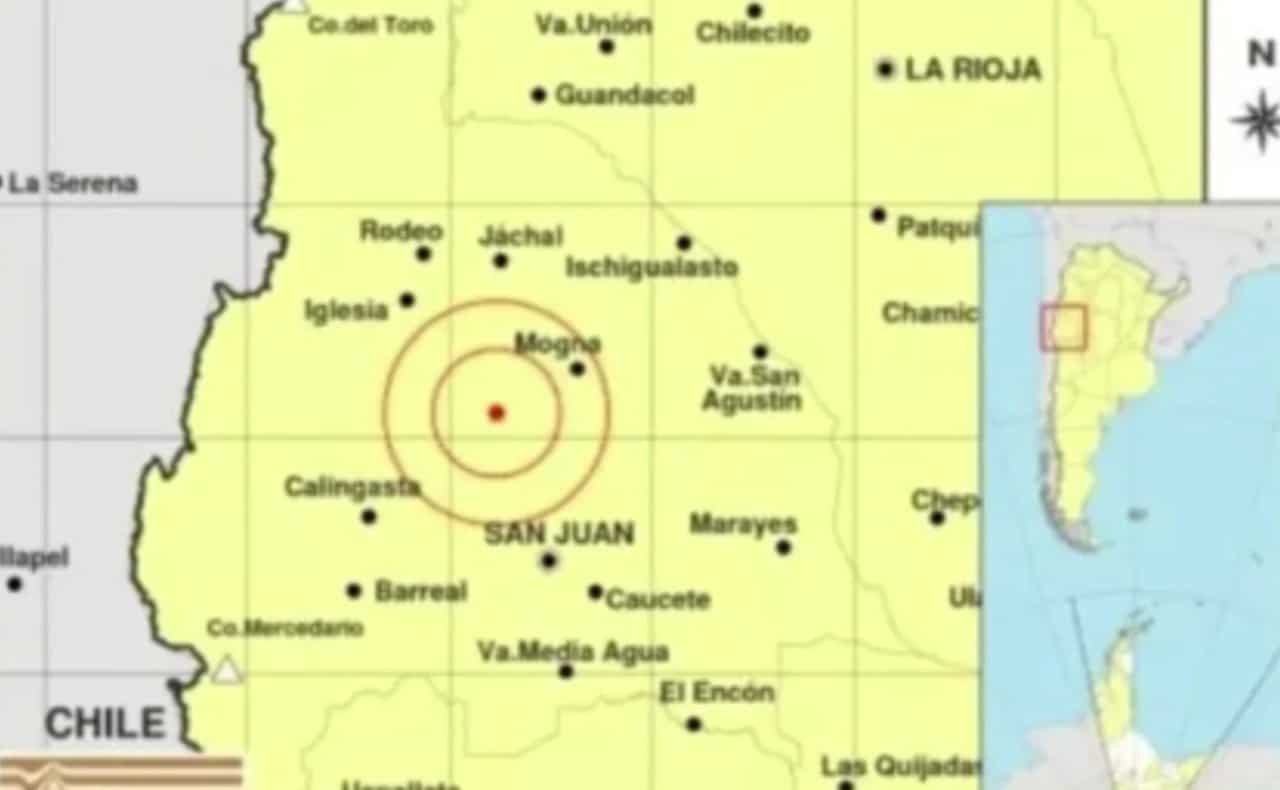
An earthquake of magnitude 5.1 shook the provinces of San Juan and Mendoza, in Argentina, on Thursday morning. The seismic event, recorded at around 11:14 am, caused concern among residents and was felt in several locations in the region.
Instituto Nacional of Prevenção Sísmica (INPRES) confirmed what happened, reporting that the epicenter was located in the province of San Juan. The reduced depth of the earthquake, just 10 kilometers, contributed to the tremor being widely perceived.
In Mendoza, movement was noticed mainly on the highest floors of buildings, while in other cities, such as Villa San Agustín and Chepes, suspended objects swayed, according to initial reports from authorities.
Epicenter and detailed geographic data
The epicenter of the earthquake was precisely located 90 kilometers east of the city of San Juan, a region characterized by significant seismic activity due to its proximity to Cordilheira of Andes. The exact coordinates provided by INPRES point to latitude -31.29 and longitude -67.6, data that helps in the geophysical analysis of the event.
Furthermore, the center point of the shaking was 211 kilometers northeast of Mendoza and about 30 kilometers northwest of Marayes. Essa geographic distribution of the epicenter explains the vast area where the tremor was felt, crossing provincial borders and generating perception in densely populated urban centers.
Perception of the shaking in different locations
The intensity of the earthquake was assessed according to the modified Mercalli intensity scale, which describes the effects perceived by people and structures. At locations such as Villa San Agustín, at San Juan, and Chepes, at La Rioja, there were consistent reports of oscillation of suspended objects, indicating a considerable level of intensity.
In the capital of the province of San Juan, the intensity was estimated between III and IV on the Mercalli scale. Essa intensity range suggests that the tremor was felt by many people inside homes and, in some cases, may have caused dishes to break and furniture to move.
More distant cities, such as Córdoba and Río Cuarto, recorded a lower intensity, between II and III. In Nessas areas, the earthquake was slightly perceived by some people who were at rest or inside buildings, without causing significant interruptions to daily activities. Variation in perceived intensity is common and depends on distance from the epicenter, depth of the event and soil type.
Initial assessment and absence of damage
Local authorities and emergency teams carried out a rapid assessment of the situation after the incident. Até at the time of publication, no significant structural damage has been reported to public or private buildings in the provinces affected by the earthquake.
The absence of injuries is another positive fact that emerges from the initial checks. The quick response and local infrastructure, designed to withstand moderate seismic shocks, may have contributed to mitigating the possible most serious consequences of the tremor.
INPRES reported that, although the earthquake calculation is automatic, the team of seismologists is reviewing the data to provide an even more accurate technical analysis of the incident. The review may include adjustments to the magnitude or exact location of the epicenter.
Reactions in tall buildings of Mendoza
The province of Mendoza, known for its urbanization and the presence of multi-story buildings, experienced the earthquake in a particular way. The impact was felt most clearly on the upper floors of buildings, where the oscillation is generally amplified.
Residents of apartments in central areas of Mendoza described the sensation of rocking and the slight shaking of the structures, which generated moments of fright, but without reports of widespread panic. The more pronounced perception at high points is a common phenomenon in seismic events, where ground movement is transmitted and amplified by the height of buildings.
The safety measures and anti-seismic construction protocols implemented in the region are crucial to ensuring the resilience of buildings in the face of tremors. The constant updating of these standards contributes to the safety of the population in an area naturally prone to earthquakes.
INPRES protocols and actions
The Instituto Nacional of Prevenção Sísmica plays a key role in the Argentina, continuously monitoring seismic activity and issuing accurate alerts and information. Its actions are vital for public safety and for managing risks related to natural disasters, especially in a nation with active seismic regions.
Real-time monitoring of tremors and the rapid dissemination of technical data allow the population to be informed and authorities to act promptly. INPRES’ efficient communication is a pillar for preparing for and responding to seismic events.
Continuous monitoring of seismic activity in the Andean region
The Andean region, where San Juan and Mendoza are located, is one of the most active seismic areas in the world due to the convergence of the Nazca and Sul-American tectonic plates. Essa Geological dynamics cause frequent earthquakes, ranging from mild to intense. Constant monitoring enables understanding of seismic patterns and improves early warning systems.
The science behind earthquakes involves studying geological faults and measuring seismic waves. Informações details about the depth and magnitude help scientists better understand the internal processes of Terra. Esse knowledge is essential for preparing risk maps and for adopting safer construction policies, aiming to protect communities.



