Farc dissident leader calls for rebel unity against U.S. intervention following Venezuela incursion and Maduro’s capture

The leader of the largest dissident faction of Colombia’s former Revolutionary Armed Forces of Colombia (Farc) has urged other rebel groups to unite against perceived United States interventionism across the region. This powerful call came in a video message confirmed as authentic by the group earlier this week.
Nestor Gregorio Vera, widely known by his nom de guerre “Iván Mordisco,” issued the rallying cry after a significant U.S. incursion into neighboring Venezuela, an operation that reportedly led to the capture of Venezuelan leader Nicolás Maduro. This development has dramatically reshaped the geopolitical landscape of South America in early 2025.
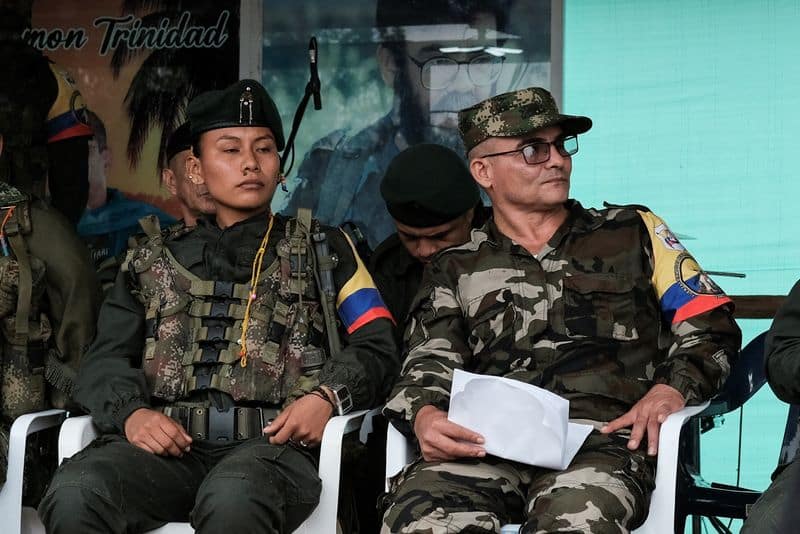
“The shadow of the interventionist eagle hovers over all equally. We ask you to put aside these differences,” Vera declared in the video. He appeared in camouflage fatigues, flanked by two heavily armed guerrillas, emphasizing the gravity and military undertones of his message to the region’s insurgent groups.
Calls for a united insurgent front
Vera’s message explicitly targets the National Liberation Army (ELN), Segunda Marquetalia, and the Bolivarian Army Guerrilla Coordinating Junta, all of which emerged from the remnants of the disbanded Farc. He stressed the shared history and common struggle among these factions.
“Destiny is calling us to unite. We are not dispersed forces; we are heirs of the same cause. We will weave unity through action and forge the great insurgent bloc that will make the enemies of the homeland retreat,” Vera articulated, aiming to galvanize a unified resistance against external pressures.
Regional tensions escalate after U.S. action
The U.S. operation in Venezuela, culminating in Maduro’s capture, has sent ripples of instability throughout the continent, particularly impacting countries with active insurgent movements. This unprecedented action has intensified fears of broader U.S. involvement in regional affairs, providing a clear impetus for Mordisco’s unification plea. The Farc’s original peace accord in 2016 led to a demobilization process, but several factions, including Vera’s, rejected it, continuing their armed struggle and evolving into significant dissident groups.
These dissident groups, now comprising a considerable force, exploit vast territories largely outside state control, particularly along remote borders and in areas rich in natural resources. Their operations are deeply intertwined with complex illicit economies, posing persistent challenges to regional stability. The immediate aftermath of the Venezuela intervention has seen a rapid realignment of various armed actors, each assessing the shifting power dynamics and potential vulnerabilities.
The historical context of U.S. anti-drug efforts and counter-insurgency campaigns in Colombia, dating back decades, fuels the narrative of interventionism among these groups. This deep-seated distrust and historical animosity contribute significantly to the appeal of a unified front against perceived foreign threats. The latest U.S. actions are viewed through this lens of historical engagement, rather than as isolated incidents, particularly by those who remain skeptical of state authority.
Petro and Trump’s contentious 2025 meeting
Colombian President Gustavo Petro, a former guerrilla who has championed peace after over six decades of internal armed conflict, is scheduled to meet U.S. President Donald Trump in Washington in February 2025. This meeting occurs days after Trump issued threats of military action against Colombia, heightening diplomatic tensions. Trump has repeatedly accused Petro’s administration, without presenting evidence, of allowing a steady flow of cocaine into the U.S., leading to sanctions against the Colombian leader in October 2024. This backdrop of accusations and sanctions creates a volatile environment for the upcoming bilateral discussions, with Petro facing domestic pressure as well, evidenced by calls for protests following Trump’s threats.
The landscape of Colombian armed groups
The groups Vera proposed to unite, which include the ELN, Segunda Marquetalia, and the Bolivarian Army Guerrilla Coordinating Junta, collectively command more than 11,000 members across Colombia’s diverse and often rugged terrain. These organizations operate with varying levels of coordination and share ideological roots stemming from Marxist-Leninist principles and Bolivarian revolutionary ideals.
The ELN, as Colombia’s second-largest active guerrilla group, maintains a presence in several departments, engaging in kidnappings, extortion, and attacks on infrastructure, alongside their involvement in drug trafficking. Segunda Marquetalia, led by former Farc commanders who rearmed, also focuses on establishing control over drug routes and illegal mining operations, often clashing with other groups.
The Bolivarian Army Guerrilla Coordinating Junta, a less prominent but ideologically aligned faction, adds to the complex tapestry of armed actors. However, Mordisco’s call notably excluded the Estado-Maior Central, the second-largest Farc dissident group, which split from his command in 2024, indicating ongoing internal divisions within the broader dissident movement despite the call for unity.
Dissident factions and criminal economies
The primary criminal activities fueling these insurgent groups are drug trafficking and illegal gold mining. These illicit economies provide substantial financial resources, allowing them to procure weapons, recruit fighters, and maintain a robust presence in remote areas. The vast profits generated from cocaine production and transport, particularly routes connecting to Central America and the U.S., are central to their operational capabilities.
Illegal gold mining has emerged as an equally lucrative enterprise, causing severe environmental damage while enriching armed groups. Control over these mining regions often leads to violent confrontations with other illegal actors, including rival dissident groups and criminal gangs, further entrenching the cycle of violence and instability in affected communities. These activities highlight the complex challenges in achieving comprehensive peace and state control in many parts of Colombia.
Colombia’s complex path to lasting peace
President Petro’s administration has embarked on a “total peace” strategy, seeking negotiations with all armed groups to end internal conflict definitively. This ambitious initiative aims to address the root causes of violence, including poverty, inequality, and lack of state presence, through a combination of dialogue and social investment. However, the resurgence of Farc dissidents and the ELN, coupled with intense U.S. pressure regarding drug eradication, complicates this delicate peace process significantly.
The demand for unity by Iván Mordisco underscores the persistent challenges facing Colombia as it navigates complex domestic security issues alongside external geopolitical pressures. His appeal to shared revolutionary ideals, juxtaposed with the reality of criminal enterprises, highlights the multifaceted nature of the conflict and the long road ahead for achieving sustainable peace and stability in the region.
A call to historical revolutionary ties
Mordisco’s invocation of “heirs of the same cause” taps into a deep vein of revolutionary history in Latin America, aiming to transcend present-day tactical differences with a broader, anti-imperialist narrative. This ideological appeal seeks to reframe the struggle beyond local disputes, presenting it as a unified resistance against a dominant foreign power. The historical legacy of U.S. interventions in the region continues to serve as a powerful rallying point for groups seeking to challenge established authority.
Veja Tambem em Últimas Notícias

Governo federal atualiza critérios e amplia benefícios do programa social para milhares de famílias

イラン、レバノン情勢悪化で米国との間接協議を中断、地域緊張が一段と高まる懸念

Desvendando o 3I/Atlas: NASA atualiza dados sobre o cometa interestelar e sua jornada cósmica
Hungary’s president rejects Prime Minister Péter Magyar’s demands amid brewing constitutional clash
Trump shrugs off Iran negotiation failure, declares profound indifference to outcome
Former minister Peter Garrett initiates independent inquiry into the Aukus submarine pact scrutiny

Novas regras do Bolsa Família em vigor: veja como acessar benefícios complementares e dicas
Cometa Interestelar 3I/Atlas, Nasa, Informações sobre o cometa, curiosidades
Florida’s attorney general sues OpenAI, alleging ChatGPT aided mass shooters in ‘web of deceit’
Frontline report reveals harrowing reality of Ebola’s persistent threat in Democratic Republic of Congo
Mexico City police deploy teargas to disperse teachers protesting near World Cup fan zone