
Nintendo requested an adjustment to the promotional image so that Mario would not fall behind Sonic in the Olympic Games By Jeronimo Santos
6 min read
 |
Nintendo has demonstrated rigorous attention to detail in protecting its main character’s image during collaborations with Sega. A former employee of the company revealed that the Japanese company requested changes to a promotional image for the series Mario & Sonic in the Jogos Olímpicos because Sonic’s feet appeared in front of those of The anecdote, shared by Ryoichi Hasegawa in a recent interview, refers to the production of Mario & Sonic at the Olympic Games Tokyo 2020, released in 2019. central even in joint projects. The change was applied to materials such as game covers and packaging. The case illustrates the evolution of the relationship between the two companies, which went from fierce rivals in the 1990s to partners in crossover initiatives. The series, which began in 2007, has already featured six main titles linked to Olympic editions. Não there have been announcements of new games since the title of Tóquio.
The revelation gained repercussion among video game fans by highlighting internal development practices. Hasegawa recalled that the Sega team received the order with surprise, but quickly proceeded with the correction.
Origins of the rivalry between Nintendo and Sega
The relationship between Nintendo and Sega marked the video game industry in the 1990s during the so-called console war. At the time, Sega positioned Sonic as a faster, more modern character compared to Mario, who represented Nintendo’s more traditional approach.
The Sega marketing campaign emphasized technical differences between the Mega Drive and the Super Nintendo. Propagandas questions questioned the superiority of the competitor’s products, creating intense competition in the global market.
This dispute influenced the character design and commercial strategies of both companies. Sonic was created specifically to compete with Mario in speed and attitude.
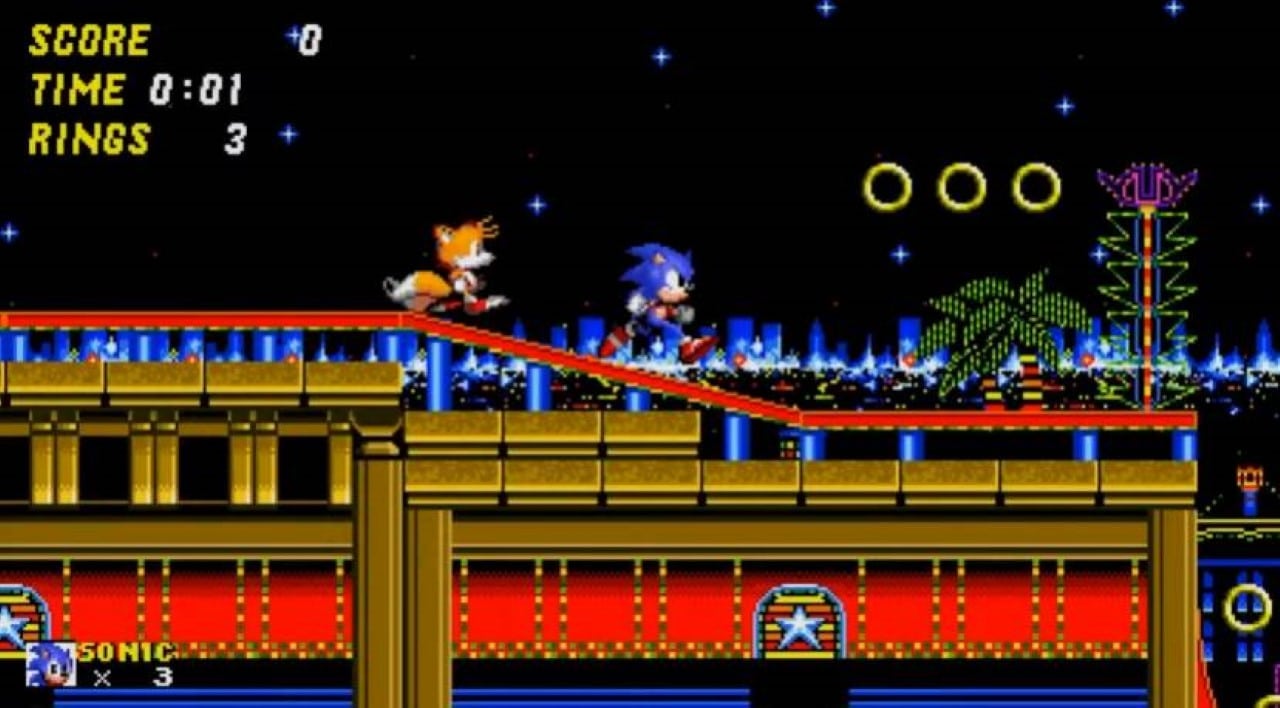
Over time, the dynamics changed after Sega left the hardware market in 2001. The company started to develop games for Nintendo platforms, paving the way for collaborations.
Details of the anecdote revealed by Hasegawa
Ryoichi Hasegawa worked directly on the series Mario & Sonic and shared the story in a recently published interview. Ele explained that the opening image showed characters in an Olympic arena, with Sonic’s feet slightly in front of Mario’s.
Nintendo identified the detail and requested a reversal in the order to prioritize its mascot. The Sega team adjusted the artwork without significant delays to the production schedule.
The episode occurred during the development of the title dedicated to Olimpíadas of Tóquio. The change affected widely distributed promotional materials, including game boxes and manuals.
Hasegawa described the internal reaction as a mixture of surprise and understanding for his partner’s strictness. The request reinforced the importance attributed to the visual hierarchy of the characters.
Evolution of the Mario & Sonic series
The partnership between Mario and Sonic officially began with the release of Mario & Sonic at the
Since then, the series has followed real Olympic events in its themes. Cada title incorporated official sports modalities adapted to the characters’ style.
- Mario & Sonic at the Olympic Games (2007, Pequim)
- Mario & Sonic at the Olympic Winter Games (2009, Vancouver)
- Mario & Sonic at the London 2012
- Mario & Sonic at the Sochi 2014
- Mario & Sonic at the Rio 2016
- Mario & Sonic at the Olympic Games Tokyo 2020 (2019)
The games sold millions of copies by combining multiplayer competitions with elements characteristic of each franchise. Modos story and special events added to the casual and competitive appeal.
The absence of new titles after 2019 reflects changes in Olympic licensing. Não there were official announcements about the continuity of the partnership in this format.
Nintendo’s control over its intellectual property
Nintendo has maintained strict policies to protect the image of its characters since the 1980s. Mario, created in 1981, has become one of the most recognized icons in global pop culture.
The company thoroughly reviews artwork and materials in licensed or collaborative projects. Esse approach ensures visual and narrative consistency across all character appearances.
Similar examples include adjustments to past crossovers and guidance for third parties. The central objective is to preserve Mario’s position as the main protagonist.
This practice extends to derivative products, such as toys and animations. The company intervenes when it perceives risks to the established identity of its franchises.
Repercussion among developers and fans
The story shared by Hasegawa quickly circulated in gaming communities. Fãs commented on the detail as a reflection of the corporate personality of Nintendo.
Independent developers highlighted the importance of clear guidelines in collaborations. The case serves as a practical example of negotiation between intellectual property holders.
Many see the episode as a slight reminiscence of old rivalries. The anecdote humanizes creative processes behind great productions.
The announcement reinforces the continued interest in the Olympic series. Jogadores expressed their desire for a possible return to the crossover format.
Legacy of collaborations between companies
Partnerships between Nintendo and Sega have expanded the reach of both universes since the 2000s. Projetos sets demonstrate maturity in the industry after periods of fierce competition.
The Olympic series represented one of the biggest commercial successes of this cooperation. Ela attracted casual audiences interested in sports and classic characters.
Other initiatives included appearances by Sonic in Nintendo games. Essa exchange benefited longtime fans of both franchises.
The current relationship prioritizes specific collaborations rather than direct rivalry. Empresas focus on unique experiences for different platforms.
Strict brand protection remains common practice in the industry. Detalhes how character positioning illustrates balancing challenges in shared projects.
Lack of new Olympic titles
Since the release of the Tóquio game, no information has emerged about sequels in the Olympic line. The last title received updates for previous generation and Switch consoles.
External factors influenced the pause in production. Mudanças in licensing agreements with Comitê Olímpico Internacional changed strategies for official games.
Sega and Nintendo maintain other forms of cooperation in selected projects. Fãs await possible future announcements involving the characters.
The series has accumulated a positive legacy with accessible mechanics and colorful visuals. Ela remains a reference in sports crossovers in the gaming market.
The revelation of Hasegawa adds a historical layer to the joint catalog. The curious detail enriches behind-the-scenes narratives about the development of iconic games.
Visual details in promotional arts
Promotional arts play a central role in promoting games. Elas establish visual tone and hierarchy between main characters.
In the case of the Olympic series, compositions grouped figures from both universes in sports scenarios. Ajustes fines guaranteed balance according to each company’s guidelines.
Subtle placements convey implicit messages about leadership. Empresas pay attention to these elements to reinforce brand identities.
The correction requested by Nintendo exemplifies attention to optical nuances. Tais interventions occur routinely in large-scale productions.
Influence on the crossover market
Crossovers between rival franchises have become more common in today’s industry. Exemplos include combat and racing with characters from multiple companies.
The pioneering union of Mario and Sonic set precedents for similar initiatives. Ela proved commercial viability of unlikely partnerships.
Developers benefit from combined fan bases in joint releases. The Olympic model highlighted sporting potential in hybrid mechanics.
The feet episode reinforces creative coordination challenges. Equipes learn to navigate distinct preferences of IP holders.
The industry has evolved towards more fluid collaborations over the decades. Legados like the Mario & Sonic series continue to inspire new projects.



