
Presidential attacks on Federal Reserve independence and escalating tariffs spark US economic uncertainty

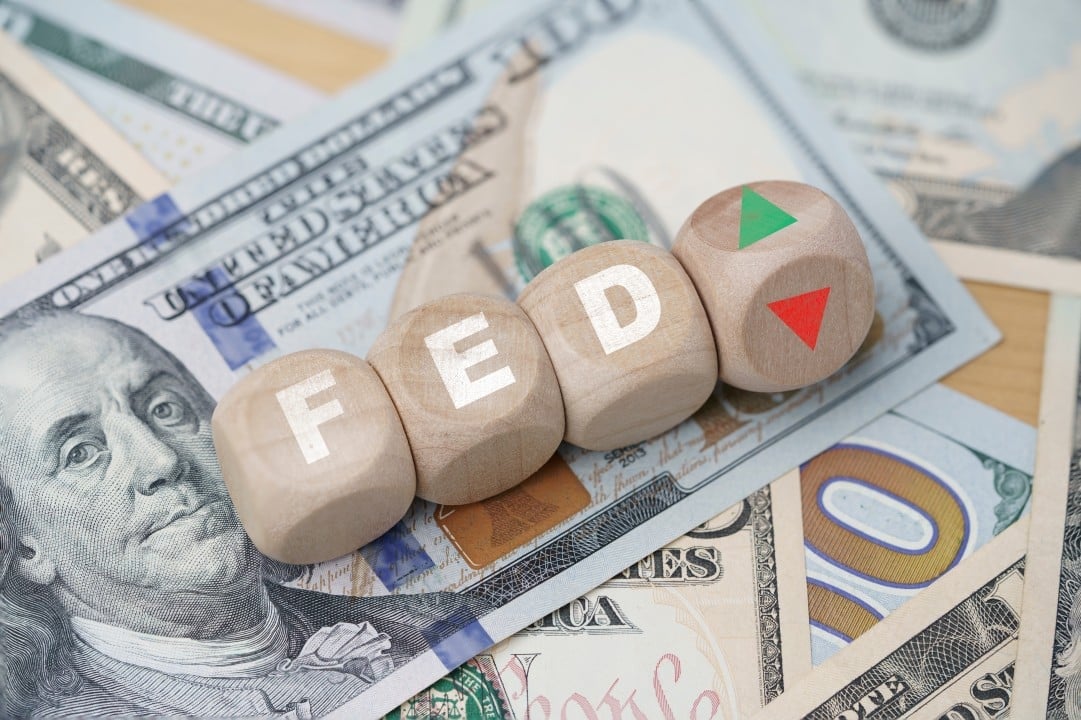
The United States economy faces growing instability fueled by ongoing presidential rhetoric against the Federal Reserve and a persistent strategy of tariffs, according to leading economists. These policy uncertainties not only undermine crucial institutional independence but also create significant disruptions in global trade and domestic financial markets. Such actions risk long-term economic repercussions, impacting everything from bond valuations to the daily cost of consumer goods across the nation.
Professor Roberto Dumas, an economics expert from Insper, highlighted these concerns, emphasizing that President Donald Trump’s repeated verbal assaults on the Federal Reserve are “alarming” and erode the institution’s critical independence. These interventions, Dumas explained, extend their reach beyond domestic policy, impacting international relations and leading to widespread uncertainty in the valuation of public and corporate bonds worldwide. The financial markets struggle to price these instruments accurately when the central bank’s autonomy is consistently challenged.
Federal Reserve independence under siege
President Trump’s relationship with Federal Reserve Chair Jerome Powell has significantly deteriorated since the republican’s first term in the White House. Once considered a trusted government appointee, Powell has become a frequent target of presidential criticism and insults over his management of American monetary policy. This shift has placed immense pressure on the Fed’s traditional role as an independent arbiter of economic stability.
Trump has publicly derided Powell with various epithets, including “Mr. Late,” “jerk,” and “old man.” The most recent escalation of this antagonism saw prosecutors initiating a criminal investigation against Powell and the Fed concerning a multi-billion dollar renovation project of the central bank’s buildings. This move, widely interpreted as an attempt to intimidate the institution, prompted an unusual public defense from Powell, who characterized the investigation as a deliberate act of intimidation during a two-minute statement.
Escalating rhetoric and its impact on monetary policy
The ongoing political friction not only complicates the accurate pricing of securities but also fundamentally undermines the perceived independence of the Federal Reserve. Professor Dumas emphasized that this “precariousness” can have far-reaching effects, as investor confidence in the stability and predictability of U.S. economic policy dwindles. Without a clear and unwavering commitment to an independent central bank, the domestic and international financial landscapes become far more volatile.
The implications for international finance are particularly stark. When the independence of a major central bank like the Fed is compromised, it introduces an unpredictable element into global markets. This uncertainty makes it difficult for international investors and central banks to gauge future monetary policy, leading to potential capital flight or increased borrowing costs for U.S. entities seeking to issue debt. Such an environment challenges the traditional role of the dollar as a stable global reserve currency and can ripple through allied economies dependent on U.S. financial health.
Global trade disrupted by tariff strategy
Beyond the direct attacks on the Fed, the administration’s aggressive tariff policies represent another major source of economic instability. The frequent back-and-forth implementation of tariffs on various goods creates “brutal global economic uncertainty,” significantly reducing worldwide growth prospects and actively “destroying logistical chains” that have been built over decades. Businesses struggle to plan investments and supply routes in such an unpredictable environment.
A report released in November 2025 by “The Budget Lab” at Yale University highlighted the severity of this approach, estimating that the average American tariff rate now stands at 16.8 percent. This figure marks the highest level seen in the past 90 years, underscoring a dramatic shift in U.S. trade policy. The tariffs are primarily justified by President Trump as a means to boost American industry, which he argues has been adversely affected by a large influx of inexpensive imported goods and increasing automation.
“Tariffs is my favorite word,” President Trump declared during a speech in Detroit on January 13, 2026. Detroit, once a thriving industrial hub, particularly for the automotive sector, has experienced significant economic deceleration and unemployment. However, despite the administration’s stated goals, the actual outcome of these commercial policies has been a decline in manufacturing jobs over the past year and a notable increase in consumer prices for various products, including coffee and meat. This has led to negative public sentiment, with a YouGov survey in partnership with The Economist indicating that half of Americans believe the country’s economy is worsening.
The “One big beautiful bill” and twin deficits
Further complicating the American economic outlook is the passage of a significant budgetary measure, which President Trump dubbed the “One Big Beautiful Bill.” Approved in July 2025, this megaproject served as the administration’s primary legislative achievement in Congress for that year. Its provisions included expanding tax exemptions first introduced during Trump’s initial term, increasing federal spending on the military and immigration enforcement, and implementing cuts to various social programs.
The Congressional Budget Office (CBO) has estimated that the “Big Beautiful Bill” is projected to generate a substantial deficit of $3.4 trillion over the next decade. Professor Dumas warns that this fiscal trajectory will significantly worsen the United States’ existing budget deficit, concurrently with a persistent current account deficit. This economic phenomenon is commonly referred to as “twin deficits,” highlighting a dual fiscal and external imbalance.
Macroeconomic imbalances raise concerns
Professor Dumas elaborated on the implications of twin deficits, explaining that they arise when a nation consistently spends beyond its means and fails to produce enough to offset consumption. “If you spend too much and don’t produce, if you save little and invest and consume too much, you will have a current account deficit,” he stated. This scenario suggests an economy that is structurally imbalanced, relying heavily on external financing to cover its consumption and investment needs.
The ultimate challenge, Dumas concluded, lies in the administration’s approach to these compounding economic issues. It remains uncertain whether President Trump will acknowledge these macroeconomic realities and adjust policies accordingly, or instead choose to “double down” on current strategies by imposing even more tariffs. This policy crossroads represents a critical juncture for the U.S. economy, with potential for either stability or further, self-inflicted disruption on both domestic and global scales.





