
Partnership with Toyota Gazoo Racing transforms Haas’ new VF-26 with a bold design for F1 By Carolina Costa
7 min read
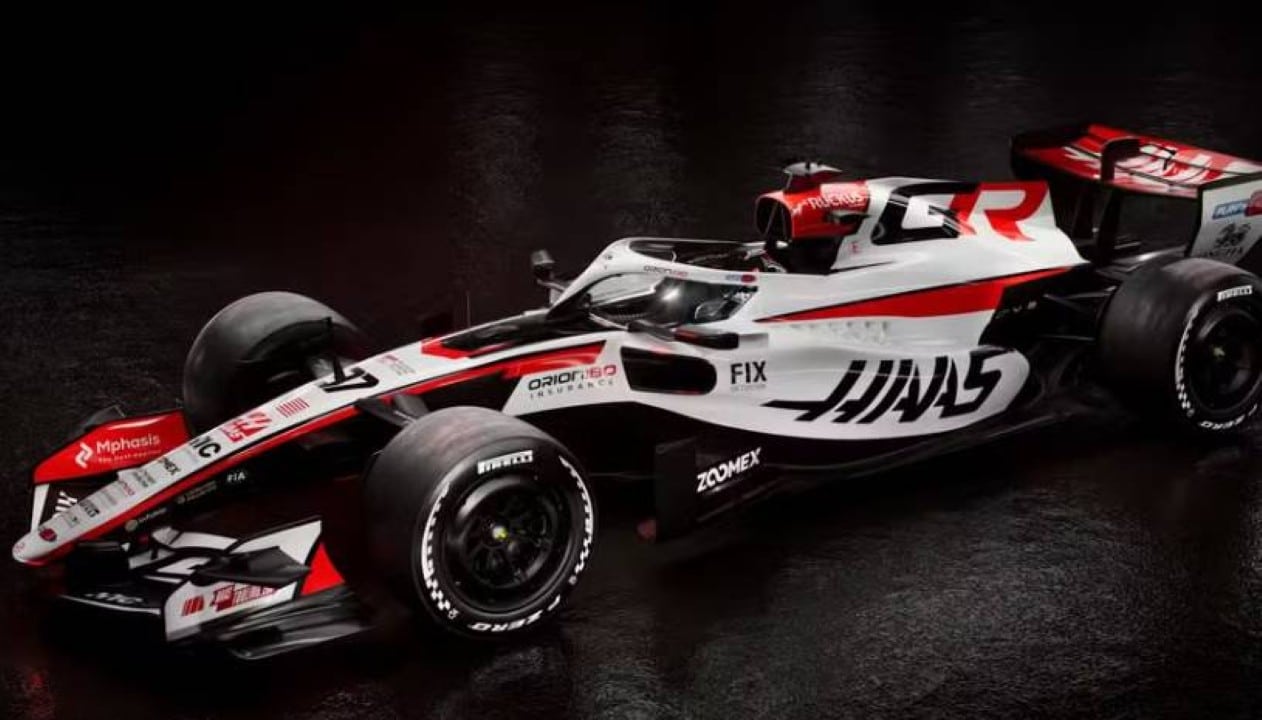 |
TGR Haas F1 The launch, carried out through the team’s digital platforms, not only revealed a visually striking design, but also established Toyota Gazoo Racing as its main sponsor and technical partner. Esta’s deepened alliance is reflected in the team’s new nomenclature and a livery that merges the traditionalism of the Haas with the Japanese giant’s racing identity. With drivers Esteban Ocon and Oliver Bearman confirmed for another year, the North American team seeks to take advantage of internal stability and new technical support to gain positions in the competitive midfield.
The early presentation of the VF-26 layout is a strategic move that allows the team to focus on pre-season challenges, which will be crucial to understanding the complexities of the new cars. The rule changes for 2026 are the most significant in years, aimed at lighter, more agile and ecologically sustainable cars. Power will be divided equally between the internal combustion engine and electrical systems, a challenge that all teams will face. Haas, with the support of Toyota and the Ferrari power unit, hopes to quickly decipher the secrets of the new regulation to gain a head start over its direct rivals.
A new visual identity for Haas
The VF-26 arrives with a livery that symbolizes the team’s new phase. The design partially abandons the sobriety of previous years to adopt more aggressive lines and a striking presence of the color red, signature of the Toyota Gazoo Racing. Red was applied to strategic areas of the body, such as the front wing, engine cover and rear wing, creating a dynamic contrast with the white and black that continue to be the base colors of the Haas. Essa choice is not merely aesthetic; it represents the fusion of two racing cultures and the strengthening of an alliance that goes beyond sponsorship to encompass deep technical collaboration. The visual identity was carefully developed to maintain Haas’s recognition among fans, while at the same time celebrating the arrival of a strong partner on the global motorsport scene.
In addition to the paintwork, the aerodynamic design of the presented car reflects the first interpretations of the 2026 rules. Although the most sensitive details remain secret until track tests, the general concept points to a more compact and efficient machine. Haas engineers, under the leadership of Ayao Komatsu, worked to find a delicate balance between downforce generation, essential for cornering performance, and energy efficiency, a pillar of the new regulations. The result is a car that, visually, already conveys the agility and modernity that Fórmula 1 seeks for the future.
The strategic alliance with Toyota Gazoo Racing
The elevation of Toyota Gazoo Racing (TGR) to lead partner of TGR brings to the Haas a vast experience acquired in other top categories, such as the Campeonato Mundial of Endurance (WEC), where it achieved multiple victories in the 24 Horas of Le Mans, and the Campeonato Mundial of Esse knowledge is particularly valuable in developing advanced hybrid systems and optimizing 100% sustainable fuels, two central pillars of the new F1 rules. The partnership provides Haas with access to simulation, manufacturing and component validation capabilities that would otherwise be difficult to obtain.
Financially, the deal gives the team a stronger foundation to compete in a spending cap environment that, while limiting budgets, still requires significant investment in research and development. The global presence of the Toyota brand also increases the visibility and commercial appeal of the North American team, especially in Asian markets. Para to Toyota, the partnership represents a high-impact marketing platform in the main category of global motorsport, reinforcing its image of performance and technological innovation. The synergy between the two organizations aims for a clear objective: transforming the Haas into a regular competitor in the fight for points and, eventually, podiums.
Unraveling the VF-26 and the new technical rules
The VF-26 was designed from scratch to adapt to a technical revolution in Fórmula 1. One of the biggest changes is in the power unit, which will have a distribution of 50% energy coming from the combustion engine and 50% from the electrical system, which has been significantly improved. The MGU-H (heat generating unit) was removed to simplify the technology and reduce costs, while the MGU-K (kinetic generating unit) had its power almost tripled. Além In addition, all cars must use 100% sustainable synthetic fuels, a crucial step for the category towards carbon neutrality. The Haas will continue to use the power units from the Ferrari, which has worked intensively to adapt to these new and demanding specifications.
In terms of aerodynamics and chassis, the 2026 cars will be shorter and narrower, with a reduction in minimum weight to make them more agile. The most radical change is the introduction of active aerodynamics, with movable front and rear wings. Drivers will be able to adjust the wings to a low-drag mode on straights (increasing top speed) and to a high-downforce mode in corners (improving grip). Essa technology, along with the ban on systems such as DRS, is designed to allow cars to follow each other more closely and to increase overtaking opportunities, making racing more exciting. The tires, supplied by Pirelli, will also be narrower, complementing the new aerodynamic package.
Ocon and Bearman: the bet on continuity
In a period of great technical uncertainty, Haas opted for stability in its pilot duo. Maintaining Esteban Ocon and Oliver Bearman for the 2026 season is a strategic decision. Ocon, an experienced driver and winner of an Grande Prêmio, provides the technical leadership and precise feedback needed to accelerate the development of a completely new car. Sua ability to get the most out of the equipment and its consistency in racing are valuable assets for a team looking to consolidate itself in the midfield. Ele played a key role in the simulator sessions that guided the VF-26 design from its early phases.
By his side, Oliver Bearman represents the future of the team. Após a season of learning and adaptation in 2025, the young British driver will have the opportunity to grow along with the new project. Sua familiarity with the team’s procedures and their already established working relationship with the engineers and with Ocon eliminate the need for an adaptation period, allowing both drivers to fully concentrate on performance from the first test. The combination of experience and youth is seen by the management of Haas as the ideal balance to navigate the challenges and opportunities that the new rules of 2026 will present.
Preparation calendar and pre-season challenges
With the car virtually presented, the focus of the TGR Haas F1 Team turns completely to the track. The preparation schedule is intense and starts next week. The team will participate in shakedown sessions at Barcelona, between January 26th and 30th. Esses Initial tests, carried out behind closed doors, are crucial to verify that all of the VF-26’s systems are working correctly, identify possible assembly flaws and ensure the car’s basic reliability before subjecting it to more rigorous testing. Será the pilots’ first real contact with the new machine.
Afterwards, the team will travel to Bahrein in February for official pre-season testing, which will be divided into two windows of three days each. Este will be the true proving ground for the VF-26, where the team will collect valuable data on aerodynamic performance, power unit behavior and wear on the new Pirelli tires. The correlation between track data and simulator results will be one of the main points of analysis. It is likely that the definitive version of the car, with all the aerodynamic updates, will only be seen in the first Grande Prêmio of the season, in the Austrália, as teams tend to hide their true potential during testing so as not to give any clues to competitors.
Operational structure and the command of Ayao Komatsu
Haas maintains its unique operational structure, with bases distributed between Kannapolis (States Unidos), Banbury (Kingdom Unido) and Maranello (Itália). Essa configuration allows the team to draw on talent and resources from different centers of motorsport excellence, whilst maintaining proximity to technical partner Ferrari in Italy. Coordination of this complex logistical and technical puzzle is the responsibility of the team director, Ayao Komatsu. With his extensive engineering experience, Komatsu has been the driving force behind the 2026 project, ensuring that the development schedule was met and that all areas of the team worked in harmony.
The 2026 season will mark Haas’s 11th consecutive participation in Fórmula 1, a milestone that demonstrates the team’s resilience and commitment. With the new regulations and the strengthened partnership with Toyota, the team sees a unique opportunity to eliminate the disadvantages accumulated in recent years and make a leap in quality. The objective is clear: to stop being a team that fights at the back of the grid to become a consistent force in the scoring zone, fighting on equal terms with teams like Alpine, Sauber and Williams. The early presentation of the design is the first step in a long journey that the team hopes will be one of success and growth.