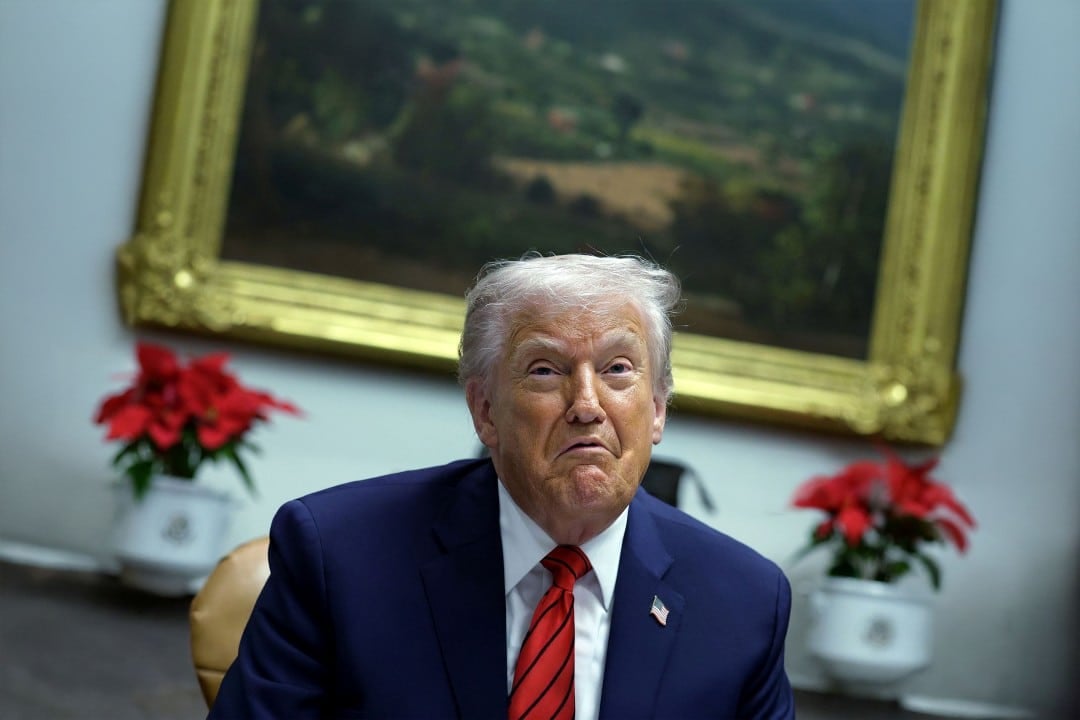
President Donald Trump voiced confidence that Greenland’s population would embrace acquisition by the United States, despite clear rejections from the islanders. His assertions came amidst widespread protests from Greenlanders, who unequivocally stated their territory was not for sale. The diplomatic tensions escalated as Trump also signaled potential economic measures.
During a White House press conference, President Trump addressed his interest in the Arctic territory, asserting that once direct conversations occurred, the inhabitants would become “enthusiastic” about the prospect. These remarks were made alongside discussions on the economy, immigration, and the United Nations.
Thousands of Greenlanders had previously demonstrated against the idea of a U.S. takeover, with one protester directly telling media outlets, “We are not for sale.” This public outcry underscored a deep-seated opposition to the proposed transaction.
Trump’s “enthusiasm” claims
President Trump’s declaration of anticipated enthusiasm from Greenlanders highlighted a significant disconnect between his administration’s views and the sentiments on the ground. He expressed certainty in their eventual approval, stating, “I haven’t spoken to them. When I speak to them, I’m sure they’ll be enthusiastic.”
This comment, delivered during a critical period of his administration, portrayed a confidence that largely ignored the existing public sentiment. His stance implied a transactional approach to territorial matters, drawing immediate international attention.
Greenland’s staunch opposition
The protests across Greenland demonstrated a firm national identity and a clear rejection of any notion of sale or annexation. Banners and chants conveyed a unified message: the island and its people were not commodities.
Greenland, an autonomous territory within the Kingdom of Denmark, has a strong sense of self-determination. Its inhabitants view their land and sovereignty as non-negotiable, emphasizing their distinct culture and governance.
Economic and strategic motives
The United States’ interest in Greenland is multifaceted, primarily driven by its vast natural resources, including rare earth minerals, and its critical geopolitical location. The island serves as a strategic point in the Arctic, vital for defense and maritime control.
Acquiring Greenland would significantly enhance U.S. Arctic presence, offering substantial military and economic advantages. This interest aligns with broader global competition for influence and resources in the rapidly changing Arctic region.
Tariff threats and international reaction
Beyond direct acquisition, President Trump also hinted at deploying alternative measures, including tariffs, to achieve his objective if traditional avenues proved unsuccessful. He specifically announced plans to impose a 10% tariff on allied nations that had deployed troops to Greenland.
These tariffs, targeting U.S. allies within NATO, were projected to take effect from February 1st, 2025, with a potential increase to 20% by June 2025. While tariffs remained his preferred method, the threat signaled a willingness to exert economic pressure.
The legal framework of acquisition
The prospect of the United States acquiring Greenland from Denmark raises complex questions under international law. Greenland’s status as an autonomous territory grants it significant self-governance, though Denmark retains ultimate sovereignty over foreign affairs and defense.
Any transfer of sovereignty would require the consent of both Denmark and Greenland’s self-governing authorities, making a unilateral acquisition highly improbable and legally contentious. The proposed acquisition scenario starkly contrasts with established principles of national self-determination. Furthermore, the legality of such assertive trade measures was concurrently under evaluation by the Supreme Court, adding another layer of complexity to the President’s strategies concerning global commerce.
Historical precedent and territorial ambitions
President Trump’s ambition to acquire Greenland resonated with historical patterns of territorial expansion in U.S. foreign policy, echoing past acquisitions such as Alaska from Russia. Experts suggested that this initiative might have been driven by a desire to secure a legacy defined by territorial growth.
His administration appeared to view such acquisitions as a testament to national strength and influence on the global stage. The pursuit of Greenland was thus framed within a larger narrative of expanding American dominion and strategic assets.
Geopolitical implications for NATO allies
The discussion surrounding Greenland and the imposition of tariffs on allied nations introduced significant strain into international relations, particularly within the NATO alliance. Such actions risked undermining the unity and cooperative spirit crucial for collective defense and diplomatic stability. The proposition of taxing allies for their military presence in a strategically important region was met with apprehension, potentially jeopardizing longstanding partnerships and trust. This aggressive stance could reshape alliances and influence global power dynamics in the Arctic and beyond, raising concerns about the future cohesion of critical international bodies.