
Republican lawmakers voiced apprehension over Trump’s Greenland acquisition threats, citing NATO stability concerns
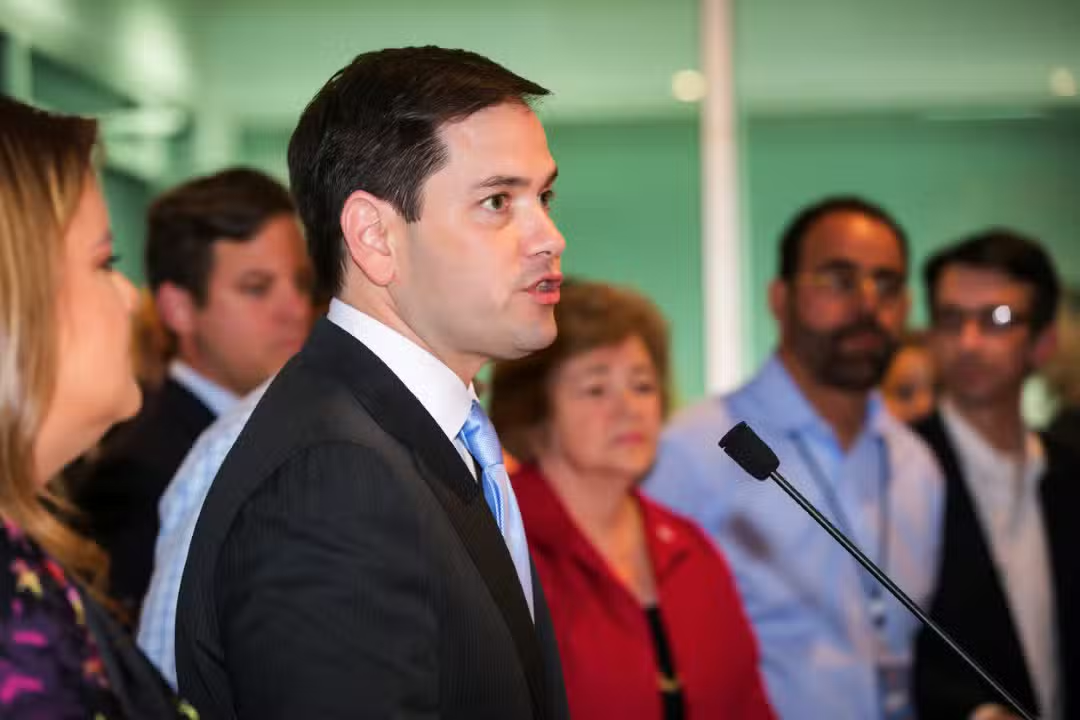
Republican lawmakers voiced apprehension over Trump’s Greenland acquisition threats, citing NATO stability concerns
A notable segment of House Republicans expressed considerable caution regarding former President Donald Trump’s intensified threats to assume control of Greenland through military intervention. This rhetoric raised significant concerns among NATO allies at the time, underscoring potential diplomatic fallout.
Many within the party, particularly those representing competitive districts, highlighted the risks such actions could pose to long-standing international alliances. The debate revealed a spectrum of views within the Republican caucus on the balance between national interests and established foreign policy.
The discussions brought to the forefront fundamental questions about the use of military force against a close ally’s territory and the broader implications for global stability and respect for sovereignty. It prompted calls for clarity on the administration’s strategic objectives for the Arctic region.
Lawmakers question military action against allies
Representative Dan Newhouse, serving a competitive district in Washington state, openly stated that no compelling justification had been presented to support actions against NATO allies. His remarks underscored a shared sentiment among some colleagues that such aggressive postures could jeopardize vital partnerships.
Newhouse further elaborated on the potential for destabilization within the NATO alliance, responding to inquiries about Trump’s Greenland initiative. He cautioned that proceeding much further down this path would indeed put the alliance at risk, signaling a clear apprehension among certain Republican factions.
The congressman emphasized the need for transparency, expressing a desire to hear directly from the president about his true plans and specific details regarding Greenland. He urged extreme caution in the unfolding situation, advocating for a measured and diplomatic approach rather than confrontational tactics.
Political and moral implications weighed
Another prominent Republican, Representative Don Bacon, who represented a competitive district, warned that Trump’s persistent pursuit of Greenland could carry significant political costs. Bacon argued that the focus risked shifting away from the administration’s economic achievements, which were crucial for the party’s platform.
Bacon highlighted robust economic indicators, including strong growth and stable unemployment rates, suggesting these should have been the administration’s primary talking points. He lamented that the economic message was being overshadowed by discussions of invading a NATO ally, a move he noted was unpopular with a vast majority of Americans.
From a moral perspective, the Nebraska Republican firmly asserted that threatening to take Greenland was unequivocally “not correct.” He underscored the importance of treating allies with respect and cooperation, especially when Denmark had historically shown willingness to collaborate on issues concerning Greenland.


Diverse republican perspectives on strategy
Not all Republican voices echoed apprehension; Representative Mark Alford offered a different viewpoint, emphasizing the importance of maintaining integrity within NATO while simultaneously seeking closer ties with Greenland. Alford, who had visited Denmark and met with officials, supported a strategic engagement with the territory.
Alford advocated for using diplomatic influence to persuade the people of Greenland that separation from Denmark and subsequent acquisition by the United States would be in their best interest. He believed that, strategically, the president’s long-term vision for acquiring Greenland was sound.
Despite widespread protests in Greenland following Trump’s refusal to rule out military intervention, Alford remained unconcerned about these reactions. He expressed confidence that the situation would ultimately resolve positively, projecting that Greenland would eventually become part of the United States.
Concerns over tariffs and military tools
Representative Richard Hudson, who chaired the House Republican campaign arm, conveyed a less immediate concern regarding a U.S. invasion of a NATO ally. He expressed skepticism about such an event occurring “sooner rather than later,” indicating a more relaxed view on the immediate threat level.
While broadly endorsing Trump’s trade policies, Hudson adopted a wait-and-see approach when questioned about threats to impose tariffs on European allies over Greenland. His response highlighted a nuanced stance within the party, where support for presidential initiatives might be conditional on specific details.
Representative Buddy Carter, a Senate hopeful seeking Trump’s endorsement, maintained that military action remained “a tool in the toolbox.” He speculated whether the threats were genuine or merely a form of leverage, comparing the situation to real estate negotiations, acknowledging Trump’s background as a developer.
Greenland’s strategic importance and allied relations
The discussions surrounding Greenland underscored its significant strategic value, particularly in the Arctic region, which holds substantial geopolitical and economic interest for global powers. Control over Greenland offers access to critical shipping routes, abundant natural resources, and a strategic location for military and scientific endeavors, aspects that fuel international interest.
For the United States, a closer relationship, or even ownership, could enhance its security posture in the Arctic, potentially countering the growing influence of other nations in the region. However, these aspirations are inherently balanced against the need to preserve and strengthen alliances, especially with long-standing partners like Denmark, a key member of NATO. The principle of collective defense and mutual respect forms the bedrock of these alliances, making any unilateral action or aggressive posturing a delicate matter.
The mixed reactions from Republican lawmakers at the time reflected the complex considerations at play: balancing perceived national interests and strategic advantage with the deeply ingrained principles of international law, diplomatic courtesy, and alliance cohesion. These internal debates serve as a critical barometer of the party’s evolving foreign policy doctrine and its approach to global leadership, demonstrating that even within a single party, diverse perspectives can emerge on issues of such profound international consequence. The episode continues to be referenced in discussions about the future of U.S. foreign policy and its commitment to allied nations.
Republican Greenland concerns, Trump foreign policy, NATO alliance, US diplomacy, Greenland acquisition
Veja Tambem em Últimas Notícias

米南方軍司令官、キューバ軍将軍とグアンタナモ国境で会談、安全保障問題に焦点
Amazon Prime’s new ice hockey romance adaptation captivates global audiences with record viewership
Remote gold mine gripped by surging ebola cases, health workers face uphill battle

Schumacher at 57: A private battle over a decade post-accident with new insights in 2026

NASA divulga dados fascinantes do cometa interestelar 3I/Atlas e sua trajetória em 2026
Colombia’s presidential election approaches, marked by heightened political violence and stark policy contrasts

Governo federal detalha regras e benefícios complementares do Bolsa Família para o próximo ano
ラオス水没洞窟、国際救助隊が生存者4人を無事救出、水位低下が脱出を支援か
ホワイトハウスUFCイベント、米兵招待に厳格な身体基準導入で論議浮上
Madlanga Commission probes alleged butt lift bribes and flawed drug operations gripping South Africa
Moana Pasifika delivers poignant upset victory amid uncertain future in Super Rugby Pacific