
Toyota suspends sales of the new RAV4 in Japan after demand runs out of stocks in record time By Carolina Costa
6 min read
 |
The sixth generation of the Toyota RAV4, launched on the Japanese market in December 2025, provoked an immediate and overwhelming reaction from consumers. Demand for the new SUV exceeded all of the automaker’s projections, resulting in the complete depletion of stocks allocated for the initial sales period in just a few days. The phenomenon led to a drastic measure: the temporary suspension of new orders across the country’s entire dealership network.
The volume of orders registered for the Z and Adventure hybrid versions, the only ones available at the debut, exceeded the initial production capacity. Diante In this scenario, Toyota chose to pause the acceptance of new purchases to ensure compliance with delivery deadlines for customers who had already closed a deal, thus avoiding the creation of long and uncertain waiting lines.
The situation reflects the strong positioning of the RAV4 as one of the most desired vehicles in the Japão. The combination of a completely renewed design, state-of-the-art hybrid technology and the brand’s reputation for reliability were decisive factors in its instant success. The automaker is now working to adjust its production chain and meet pent-up demand as quickly as possible.
Initial release and available grids
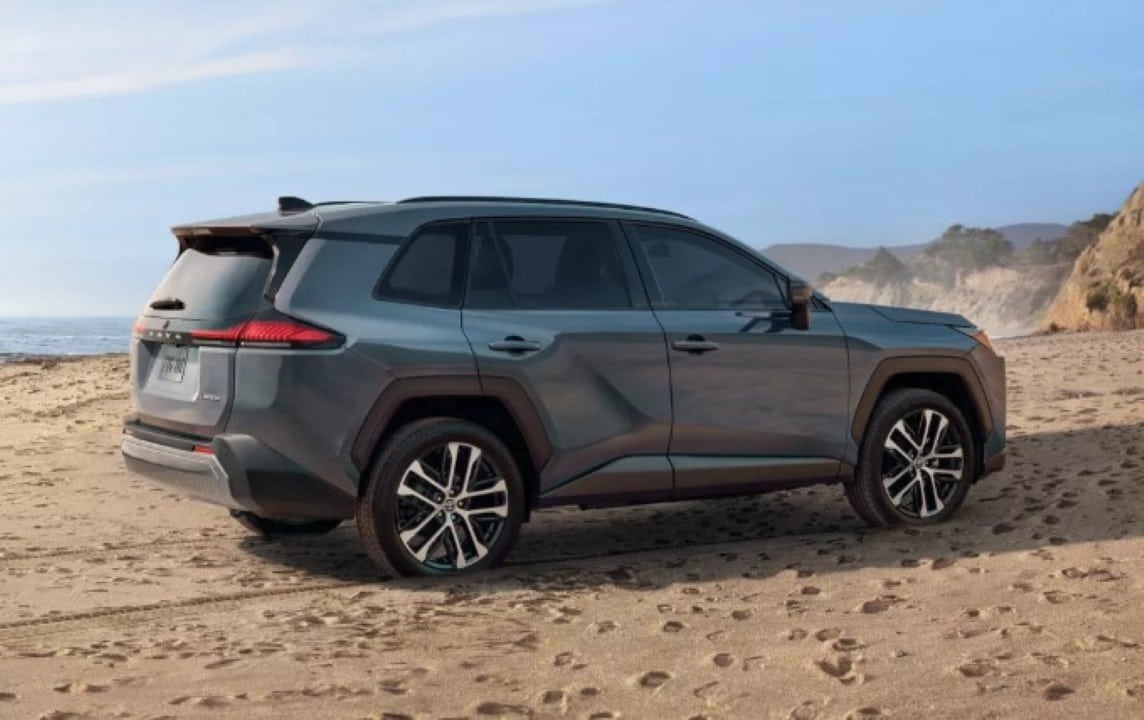
The new RAV4 debuted in Japanese dealerships with a strategy focused exclusively on hybrid powertrains, in line with market electrification trends. The two initial versions, Z and Adventure, were designed to meet different consumer profiles, but share the same efficient mechanical set.
The Z grille is aimed at urban use, with a more refined finish, alloy wheels with an exclusive design and a robust package of comfort and technology items. Já The Adventure version, as the name suggests, has a more robust proposal, with redesigned bumpers, more prominent plastic moldings and a suspension tuned for light off-road forays.
Regarding values, starting prices were established from approximately 4.5 million yen for the Adventure version, while the Z is positioned in a slightly higher range due to additional standard equipment. Ambas the configurations were quickly absorbed by the market.
Toyota’s decision to limit the launch to these two variants was strategic, aiming to concentrate production and guarantee quality in the initial phase. Outras versions, including the sporty GR SPORT and possibly entry-level options, are scheduled to be introduced in later phases, throughout 2026.
Reasons for high demand
The success of the RAV4 is not an isolated case, but the intensification of an already consolidated leadership in the medium SUV segment in the Japão. The new generation amplifies the attributes that have won over local drivers over the years. The hybrid system, which combines a 2.5-liter combustion engine with electric powertrains, offers remarkable energy efficiency, a crucial factor for Japanese consumers facing high fuel costs. Este powertrain has been improved to deliver a more linear response and even lower consumption in urban and highway cycles. Além In addition, the exterior design adopted more aggressive and contemporary lines, while the interior underwent a revolution, incorporating superior quality materials, a digital instrument panel and a new multimedia center with a larger screen and improved connectivity. The Toyota Safety Sense active safety package has also been updated with new driver assistance features, reinforcing the perception of value and safety. The offering of electronic all-wheel drive (E-4ORCE) on both initial grades further solidified its appeal as a versatile and safe all-weather vehicle, motivating many previous-generation owners to make the immediate switch.
Situation at dealerships
The scenario at Toyota dealerships throughout Japão is one of high expectations and information management. Relatos from several stores indicate that the vehicle quotas destined for the launch were completely sold in less than a week, a pace considered exceptional even for a popular model like the RAV4. The automaker’s distribution system, which limits the number of units per resale, was quickly overloaded, forcing the interruption of attracting new customers to avoid overbooking and missing deadlines.
Currently, customers arriving at stores are informed about the suspension and advised to wait for an official announcement for the reopening of sales. Para To manage interest, some utilities have created unofficial waiting lists, committing to contact interested parties as soon as new production allocations are confirmed. Deliveries of the first accepted orders are scheduled to take place between May and June 2026, with production fully focused on meeting this initial demand before opening new batches.
Temporary pause in production
To add complexity to the high demand scenario, Toyota announced a brief shutdown of the assembly line responsible for the RAV4 in December 2025. The interruption was necessary to perform a quality check on an electronic engine control unit, a standard procedure to ensure vehicle reliability.
Although the suspension was quickly resolved, with production resuming in January 2026, it had a small impact on the initial pace of deliveries. The measure, however, reinforces the brand’s commitment to the safety and quality of its products, a factor valued by consumers.
Postponement of the PHEV version
The long-awaited plug-in hybrid (PHEV) variant of the new RAV4, which promises greater electric range, has had its launch schedule changed. Originalmente scheduled to debut alongside conventional hybrid versions, its arrival has been postponed to sometime within the Japanese fiscal year 2025, which ends in March 2026.
Toyota has not yet released specific technical details, such as battery capacity, autonomy in 100% electric mode or final prices. The expectation is that the model will offer superior performance and the ability to make daily urban journeys without consuming fuel.
This strategic postponement allows the automaker to focus its efforts on producing models with a higher initial volume. Consumidores interested in the PHEV configuration, which attracts an audience focused on maximum efficiency and lower environmental impact, will need to wait for an official announcement in the coming months.
Highlighted technical characteristics
The new Toyota RAV4 is built on the global TNGA (Toyota New Global Architecture) platform, which gives the vehicle a lower center of gravity and greater torsional rigidity. Essa base results in significant improvements in stability, ride comfort and steering response, making driving more enjoyable and safer.
Expectations for resumption of orders
Japanese automotive sector analysts project that Toyota will be able to normalize the situation and resume accepting regular orders between April and May 2026. Este period coincides with the completion of deliveries of the first batch of vehicles sold, freeing up capacity on the production line.
The automaker has already confirmed that it plans to gradually increase the SUV’s manufacturing volume to balance supply and demand. Novas unit allocations will be distributed to the dealership network as manufacturing capacity allows, with the aim of reducing future waiting lists.
The recommendation for interested consumers is to maintain direct contact with local stores to obtain updated information. The creation of interest lists by resellers themselves has become the main tool for organizing the flow of future buyers.
The strong and sustained demand for the RAV4 reaffirms Toyota’s leadership position in the competitive SUV segment. The model continues to be a market reference, setting trends in design, efficiency and technology, and its initial success indicates another year of robust sales at Japão.
SUV market in the current Japão
The sports utility vehicle segment continues to expand rapidly in the Japanese market, with consumers increasingly valuing the versatility, interior space and elevated driving position that these vehicles offer. The RAV4 competes directly with heavyweight models such as the Honda CR-V, the Subaru Forester and the Nissan X-Trail.
In this competitive scenario, the RAV4 stands out mainly for its advanced hybrid technology, which has become a crucial differentiator in a market where electrification is advancing rapidly. Toyota’s extensive dealer network and after-sales reputation also contribute to its strategic dominance in the segment.