
Artificial intelligence overturns wave of disinformation about the interstellar comet 3I/ATLAS in record time


The discovery of the interstellar comet 3I/ATLAS in mid-2025 marked a significant event for astronomy, but it also triggered an unprecedented information storm. Milhões of false and inaccurate posts flooded social media in a matter of weeks, exploiting public curiosity about the third confirmed object coming from outside our Sistema Solar.
The false narratives, which ranged from conspiracy theories about artificial origins to apocalyptic warnings about a supposed collision with Terra, spread with alarming speed. The spread was driven by algorithms that prioritize emotional engagement, allowing sensationalist content to quickly overshadow verified scientific information.
In response to this wave of misinformation, a new artificial intelligence tool, called AstroBERT-v2, was successfully mobilized. The system demonstrated a remarkable ability to identify and neutralize false content within hours, establishing a new paradigm in combating scientific infodemics and offering valuable lessons for the future.
The trajectory and characteristics of the interstellar visitor
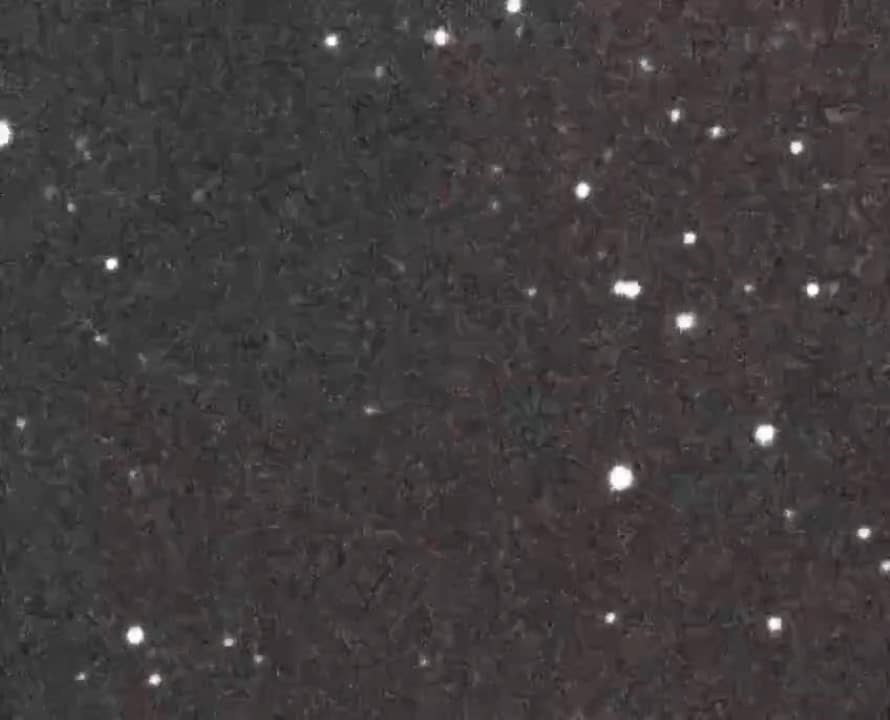
Comet 3I/ATLAS was first detected in July 2025 by the ATLAS astronomical survey system, located at Chile. Sua’s identification as an interstellar object was confirmed through analysis of its trajectory, which turned out to be hyperbolic, indicating that it was not gravitationally bound to our Sol. Movendo reached a speed of more than 58 kilometers per second when entering the system, the celestial body presented characteristics that differentiated it from the native comets of Nuvem and Oort. Observações carried out by advanced telescopes, such as Hubble, revealed a peculiar chemical composition, with an abundance of carbon dioxide and nickel in its icy core and in the coma of dust and gas that surrounded it. The comet reached its perihelion, the closest point to Sol, in October 2025, and made its closest approach to Terra in December of the same year, passing at a safe distance and without presenting any risk of impact. Apesar of unfounded speculations about its nature, astronomers have clarified that its orbital and compositional anomalies are explainable by natural processes occurring in its stellar system of origin.
The explosion of false narratives on the networks
Shortly after the official announcement of the discovery, the internet was taken over by a torrent of information about 3I/ATLAS. Nas first hours, the publication rate reached more than 12 thousand posts per hour, and by October 2025, the total volume of content in English alone already totaled 5.7 million posts.
A detailed analysis revealed that approximately 62% of these posts contained inaccuracies resulting from misinterpretations of technical data, such as orbital ephemerides, without clear malicious intent. Contudo, the rest represented deliberate disinformation, created with the aim of generating panic or engagement through lies.
The disinformation campaign used sophisticated technological tools to expand its reach. Specific Canais on YouTube, some with more than 50 thousand subscribers, were responsible for around 67% of falsehoods. Além In addition, deepfakes were identified in 4% of cases, while AI-generated voices narrated alarmist videos in 11% of the fake content analyzed.
The most worrying factor was the speed of spread. Estudos of digital monitoring confirmed that sensationalist and false content spread on average twice as fast as neutral and verified news published by space agencies and scientific institutions.
How misinformation was amplified
The rapid spread of falsehoods about comet 3I/ATLAS was a direct reflection of the functioning of the algorithms of the main digital platforms. Esses systems, designed to maximize user retention time, tend to prioritize content that generates strong emotional reactions, such as fear and indignation, regardless of its veracity. Figuras public and digital influencers, seeking to capitalize on the massive interest in the topic, also contributed to the creation of parallel narratives that contradicted scientific data.
The tactics employed by misinformation creators were diverse and effective. Vídeos manipulated showed supposed statements from renowned scientists, with their voices and images altered to endorse unfounded theories. Montagens Fake photographs and images quickly went viral, claiming to show artificial structures on the comet or signs of extraterrestrial communication. Inicialmente, space agencies adopted a strategic silence regarding rumors, seeking to avoid giving more visibility to falsehoods. Posteriormente, a coordinated campaign to release raw data and observations confirmed typical comet behavior, without any evidence of alien technology.
AstroBERT-v2: the technological answer
To combat this wave of misinformation, researchers developed and implemented AstroBERT-v2, an artificial intelligence system specifically trained to analyze astronomy-related content. The tool is designed to identify linguistic patterns, factual inconsistencies, and terminology commonly used in fake news about space.
With an accuracy of 94%, AstroBERT-v2 proved to be extremely effective in its task. Seu’s main mechanism of action was to automatically detect false publications and then insert contextual responses or notes containing links to verified scientific sources, such as articles from space agencies and universities.
The most significant impact of the tool was the drastic reduction in the useful life of pseudonews. Antes of its implementation, false news could circulate for days or weeks. With the performance of AstroBERT-v2, the average longevity of a rumor about the comet was reduced to approximately six hours.
Effectiveness proven in numbers
The results of applying AstroBERT-v2 were quantified through controlled studies and large-scale data analysis. In a test involving 500 participants exposed to false content, 78% stated that automatic AI interventions were useful in correcting their perception on the subject. Conviction in dubious narratives dropped, on average, by 25% among users who viewed verification notes.
The combination of AI technology with community moderation mechanisms, such as the collaborative notes already existing on platforms like X, has proven to be particularly powerful. Essa synergy resulted in a more than 50% decrease in the number of retweets and shares of misinformation. The 3I/ATLAS case demonstrated the scalability and viability of automated tools to mitigate infodemics in real time.
The scientific and digital legacy of 3I/ATLAS
The episode involving comet 3I/ATLAS exposed the vulnerability of the global information ecosystem in the face of major scientific discoveries. The speed with which millions of false publications were created and disseminated served as a warning to the scientific community and technology companies. The success of tools like AstroBERT-v2, however, points to a promising path, where artificial intelligence acts as a fundamental ally in preserving the integrity of information. The integration of these systems with human and community moderation proved to be an effective strategy, whose effectiveness can be expanded in the future.
As comet 3I/ATLAS continues its journey out of Sistema Solar, it leaves behind a double legacy. Cientificamente, data collected during its passage will continue to provide valuable information about the composition of celestial bodies in other star systems. Digitalmente, the disinformation crisis it provoked accelerated the development of technological countermeasures and reinforced the urgent need to promote scientific education and critical thinking in society, empowering the public to navigate an increasingly complex media landscape.



