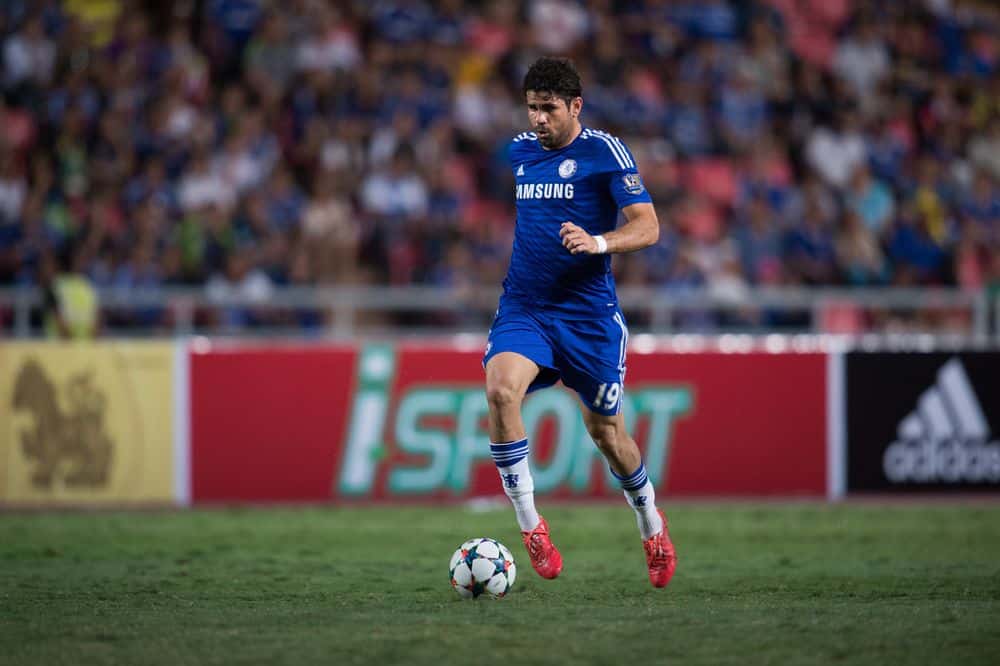
Striker Diego Costa, with remarkable spells in European football and at Seleção Espanhola, broke his silence about his troubled relationship with coach Antonio Conte during the period they were together at Chelsea. In recent statements to “The Obi One Podcast”, the player detailed the working environment under the command of the Italian coach in the 2016/17 season, marked by the Premier League title. Segundo the athlete, despite his sporting success on the field, daily life at the training center was permeated by an excessively rigid and authoritarian attitude from the commander, which generated profound wear and tear among the members of the London squad.
Daily coexistence in Stamford Bridge seems to have been one of the biggest challenges for the group which, even though victorious, dealt with leadership described as negative by Costa. The player highlighted that Conte’s behavior did not allow athletes to enjoy training sessions, transforming the professional routine into a psychological burden. Essa lack of interpersonal harmony, in the striker’s view, was the determining factor in the coach’s time at the English club not lasting longer, despite the cups won at Inglaterra.
😡 ‘HE’S A VERY BITTER GUY’
—The Obi One Podcast (@obionepodcast)January 22, 2026
It’s fair to say Antonio Conte is NOT on Diego Costa’s Christmas card list. 👀
🧨💥pic.twitter.com/L6evL19O8Z
The centralizing profile of Antonio Conte behind the scenes
The attacker highlighted that the main difficulty in getting along with Antonio Conte was the lack of trust that the coach placed in his subordinates and his technical team. Diego Costa stated that the Italian operated under the premise that he had absolute knowledge about all aspects of the game, ignoring suggestions or the collective well-being of the players. Essa centralizing stance created an abyss between the technical command and the athletes, who felt devalued and constantly under unnecessary emotional pressure.
The training sessions, which were supposed to serve for technical and tactical improvement, were described by the player as moments of constant tension and little professional satisfaction. According to reports from Costa, the coach maintained a perpetual expression of discontent and anger, which contaminated the organizational climate in the locker room. Key friction points mentioned included:
- The coach’s refusal to listen to differing opinions during preparation for matches.
- The emotional distance that prevented the creation of positive leadership bonds.
- Maintaining a charged environment, marked by constant criticism and lack of empathy.
- The perception that success on the field occurred despite the internal climate, and not because of it.
Striking contrast between the management of Mourinho and Conte
In a comparative analysis of the different leadership styles he experienced at Premier League, Diego Costa placed José Mourinho on a level opposite to that of Antonio Conte. The striker was full of praise for the Portuguese coach, describing him as the professional who brought him the most happiness during his career in European football. Para the player, Mourinho’s ability to motivate the squad and humanize the work environment was the difference that made the routine productive and light.
The experience under the command of Mourinho was classified by Costa as revitalizing, where the pleasure of training exceeded contractual obligations. Ele emphasized that, with the Portuguese, the players arrived at the club excited, feeling that the coach gave them “life” and emotional support. Essa dichotomy between the authoritarianism of Conte and the charisma of Mourinho serves as a faithful portrait of the tensions that often occur in the world’s biggest clubs.
The troubled exit and the decisive text message
The relationship between Diego Costa and Antonio Conte reached its definitive breaking point after winning the English title, in an episode that has become famous in the recent history of Chelsea. The coach sent a text message to the striker informing him that he was no longer part of the plans for the following season, even after Costa had been the team’s top scorer. Essa impersonal form of communication was seen as the height of professional disrespect and sealed the fate of the athlete, who later returned to Atlético from Madrid.
The outcome of that partnership left deep marks on the image of Conte among fans and the specialized press, reinforcing his reputation as a coach who was difficult to deal with on a daily basis. Diego Costa reiterated that dissatisfaction was widespread and that the majority of the cast shared the same feeling of relief when the cooperation came to an end. The report explains how people management can be as crucial as tactical strategy in maintaining a winning project in the long term.
Repercussion of the comments in the English football environment
Diego Costa’s statements quickly echoed across sports news portals and social media, reigniting debates about the effectiveness of training methods based on fear and rigidity. Especialistas point out that, although Conte is a tactically brilliant coach and collector of titles, his history of conflicts with leadership in the clubs he plays for corroborates the attacker’s version. The case serves as a study in how immediate sporting success can mask deep internal crises that end up imploding talented teams.
Costa’s transparency in addressing these topics reflects a growing trend of players who, after the end of cycles, expose the behind-the-scenes reality of high performance. Esse type of statement offers fans and managers a clearer view of the challenges faced in extreme pressure environments. The attacker’s narrative suggests that the balance between discipline and personal satisfaction is the secret to the sustainability of any job in elite sports.
Details of the training routine under strong pressure
The daily life reported by Diego Costa involved an emotional charge that went beyond the four lines of the playing field during his stay in Londres. The player mentioned that the Italian coach’s closed face was the first thing the athletes saw when arriving at the training center, dictating the negative tone for the rest of the day. Não there was space for open dialogue or moments of relaxation, elements that Costa considers fundamental to maintaining the mental health of a competitive group.
For many players, the discipline imposed by Conte seemed to go beyond the limits of professionalism, becoming something personal and suffocating. Essa perception that “no one liked him” suggests that the locker room was united not by admiration for the leader, but by a common need for professional survival. The success of that season was therefore an example of the resilience of a group of players who managed to isolate themselves from external toxicity to achieve the club’s collective goals.
Legacy of titles and conflicts in Antonio Conte’s career
Antonio Conte’s career continues to be marked by this duality between significant victories and traumatic departures from the institutions he commands. Desde his passage through Juventus until more recent passages through Inter from Milão and Diego Costa’s words only confirm a profile that the football market has been monitoring carefully for years, balancing the technical gain with the risk of internal instability.
The news reinforces that, for athletes with the profile of Diego Costa, who value human connection and mutual trust, the Italian style of Conte represents the opposite of the sporting ideal. Enquanto modern football is moving towards more collaborative management, the attacker’s report serves as a reminder of the tensions that still persist at the top of the world football pyramid. The search for results at any cost often sacrifices the longevity of partnerships that could be historic for clubs.
Perspective on the future and the impact of the statements
Although the episode took place a few years ago, the detailed revelation in the podcast brings new elements to understand the dynamics of that Chelsea team. Diego Costa remains a beloved figure among the London fans, who now better understand the reasons for his abrupt departure from the club. The impact of these statements also affects the perception of future players who may work with Conte, creating a warning about the environment they will encounter.
The striker’s honesty in admitting his preference for Mourinho also highlights how the people management style can define the individual performance of big stars. Costa was most productive and happy under commands that offered freedom and support, something that Conte deliberately restricted in favor of a strict, mechanical system. The history of Chelsea in 2016/17 is now recorded not only by the trophy, but by the silent resistance of a dressing room that did not feel represented by its boss.