
Research in Japan chooses the Honda Fit as the best car for everyday use due to its economy and visibility By Carolina Costa
6 min read
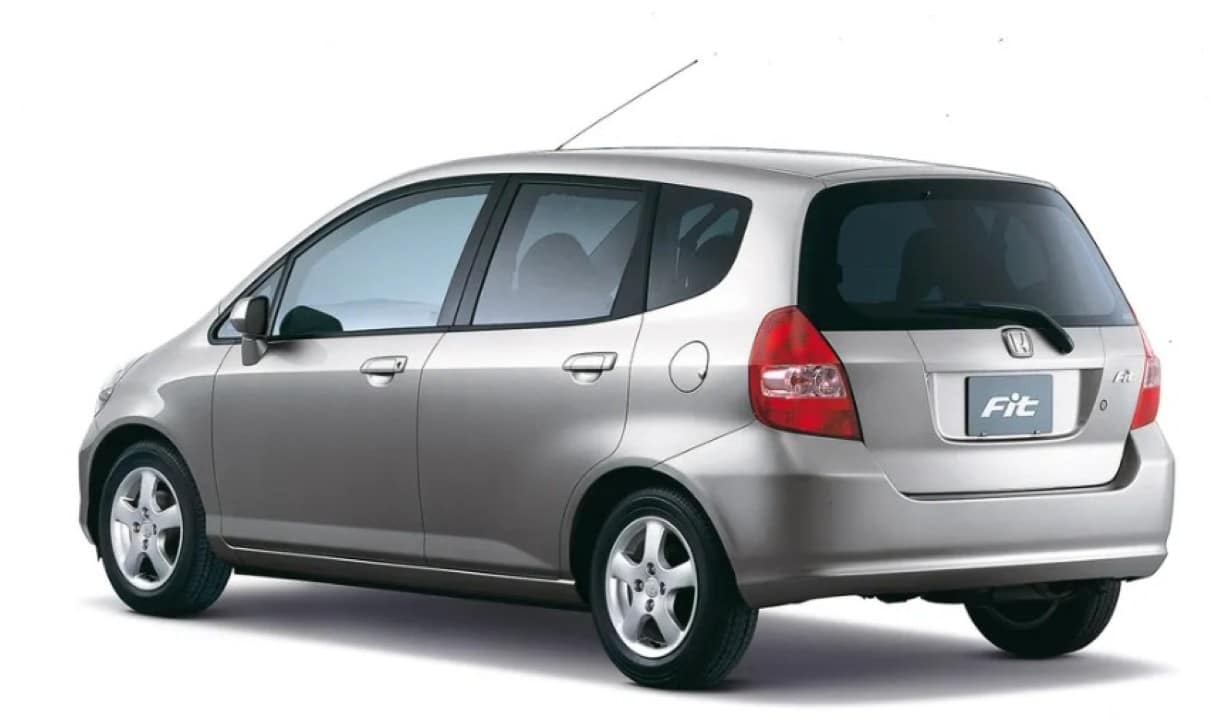 |
A new survey carried out in January with 300 drivers of different ages across the Japão identified the Honda Fit as the preferred vehicle for daily trips, known as commuting. The compact model of the Honda was the most voted, surpassing direct competitors and consolidating its image as a practical and efficient solution to the challenges of Japanese urban traffic.
The choice of participants was guided by pragmatic criteria, such as low maintenance costs, excellent fuel consumption and ease of driving on congested roads. The Toyota Yaris and the Honda N-Box were also among the most cited, reflecting a clear market preference for vehicles that combine economy, comfort and maneuverability in dense metropolitan environments.
The survey, conducted using an online questionnaire with open answers, captured the real perceptions of those who face the routine of getting to and from work. The results highlight that, for the Japanese driver, functionality and reducing stress behind the wheel are more important than luxury or high-speed performance, shaping trends in the local automotive sector.
Detailed voting results
With a total of 49 votes, Honda Fit took the lead in the survey. Respondents justified the choice by citing the combination of intelligent design with controlled operating costs. The feeling of safety provided by the wide front and side visibility was one of the most praised points, being a crucial differentiator for navigating busy intersections and narrow streets with confidence.
The Toyota Yaris won second place with 34 votes, being recognized mainly for its mechanical robustness and the efficiency of the powertrain, especially in the hybrid version. Drivers highlighted that the reliability of the Toyota brand, combined with low fuel consumption, makes the Yaris a rational choice for those seeking predictability and long-term expense control.
Completing the podium, the Honda N-Box obtained 31 votes, an impressive result for a vehicle in the kei car category. Seu The main attraction, according to participants, is the surprising interior space, which offers an unusual level of comfort and versatility for a car of its size. The ease of maneuvering and parking in tight spaces was also a determining factor in its popularity.
The qualities of the Honda Fit for everyday use
The success of the Honda Fit in the Japanese urban environment can be attributed to a set of features carefully designed for city living. Seu compact design does not compromise internal space, which is optimized by solutions such as folding seats, allowing the transport of larger loads when necessary without sacrificing comfort for passengers in everyday use.
The driving position, slightly higher than that of other hatchbacks, improves the driver’s field of vision, minimizing blind spots and making it easier to anticipate movements in traffic. Essa feature has been repeatedly mentioned as a factor that reduces mental fatigue during traffic jams, making the driving experience less tiring.
Furthermore, the Honda dealer network and parts availability in the Japão ensure that maintenance is accessible and quick, a vital point for those who depend on their car daily. The latest versions of the Fit come equipped as standard with a robust package of active safety technologies, such as autonomous emergency braking and lane keeping assist, which contribute to safer and calmer driving.
Advantages of Toyota Yaris in urban commuting
The Toyota Yaris has established itself as a strong alternative to the Fit, capitalizing on the Toyota’s reputation for durability and low cost of ownership. Sua hybrid version is particularly valued, achieving average consumption that often exceeds 35 km/l in real mixed traffic conditions, which represents significant savings in the monthly fuel budget.
The interior of the Yaris is often praised for its quality finish and ergonomic design, which provides a feeling of well-being even on longer journeys. Efficient acoustic insulation and well-calibrated suspension help filter asphalt irregularities and traffic noise, creating a calmer and more comfortable environment for the driver and passengers.
The vehicle’s light steering and short turning radius are other advantages highlighted by research participants. Essas features make the Yaris extremely agile for making quick maneuvers, such as changing lanes on busy avenues or parking in difficult-to-access spaces, optimizing time and reducing stress in common everyday urban situations.
Why the Honda N-Box Attracts Daily Drivers
Despite belonging to the microcar (kei car) category, the Honda N-Box stands out for a design that maximizes interior space. Sua tall, box-shaped body allows for comfortable seating for four adults, as well as offering a surprisingly versatile trunk for a vehicle less than 3.4 meters long.
The tax benefits associated with kei cars in Japão, such as lower taxes and insurance, make the N-Box a financially attractive option. Seu small-displacement engine, generally equipped with a turbo, offers adequate performance for the city with exemplary fuel consumption, keeping operating costs at a very low level.
The elevated driving position, similar to that of a compact SUV, conveys a greater feeling of safety and improves visibility, aspects that are highly valued in the heavy traffic of Japanese metropolises. For many drivers, the N-Box represents the ideal solution that combines the economy of a kei car with the practicality and comfort of a larger car.
The automotive market scenario in Japão
The dominance of compact vehicles and kei cars in the Japão is not a coincidence, but rather a direct response to the country’s geographic and economic conditions. Cidades densely populated, narrow streets and the high cost of parking and tolls make large cars impractical for the majority of the population. Modelos like the Fit, Yaris and N-Box are specifically designed to thrive in this environment, offering maximum efficiency in a compact package. Dados of sales from previous years, such as 2025, often show the N-Box as the best-selling car in the country, highlighting the strength of the kei segment. However, preference surveys like the one from January 2026 reveal important nuances, showing that for the specific task of commuting, attributes like the superior visibility of the Fit may outweigh the tax benefits of the N-Box in many consumers’ perception of value. The growing popularity of hybrid propulsion systems also reinforces the trend towards greater energy efficiency and lower pollutant emissions, a growing concern in large cities.
Common attributes among the most voted vehicles
Analysis of responses from 300 participants reveals that the three highest-ranked vehicles share essential features that meet the main demands of Japanese urban drivers. Efficiency in fuel consumption is a unanimous factor, being a fundamental criterion for controlling costs in a routine of constant travel.
Maneuverability in tight spaces is another essential quality. The ability to easily navigate congested streets and park without difficulty is a difference that saves time and reduces anxiety. Todos the three models were praised for their agility and compact dimensions, which make them perfectly adapted to the country’s urban infrastructure.
The quest for a less stressful driving experience
A recurring theme in the interviewees’ justifications was the importance of a vehicle that contributes to reducing daily stress. The Honda Fit was cited for its relaxed and intuitive driving, while the Toyota Yaris’s comfortable interior was highlighted as a welcoming refuge amid traffic chaos.
The Honda N-Box, in turn, received praise for transforming the time spent commuting into a more enjoyable moment, thanks to its spaciousness and stability. The presence of driver assistance technologies in the three models was also a positive point, as they help prevent accidents and alleviate the driver’s cognitive load. The research shows that choosing a car for commuting goes beyond simple functionality, also involving the driver’s well-being and quality of life.



