United Kingdom rejects joining Trump’s peace board due to president Putin’s lack of Ukraine commitment
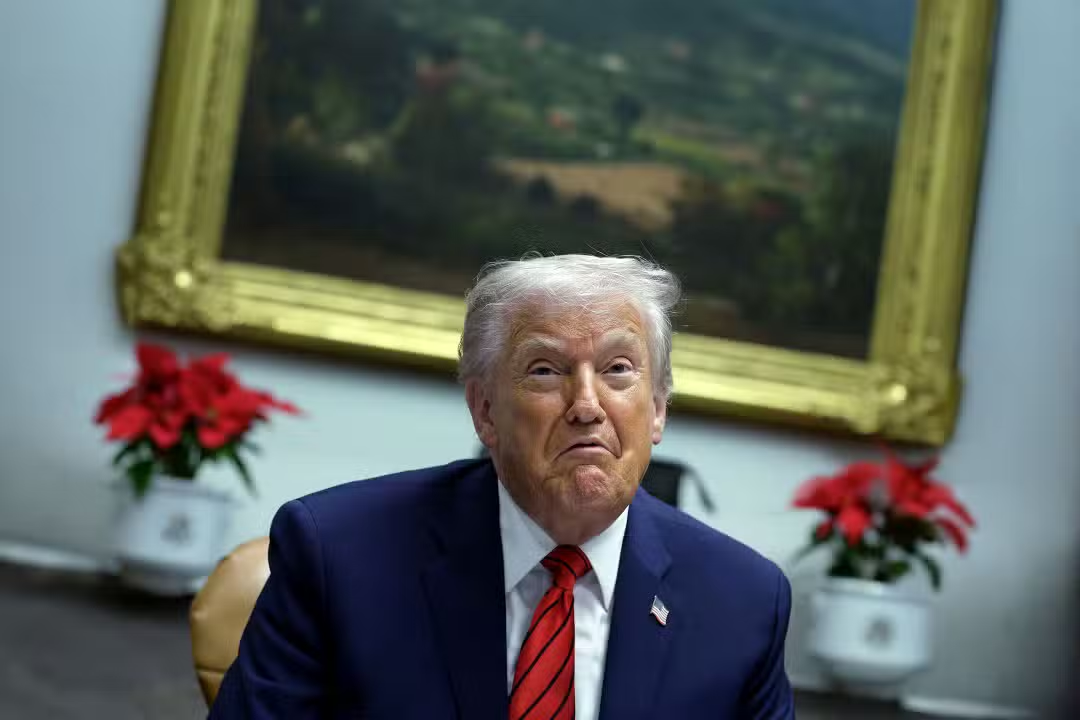
The United Kingdom has formally declined participation in former President Donald Trump’s proposed “Board of Peace,” citing ongoing concerns regarding Russian aggression and its leader’s actions. This decision reinforces London’s firm stance on international law and the necessity for genuine commitment to peace. Foreign Secretary Yvette Cooper emphasized that Moscow’s current conduct and a visible lack of genuine dialogue preclude British engagement with such an initiative.
Cooper asserted that President Vladimir Putin has shown no verifiable commitment to peace in Ukraine, a critical factor influencing the UK’s foreign policy decisions. This resolute position underscores London’s unwavering support for Ukraine’s sovereignty and its consistent demand for concrete, verifiable steps towards de-escalation from the Kremlin as 2025 progresses. The government believes that engaging in a peace board without these fundamental shifts would be counterproductive to achieving a lasting resolution.
British commitment to peace principles
The UK government maintains a firm position that any credible peace initiative must be fundamentally founded on genuine respect for international law and territorial integrity. This principle rigorously guides its foreign policy, especially concerning the protracted and devastating conflict unfolding in Ukraine. Adherence to these core tenets is non-negotiable for London when considering participation in global diplomatic endeavors.
Foreign Secretary Cooper highlighted that President Putin’s actions, including persistent military operations and hostile rhetoric, do not align with the essential preconditions for meaningful diplomatic engagement. Therefore, joining a broad “peace board” that might implicitly overlook these crucial foundational issues is seen as potentially legitimizing aggression rather than fostering true peace. The UK seeks real change, not merely symbolic gestures.
London’s diplomats are actively working through established international forums and multilateral organizations to press for a comprehensive resolution to the conflict, prioritizing accountability and justice for the ongoing war in Eastern Europe. This approach ensures that any British diplomatic effort contributes to a just and enduring peace, rather than simply participating in forums that lack clear objectives or verifiable outcomes.
Evaluating proposed international initiatives
Trump’s concept for a “Board of Peace” has garnered varying international responses since its initial proposal, generally aiming to bring global leaders together to address complex conflicts. However, specifics regarding its proposed structure, operational mechanisms, and concrete objectives have remained largely undefined, creating uncertainty about its potential efficacy. This ambiguity contributes to the cautious approach taken by several nations.
The UK’s careful refusal reflects a cautious and pragmatic approach to new multilateral frameworks, particularly when existing diplomatic channels are already actively addressing complex geopolitical challenges like the full-scale war in Ukraine. Rather than duplicating efforts or joining initiatives without clear mandates, the UK prefers to concentrate its diplomatic resources where they can have the most tangible impact.
Putin’s actions and global perception
President Putin’s government has faced widespread international condemnation and a concerted effort by numerous Western nations to impose extensive sanctions and achieve diplomatic isolation since its full-scale invasion of Ukraine. This sustained pressure aims to alter Moscow’s strategic calculations and compel a return to international norms. The global community largely views the conflict as a direct violation of sovereign rights.
Recent intelligence reports and official statements from allied governments in early 2025 continue to indicate a persistent lack of significant shift in Russia’s military strategy or its demonstrated willingness to engage in good-faith negotiations towards a peaceful settlement. The aggression continues, challenging international efforts to stabilize the region and restore peace.

This sustained posture by Moscow, characterized by continued military operations and a refusal to negotiate on terms acceptable to Ukraine and its allies, makes it profoundly challenging for countries like the UK to endorse any peace proposal that might inadvertently legitimize the current conflict. Such an endorsement could also diminish crucial international pressure on the Kremlin, potentially prolonging the war.
Implications for transatlantic relations
The UK’s decision could be perceived differently across the Atlantic, particularly if former President Trump were to return to office and champion such an initiative with renewed vigor. London consistently seeks to balance its independent foreign policy priorities with the vital need for allied solidarity and cooperation with the United States. This careful diplomacy is crucial for maintaining strong alliances.
Maintaining strong and robust ties with the United States remains a foundational cornerstone of British foreign policy, irrespective of who occupies the White House at any given time. This requires an ongoing and careful navigation of potentially differing strategic viewpoints and approaches to global challenges, ensuring that the foundational alliance endures.
Senior British officials have consistently affirmed their unwavering commitment to the transatlantic security architecture, most notably through their strong support for NATO, which contrasts with some isolationist sentiments occasionally expressed by certain political factions. This commitment underscores a shared vision for collective defense and regional stability. Ensuring alignment on critical security issues, particularly regarding Russia and the broader European stability, is paramount for both nations moving into 2025 and beyond.
Ukraine’s perspective and support from allies
Ukraine has consistently and vociferously called for sustained international pressure on Russia, coupled with robust military, humanitarian, and financial assistance from its allies to defend against ongoing aggression. Any international initiative perceived to undermine this unified front, or to offer premature concessions, is viewed with deep skepticism and concern by Kyiv, which fears a weakening of its defensive posture. The UK remains one of Ukraine’s staunchest supporters, providing significant aid packages, intelligence sharing, and actively advocating for a just peace that fully respects Ukraine’s territorial integrity and national sovereignty within international frameworks.
Prime Minister Rishi Sunak’s administration, alongside Foreign Secretary Cooper, has consistently reiterated that a lasting and equitable peace cannot be achieved through concessions to aggression, which would set a dangerous precedent for international relations. Instead, they argue, peace must be secured through a clear, unequivocal commitment from Russia to withdraw its forces from Ukrainian territory and to adhere strictly to international norms and established treaties. This resolute perspective profoundly shapes their engagement with all proposed diplomatic solutions and peace initiatives.
The path toward a sustainable peace in Europe
Achieving a sustainable and durable peace in Europe necessitates a multifaceted and integrated approach that combines relentless diplomatic pressure, comprehensive economic sanctions, and unwavering, continued support for Ukraine’s defense capabilities, according to leading British policy makers. Foreign Secretary Yvette Cooper has clearly articulated that genuine de-escalation and a verifiable commitment from President Putin to definitively cease hostilities and unequivocally respect international borders are absolutely non-negotiable prerequisites for any broad, credible peace talks to genuinely succeed. The UK envisions a future where European security is fully restored through strict adherence to the rule of law and international agreements, not through initiatives that might inadvertently reward aggression or overlook fundamental principles of national sovereignty, ensuring that 2025 builds a robust foundation for lasting regional stability and global order.
Future diplomatic engagements
Despite declining this specific invitation from former President Trump, the UK government affirmed its consistent readiness to engage in credible and constructive diplomatic efforts aimed at resolving international conflicts across the globe. This engagement, however, is always conditional on such initiatives aligning thoroughly with its core principles, established values, and strategic foreign policy objectives, ensuring that British participation genuinely contributes to global security.
Veja Tambem em Últimas Notícias

Amazon Prime’s new ice hockey romance adaptation captivates global audiences with record viewership
Remote gold mine gripped by surging ebola cases, health workers face uphill battle

Schumacher at 57: A private battle over a decade post-accident with new insights in 2026

NASA divulga dados fascinantes do cometa interestelar 3I/Atlas e sua trajetória em 2026
Colombia’s presidential election approaches, marked by heightened political violence and stark policy contrasts

Governo federal detalha regras e benefícios complementares do Bolsa Família para o próximo ano
ラオス水没洞窟、国際救助隊が生存者4人を無事救出、水位低下が脱出を支援か
ホワイトハウスUFCイベント、米兵招待に厳格な身体基準導入で論議浮上
Madlanga Commission probes alleged butt lift bribes and flawed drug operations gripping South Africa
Moana Pasifika delivers poignant upset victory amid uncertain future in Super Rugby Pacific
Novas diretrizes do Bolsa Família 2026 garantem suporte ampliado e inclusão social