Broadcast of the College Football Playoff final reaches 30 million views in a new record By Beatriz
7 min read
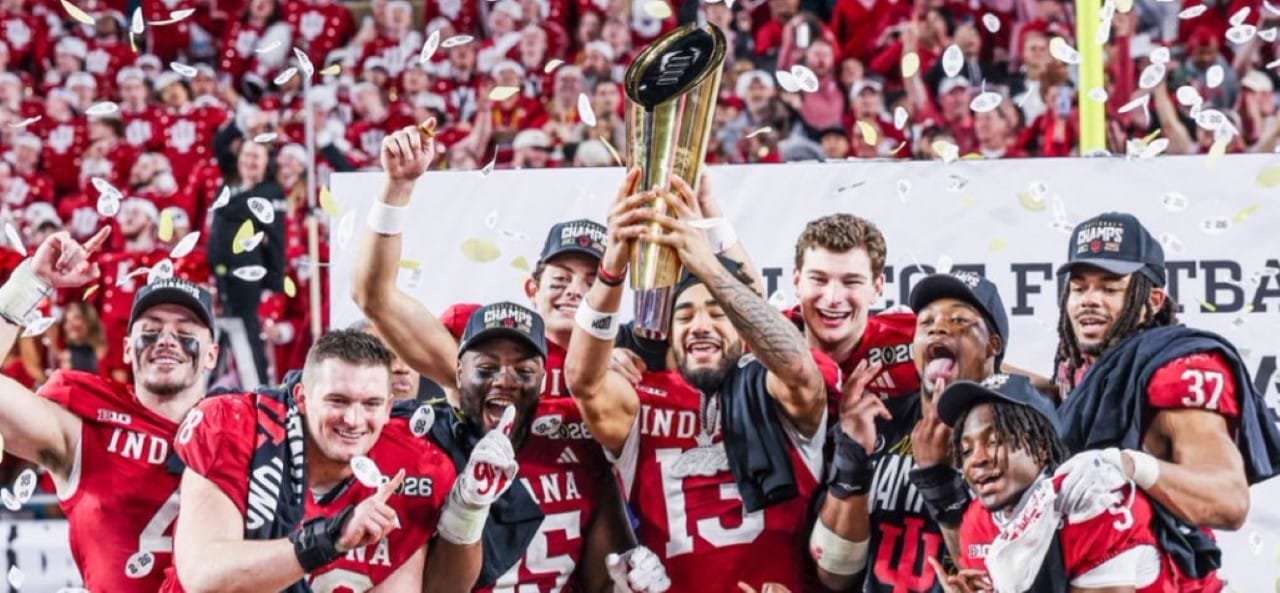 |
The decision of College Football Playoff between Indiana and Oregon established a new level for university sports in the Estados Unidos by recording an average audience of 30 million viewers. The confrontation, which culminated in the historic victory of Indiana, attracted massive public attention during Thursday night, consolidating the tournament as one of the most watched events on the North American sporting calendar. Especialistas from the sector highlight that the numbers reflect not only the technical quality of the teams, but also the success of the new expanded playoff format.
Public engagement exceeded the initial expectations of broadcasters holding the broadcasting rights, who predicted moderate growth compared to the previous year. The data shows that the audience peak occurred during the last quarter of the match, when Indiana consolidated its strategic advantage to guarantee the national trophy. Esse volume of spectators puts the university final on a level of direct competition with major professional events, such as the NFL conference finals and NBA decisive games.
- 25% increase in audience compared to last season’s final.
- Record digital reach through official streaming platforms.
- Greater concentration of young audiences aged 18 to 34 in the last ten years.
- Absolute dominance of social media with constant mentions during the four quarters.
The massive support of fans reinforces the cultural importance of college football, which serves as a pillar of entertainment in several regions of the country. The organization of the event celebrated the result as a validation of the investment in infrastructure and marketing made throughout 2025. With the consolidation of these numbers, the advertising market projects even higher values for sponsorship quotas for the next seasons of the championship.
Expansion of the playoff format drives national interest
The change to a more comprehensive knockout system allowed more teams from different conferences to have the opportunity to compete for the category’s top title. Essa plurality of competitors generated renewed interest in markets that were previously far from the final stages, such as the state of Indiana and the regions of Noroeste Pacífico. The presence of Oregon in the decision also contributed to the West Coast local time maintaining high tuning rates until the end of the confrontation.
Media analysts claim that the “zebra” narrative constructed by Indiana throughout the season was one of the main drivers for neutral audience engagement. Milhões of people who don’t necessarily support the universities involved decided to follow the champion team’s overcoming trajectory. Esse audience phenomenon demonstrates that competitive balance is essential to maintain commercial relevance and organic growth of the sport’s fan base.
Undefeated. And never daunted.#CFBPlayoff pic.twitter.com/FlKejFjzie
—College Football Playoff (@CFBPlayoff)January 21, 2026
Impact of technology and streaming on content distribution
Easy access through apps and subscription services allowed the game to be followed in real time on mobile devices around the world. Diferente than traditional broadcasts, the digital format offered interactive statistics and multiple cameras, which kept the viewer connected to the platform for longer. The integration strategy between linear television and the online environment proved to be the ideal formula for reaching the milestone of 30 million people.
Social media acted as a vital complement to the main broadcast, generating discussions that encouraged new users to turn on the television or open the video app. Milhares of clips with the most plastic plays of Indiana and Oregon were shared instantly, creating a network effect that amplified the reach of the event. Esse integrated digital ecosystem is now the model for other sports leagues looking to maximize their global visibility.
Technical and logistical preparation for the event in 2026
Holding the match required a complex operation involving thousands of security, broadcast and hospitality professionals to guarantee the fan experience. The stadium operated at maximum capacity, receiving visitors from all parts of the Estados Unidos who traveled to witness the historic clash on January 22nd. The efficiency in managing the flow of people and the quality of the lawn was praised by the technical committees of Indiana and Oregon.
The local start time of the match was planned in detail to balance the convenience of fans in attendance and prime broadcast times in different zones. Essa logistical coordination was essential for the audience record to be reached without compromising physical attendance at the stadium. The operational success of College Football Playoff in 2026 sets a standard of excellence for future venues wishing to host the national championship.
Reactions from coaches and players after the final whistle
Indiana’s coach expressed gratitude for the massive support received, emphasizing that the title is the result of years of dedication from a resilient sports program. In his collective statements, he highlighted that knowing that 30 million people were watching the team’s performance served as extra motivation for the athletes on the field. The players also demonstrated awareness of the magnitude of the event and the responsibility of representing the university on such a relevant stage.
On Oregon’s side, the feeling of frustration at the defeat was accompanied by recognition of the growth of university sports as a whole. The technical staff highlighted that reaching the final and participating in a match with such visibility is an achievement that values everyone involved, regardless of the final result on the scoreboard. The appreciation of athletes in such a heated media market opens doors to future professional opportunities in the American football scene.
Financial outlook and new broadcast contracts
The audience success should accelerate the renegotiations of image rights contracts between university conferences and large communication networks. With 30 million confirmed viewers, the market value of the next finals tends to rise considerably, attracting new global investors. The interest of international brands in associating their names with College Football Playoff indicates that the event is no longer just a regional product but has become a global powerhouse.
Profits generated from the sale of tickets, licensed products and digital advertising will be reinvested in the sports infrastructures of participating universities. Isso ensures the cycle of excellence continues, allowing new talent to emerge in cutting-edge training environments. The local economy of the cities involved also registered a significant increase in commercial activities, highlighting the power of financial movement that college football currently has.
Detailed audience data by geographic region
The segmented statistics reveal that the Meio-West of the Estados Unidos recorded the highest rates of proportional participation, driven by the victorious campaign of Indiana. However, growth in southern and east coast states is what really allowed the total number to jump to the 30 million mark. The geographic diversification of the audience shows that the sport is breaking territorial barriers and unifying fans of different profiles.
- Indianapolis led the ranking of cities with the highest share of domestic audience.
- Portland and Eugene had total engagement above 70% of the televisions turned on.
- Cities like Nova York and Chicago saw double-digit increases in streaming consumption.
- Mobile data traffic during the match was the highest recorded on January 22nd.
Analyzing these numbers allows marketing teams to target their campaigns more precisely for the upcoming 2026 season. Where audiences are growing helps strengthen local partnerships and create satellite events that further expand the finals experience. The objective now is to maintain this high level of interest during the regular phases of the championship, ensuring the sustainability of the business model in the long term.
Historical evolution of university broadcasts
Compared to previous decades, college football has undergone a radical transformation in the way it is consumed. What was once restricted to radio broadcasts and local channels now occupies the center of attention of the largest global media platforms. The record of 30 million viewers is the crowning achievement of a professionalization process that involves everything from image capture to real-time tactical analysis for the viewer.
Indiana and Oregon went down in history not just for the score, but for being the protagonists of a watershed chapter in the entertainment industry. The ability to consistently generate an event of such magnitude places College Football Playoff at the top of annual programming priorities. The trend is that, with the use of new augmented reality and immersive sound technologies, engagement will continue to rise in the coming years.
Cultural significance of Indiana’s victory in the current scenario
The victory of the national championship by Indiana represents a break in paradigms within the traditional structure of university sports. Historicamente dominated by other powers, the 2026 title shows that investment in sports management and recruiting can take less traditional programs to the top. Essa change in the hierarchy of sporting power is seen positively by fans, who appreciate the competitiveness and unpredictability of results.
The celebration in the streets of Indiana after the game demonstrated the social impact that a victory of this size has on the local community. The feeling of pride and belonging generated by the American football team is reflected in other areas of the university, increasing the interest of new students and donors. The national visibility provided by 30 million spectators puts the institution in the spotlight, facilitating the development of new academic and sporting projects.