Historic 2026 solar storm brings rare aurora australis visibility to southern Brazil

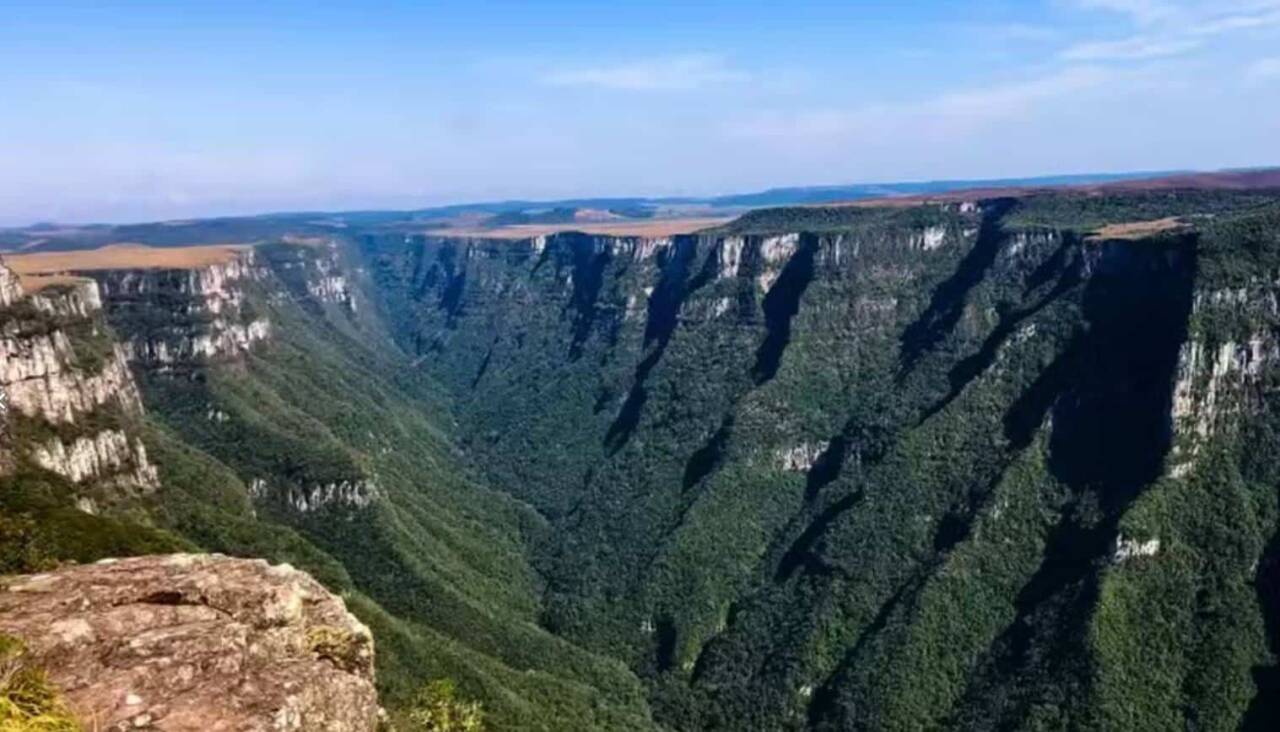
Southern Brazil witnessed a striking celestial event on January 20, 2026, as a powerful solar storm triggered a rare aurora australis, or southern lights, visible in the skies of Rio Grande do Sul. This extraordinary phenomenon, typically reserved for high-latitude polar regions, captured attention across the nation.
The event marked a significant occurrence for Brazil, given its geographical position far from the magnetic poles where such auroras are common. Photographs circulating online showcased the breathtaking display, featuring purple and reddish hues illuminating the night sky.
The observation was made possible by the most intense solar storm recorded in the last two decades, which caused strong solar winds to interact with Earth’s magnetic field. This interaction resulted in the vibrant light show seen by some in specific locations.
Understanding the rare phenomenon
Auroras occur when charged particles from the sun, ejected during solar flares or coronal mass ejections (CMEs), collide with gases in Earth’s atmosphere. These collisions excite atmospheric atoms and molecules, causing them to emit light.
When this phenomenon occurs in the Northern Hemisphere, it is known as the Aurora Borealis, or northern lights. In the Southern Hemisphere, it is called the Aurora Australis. Key factors contributing to such a display include:
* Intense solar activity: Powerful solar storms release a massive stream of charged particles.
* Geomagnetic field interaction: These particles interact with Earth’s magnetosphere.
* Proximity to magnetic poles: Auroras are typically seen closer to the magnetic north and south poles.
* Dark and clear skies: Absence of light pollution and clouds is crucial for visibility.
Expert insights on visibility
Astrophysics professor Cássio Leandro Barbosa from Centro Universitário FEI affirmed the possibility of observing such an event in southern Brazil. He highlighted the region’s geographical alignment as a contributing factor.
“It is favorable for longitude 60º, and Cambará is quite far south, so a high-intensity event could indeed be observed,” Barbosa stated during an interview. He also noted a slight uncertainty, suggesting some observations might be due to natural luminescence rather than solely the aurora.
Despite the rarity, the exceptional strength of the solar storm provided the necessary conditions for this unique sighting, pushing the boundaries of typical aurora visibility zones.
The 2026 solar storm’s intensity
The solar storm that precipitated this event was classified as the most powerful in two decades, placing global monitoring agencies on high alert. Its magnitude was such that the effects extended much further from the usual polar regions, affecting Earth’s magnetic field and potentially impacting communications and power grids worldwide. Scientists closely monitored its progression, anticipating widespread geomagnetic disturbances that could lead to auroral displays at lower latitudes than commonly observed, making the Brazilian sighting particularly significant.
Historical precedents in Brazil
While rare, the 2026 event is not entirely unprecedented in Brazil’s history. A study published in 2024 by researcher Denny M. Oliveira brought to light a significant observation from 1875.
In that year, French astronomer Emmanuel Liais, who served as the director of the Imperial Observatory in Rio de Janeiro (now the National Observatory), recorded an aurora australis over the city. Liais, using a spectroscope, meticulously observed moving light rays in the sky, noting distinct red tones at the bottom and greenish hues at the top of the display, providing valuable historical documentation of such phenomena in tropical latitudes.
South Atlantic Magnetic Anomaly’s role
Cambará do Sul, the municipality in Rio Grande do Sul where the aurora australis was photographed, is notably close to the South Atlantic Magnetic Anomaly (SAMA). The SAMA is an area where Earth’s inner Van Allen radiation belt comes closest to the planet’s surface, creating a region of reduced magnetic field intensity.
This anomaly allows charged particles from space to penetrate deeper into the atmosphere at lower altitudes than in other regions. While its direct role in large-scale aurora visibility is still a subject of scientific study and discussion, its proximity to Cambará do Sul could have contributed to the localized conditions favoring the rare sighting.
The weakened magnetic field in the SAMA region might facilitate the interaction of solar wind particles with the upper atmosphere, enhancing the potential for auroral phenomena under extreme solar storm conditions. This geographic peculiarity makes certain parts of Brazil more susceptible to such celestial events when a major solar event occurs.
Observing the fleeting display
The photograph, captured and shared by Egon Filter on Instagram, provided concrete evidence of the aurora australis in Cambará do Sul. Filter’s profile detailed that the purple and reddish lights were visible for only a few minutes. Crucially, the phenomenon was not discernible to the naked eye, requiring specialized photographic equipment to be recorded. The image portrays a stunning starry sky adorned with the vibrant, ethereal glow, offering a glimpse into this fleeting spectacle.