
Brazilianpresidentialsuccessionhistoryfromrepublic1889throughcurrenttermleadingupto2026nationalelections

As Brazil prepares for the 2026 elections, where over 150 million voters are expected to elect representatives for state and national executive and legislative branches on October 4, with a potential second round on October 25, understanding the nation’s presidential history offers crucial insight into its political evolution. This electoral cycle marks a significant institutional calendar shift, as the inauguration of the President and Vice-President will occur on January 5, 2027, followed by governors and vice-governors on January 6, reshaping the transition of power.
The upcoming polls also highlight ongoing debates, such as the TSE’s 2026 draft strengthening accountability for big tech platforms while notably not addressing artificial intelligence regulations. Further, new candidacy rules for the 2026 elections outline how political hopefuls can launch their campaigns, underscoring the dynamic nature of Brazil’s democratic process. These developments frame a moment of reflection on the leaders who have shaped the country’s trajectory.
The journey through Brazil’s presidency, from the late 19th century to the present, provides a comprehensive overview of the distinct political, institutional, and social eras the nation has experienced. This historical perspective is vital for citizens engaging in the upcoming electoral decisions, offering context for current challenges and future aspirations.
The dawn of the republic: Early civilian leaders
Brazil’s republican era commenced on November 15, 1889, with Marshal Deodoro da Fonseca assuming the role of its first president. Initially leading a provisional government, he later presided over the constitutional transition from monarchy to republic. His tenure was marked by the 1891 Constitution’s promulgation, alongside significant political instability, economic crisis, and ultimately, the dissolution of Congress, preceding his resignation.
Following Deodoro’s departure, Vice-President Floriano Peixoto took office, despite constitutional provisions for new elections. His administration was characterized by the suppression of armed revolts, including the Naval Revolt and the Federalist Revolution, coupled with measures aimed at controlling living costs.
Political turbulence and military interlude
Prudente de Morais became the first civilian president in 1894, navigating internal conflicts such as the Canudos War and complex diplomatic challenges. His successor, Campos Sales, inherited an economic crisis and solidified the “governors’ policy,” which structured relations between the central government and states throughout the First Republic. This period laid foundational aspects of Brazilian federalism.
The early 20th century saw Rodrigues Alves championing a modernization project for Rio de Janeiro, then the federal capital, encompassing urban reforms and sanitation campaigns, notably the contentious Vaccine Revolt. He was re-elected in 1918 but died before taking office. Afonso Pena, who encouraged railway expansion, also died during his mandate, succeeded by Nilo Peçanha until 1910.
The Vargas era and redemocratization
The 1910s and 1920s witnessed presidencies including Hermes da Fonseca, Venceslau Brás, Delfim Moreira, Epitácio Pessoa, Artur Bernardes, and Washington Luís, against backdrops of World War I, labor strikes, and the emergence of the Tenentismo movement. Washington Luís, the last president of the First Republic, was deposed by the 1930 Revolution, marking a significant institutional rupture.
Getúlio Vargas then seized power, governing for 15 years through provisional, constitutional, and dictatorial phases, culminating in the Estado Novo. His deposition in 1945 led to a transitional government under Supreme Court President José Linhares until Eurico Gaspar Dutra’s election in 1946, heralding redemocratization and a new Constitution.
Building Brasília and a return to democracy
Vargas returned to power via direct elections in 1951, but his second term was plagued by intense political instability, ending with his suicide in 1954. Brief governments by Café Filho, Carlos Luz, and Nereu Ramos followed, setting the stage for Juscelino Kubitschek’s presidency in 1956.
Kubitschek’s administration spearheaded a rapid development project, most famously resulting in the construction of Brasília. His “50 years in 5” motto encapsulated an ambitious vision for national progress and modernization, firmly establishing his legacy in the country’s economic and urban landscape.
Military rule and the path to a new constitution
Ranieri Mazzilli twice served briefly as President. In 1961, he held the office for 13 days after Jânio Quadros’ resignation, bridging the gap until João Goulart’s inauguration. Three years later, in 1964, Mazzilli again assumed the presidency for 13 days, following Goulart’s deposition in the civil-military coup, marking the onset of military rule.
This period saw a succession of military presidents, including Humberto de Alencar Castelo Branco, Arthur da Costa e Silva, Emílio Médici, Ernesto Geisel, and João Figueiredo. These administrations were characterized by authoritarian control, political repression, and significant state-led economic projects. The military regime profoundly impacted Brazilian society and its political institutions.
The dictatorship concluded in 1985 with the indirect election of Tancredo Neves, who, tragically, never took office. His vice-president, José Sarney, then assumed the presidency, guiding the nation through its democratic transition and the drafting of the 1988 Constitution, a landmark document solidifying democratic principles.
The democratic resurgence: impeachments and economic shifts
The New Republic began with Fernando Collor, Brazil’s first directly elected president after military rule, who was impeached in 1992. Itamar Franco succeeded him, overseeing the implementation of the Plano Real, a pivotal economic stabilization program that effectively curbed hyperinflation and brought significant economic relief to the populace. This period marked a return to political stability and economic predictability.
Fernando Henrique Cardoso was subsequently elected and re-elected, governing from 1995 to 2003. His administration continued economic reforms, privatizations, and expanded social programs, consolidating the gains of the Plano Real and fostering a period of sustained economic growth. These years also saw Brazil increase its integration into the global economy.
Contemporary presidencies: From Lula to 2026
The early 21st century has been defined by the presidencies of Luiz Inácio Lula da Silva, elected in 2002 and re-elected in 2006, focusing on social inclusion and economic growth. Dilma Rousseff followed, becoming the first woman president, though she was impeached in 2016.
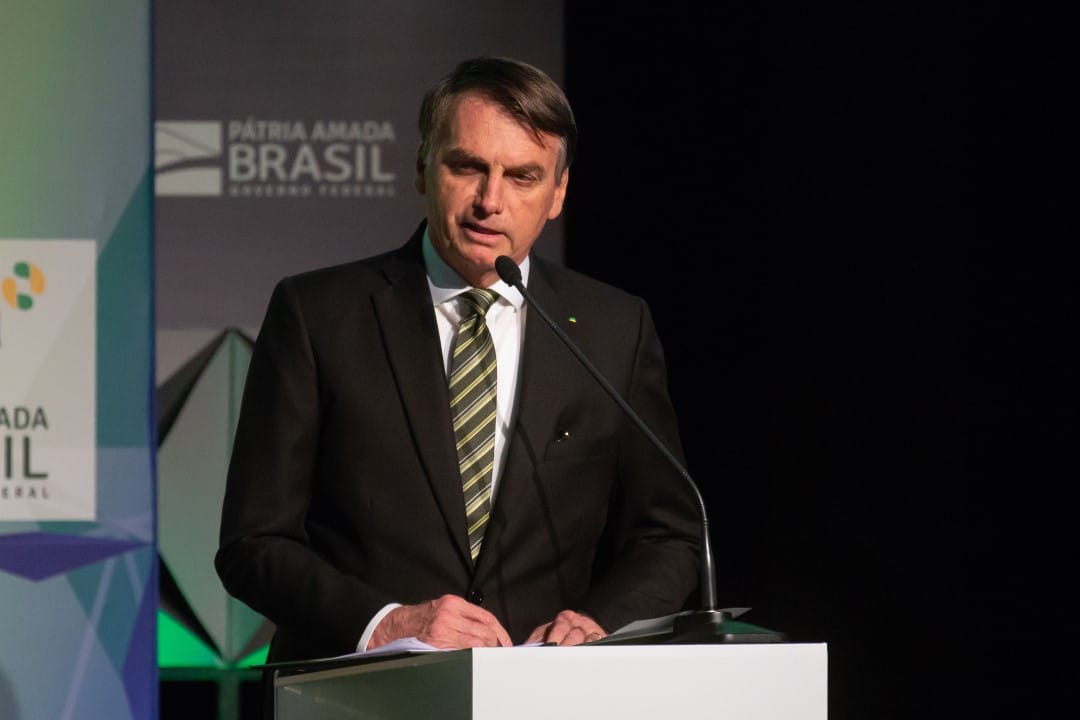
Michel Temer, then vice-president, assumed office until 2019, succeeded by Jair Bolsonaro, elected in 2018. Since 2023, Luiz Inácio Lula da Silva has been serving his third term as president. As Brazilians prepare for the 2026 elections, this historical overview underscores the continuous evolution and resilience of the nation’s democratic journey.





