
GR Yaris gains Ogier and Rovanperä editions with 200 cars before official launch on the Brazilian market By Carolina Costa
5 min read
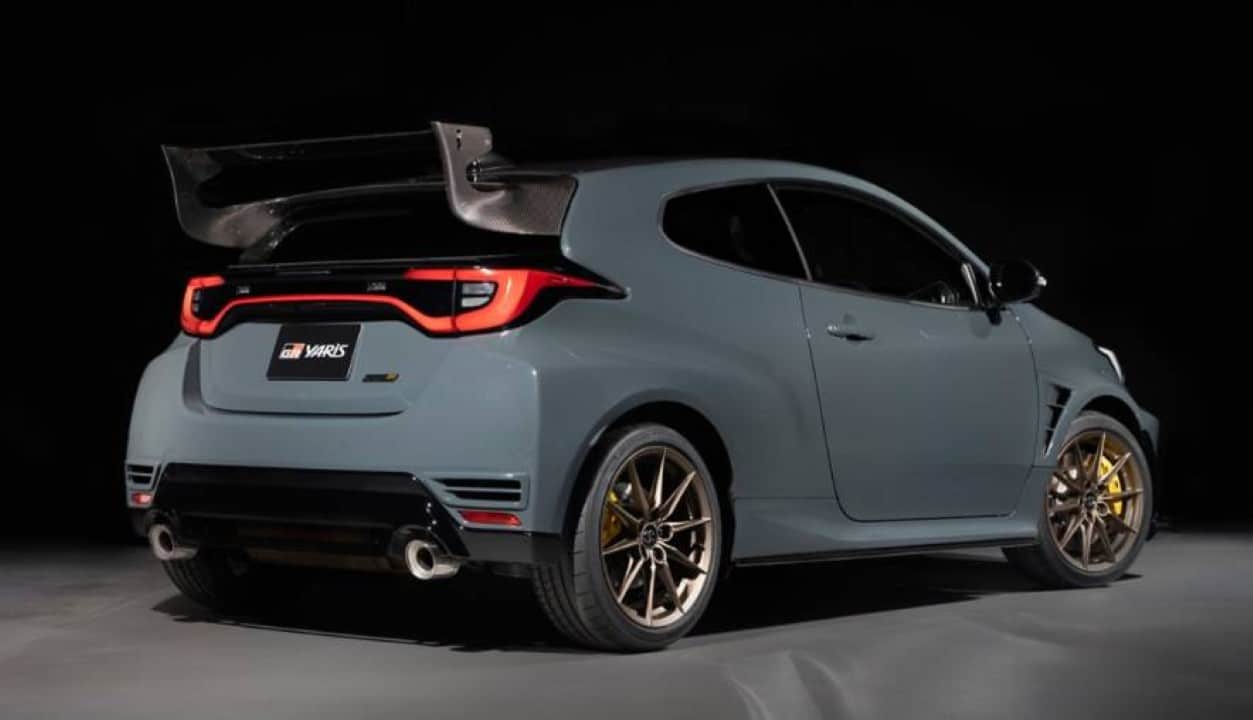 |
Toyota Gazoo Racing, the Japanese automaker’s high-performance division, announced the launch of two special and highly exclusive editions of the GR Yaris. The models pay homage to the multi-world rally champions Sébastien Ogier and Kalle Rovanperä, consolidating the vehicle’s strong connection with competitive motorsport. Production will be strictly limited to 100 units for each version, totaling 200 examples that have already become an object of desire among collectors and enthusiasts around the world.
These special versions arrive in selected markets, such as Japão and Europa, throughout 2024, anticipating the debut of the standard version of the acclaimed hot hatch in the Brasil. The arrival of the conventional model on the Brazilian market is confirmed by the manufacturer to take place in April 2026, generating great expectations among local consumers who are waiting for a compact sports car with rally DNA and all-wheel drive.
Both vehicles were developed with the direct participation of the honored drivers, who contributed to the calibration of exclusive driving modes and fine adjustments to the all-wheel drive system. Essa collaboration ensures that each edition not only bears the names of the champions, but also reflects their distinct riding styles, offering an even more refined and personalized driving experience.
Exclusive details of the Sébastien Ogier edition
The version that celebrates the eight-time world champion Sébastien Ogier stands out for its sober and imposing visual identity. The vehicle is presented in the exclusive color Matte Stealth Gray (matte gray), which gives it a stealthy and sophisticated appearance. Subtle Detalhes, such as decals commemorating the achievement of world titles and references to the França flag on the brake calipers and front grille, reinforce the tribute to the French driver. The interior follows the exclusivity with blue, white and red stitching on the steering wheel and gear lever, as well as a numbered plaque that attests to the authenticity of the limited series. The highlight of this edition are the two new driving modes for the GR-Four all-wheel drive system. The “Morizo” mode was calibrated for a more neutral response and focused on consistency in fast laps, while the “Seb” mode was adjusted by the Ogier himself to prioritize the rear axle, allowing more precise control in curves and facilitating the car’s rotation when entering corners, an ideal behavior for winding asphalt sections.
Version Kalle Rovanperä customizations
In contrast to the sobriety of the Ogier edition, the GR Yaris in honor of the two-time champion Kalle Rovanperä displays a vibrant and aggressive design, directly inspired by the visual layout of the Toyota Gazoo Racing competition car. The body adopts an exclusive tricolor painting that combines shades of red, white and gray in a dynamic pattern, reminiscent of the war colors used by the team in Campeonato Mundial of Rali. The look is complemented by an adjustable carbon fiber rear spoiler, which not only enhances the aesthetics but also improves aerodynamic performance at high speeds. Essa edition was designed to reflect the young Finnish driver’s bold and spectacular riding style.
The big difference in this version is its personalized driving modes, developed to maximize fun and control in different conditions. “Kalle” mode changes torque distribution to favor the rear constantly, ideal for drifting and maneuvering on low-grip surfaces such as gravel or snow. Já the “Donut” mode has been specifically calibrated to facilitate the execution of controlled rotations, sending most of the force to the rear wheels so that the driver can perform 360-degree maneuvers with greater ease. Esses adjustments transform the car’s behavior, making it an extremely agile and fun driving tool, especially off conventional tracks.
Mechanical and performance evolutions
Both special editions are based on the latest update of the GR Yaris, which brought significant improvements to its engine and structure.
The heart of the hot hatch continues to be the 1.6 three-cylinder turbo engine, but with power increased to 304 hp and torque to 40.8 kgfm.
The six-speed manual transmission was retained as standard for purists, but a new eight-speed automatic transmission option was introduced.
The chassis has been reinforced with additional spot welding and increased application of structural adhesives, resulting in increased torsional rigidity.
Expectations for arrival at Brasil
Toyota of Brasil has already officially confirmed that the standard GR Yaris will be launched in the country, with the first units scheduled to arrive in April 2026.
Although prices have not yet been released, experts in the automotive sector estimate that the final value should be above R$400,000, considering import taxes and the exclusive positioning of the model.
The car will compete in a very restricted market niche, with few direct competitors that offer a combination of all-wheel drive, manual transmission and performance derived from motorsport.
The heritage of the world rally championship
The development of the GR Yaris is intrinsically linked to the success of the Toyota Gazoo Racing in the WRC, where the team won multiple titles.
The car was originally conceived as a homologation model, that is, a street version produced in sufficient quantity to legitimize the participation of its competition counterpart in the championship.
Aerodynamic design and premium finish
The two limited editions are equipped with 18-inch BBS alloy wheels, which in addition to being light, have a forged design that increases resistance. The interior features sports seats with a reinforced structure for greater lateral support when cornering and a steering wheel covered in Alcantara, ensuring a firmer and more precise grip during sports driving.
Reception in the international market
The launch of the Ogier and Rovanperä editions caused a huge stir in the markets where they were made available, such as Japão and some Europa countries.
The 200 total units were sold out in record time, with waiting lists and lottery systems to define buyers, highlighting the extremely high demand for the model.



