
Interstellar comet 3I/ATLAS is spotted with a greenish glow in rare recording made in Egypt By Jeronimo Santos
5 min read
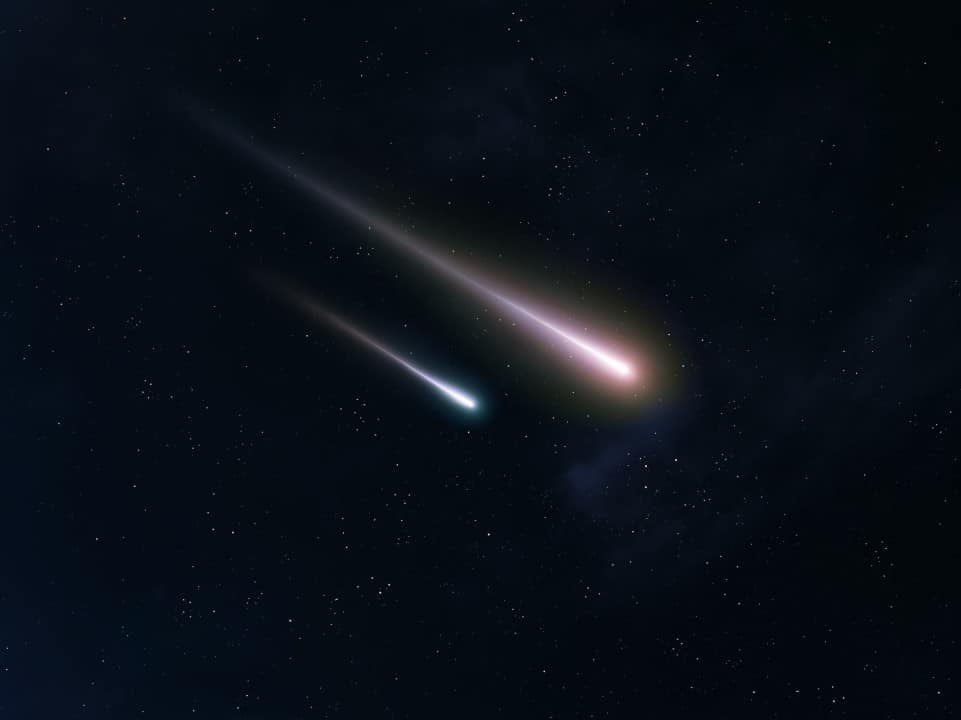 |
A rare astronomical spectacle was documented in the skies of Egito in late 2025, when photographer Osama Fathi made an unprecedented record of the interstellar comet 3I/ATLAS. The image, captured on November 29 of that year, reveals the celestial object exhibiting a distinct greenish glow as it crossed the landscape of Deserto Negro, a region known for its low light pollution and exceptionally dark skies. The recording took place around 3am local time, providing ideal conditions for observation.
Comet 3I/ATLAS is the third interstellar object confirmed to pass our Sistema Solar, following the detections of 1I/’Oumuamua and 2I/Borisov. Após a period of invisibility as it passed behind Sol during the fall of 2025, the comet re-emerged into the night skies, becoming a coveted target for amateur and professional astronomers equipped with telescopes. The photograph of Fathi managed to highlight the comet’s subtle coma, a cloud of gas and dust that surrounds its nucleus, framed by the silhouette of desert trees.
The comet’s trajectory confirms its extrasolar origin. Descoberto on July 1, 2025 by the ATLAS system (Asteroid Terrestrial-impact Ele reached its perihelion, the closest point to Sol, on October 30, 2025, at a distance of approximately 1.4 Unidades Astronômicas (AU), equivalent to 1.4 times the distance between Terra and Sol.
🚨: Photographer captures interstellar comet 3I/ATLAS glowing brilliantly over Egypt’s Black Desert!🌌pic.twitter.com/0UGUp2kpit
— All day Astronomy (@forallcurious)December 10, 2025
Origin and characteristics of the stellar visitor
Comet 3I/ATLAS represents a unique opportunity for science, as it carries information about the composition of its home star system. Diferente of our native Sistema Solar comets, which orbit Sol on elliptical trajectories, interstellar visitors travel at much higher speeds. 3I/ATLAS, for example, moves at about 58 kilometers per second relative to Sol, a speed that prevents its gravitational capture. Essa feature is the main evidence that it did not form in our cosmic neighborhood, but rather in a distant planetary system, having been ejected and drifting through space for millions or even billions of years before crossing our path.
Observations carried out by large observatories, such as the Hubble and James Webb space telescopes, have revealed important details about its structure. The comet has an active coma and a well-defined dust tail, indicating that its solid core is releasing gas and dust as it is heated by solar radiation. Spectrographic analysis of these materials allows scientists to determine their chemical composition, offering valuable clues about the building blocks of planets elsewhere in the galaxy. Cada data collected on 3I/ATLAS helps compose a more complete picture of the diversity of planetary systems in the universe.
The green glow and chemical composition
The most striking feature in the image of Osama Fathi is the greenish glow emanating from the comet’s coma. Essa coloring is not just a visual effect, but a direct chemical indicator of the object’s composition. The green tone is generated mainly by the emission of light from diatomic carbon (C2) and radical cyanide (CN) molecules present in the gas released by the nucleus. Quando these molecules are bombarded by ultraviolet radiation from Sol, they become excited and emit light at specific wavelengths, resulting in the visible green color. Although Embora is a common feature in many comets of our own Sistema Solar, observing it in an object of interstellar origin is of great importance. The presence and abundance of these molecules provide astronomers with crucial data for comparing our system’s chemistry with that of other star systems, helping to understand whether the ingredients for life as we know it are common throughout the galaxy.
Image capture details
To obtain such a detailed record of a faint object, Osama Fathi employed advanced astrophotography techniques. Ele used a modified Nikon Z6 camera, optimized to capture specific frequencies of light emitted by celestial objects, attached to a RedCat telescope lens.
The photographer applied a 3x optical zoom, reaching an effective focal length of approximately 750 mm, which allowed the image of the comet to be enlarged in the sky. The final photo is the result of stacking 60 exposures of 60 seconds each, added to another 60 exposures of 30 seconds.
This technique, known as “stacking”, increases the signal-to-noise ratio, revealing details that would be invisible in a single exposure. The method made it possible to highlight the delicate structure of the coma and, at the same time, compensate for the comet’s movement in relation to the background stars.
The 3I/ATLAS journey through our system
The passage of 3I/ATLAS through Sistema Solar was a brief but intensely monitored event. Desde its discovery in mid-2025, astronomers from around the world followed its trajectory.
The comet became a prime observation target after reaching perihelion in late October 2025, when its gas and dust release activity peaked.
Its closest approach to Terra occurred in December 2025, when it passed at a safe distance of around 1.8 AU, without posing any risk of impact to our planet.
After this point, the comet began its long journey out, following its hyperbolic trajectory that will take it back to the vast space between the stars, probably never to return.
Amateur and professional observation
The reappearance of comet 3I/ATLAS after its passage through the solar conjunction opened a window of opportunity for observers across the northern hemisphere. Astrônomos amateurs, like Fathi, have played a key role in providing high-resolution images that complement data collected by professional observatories.
Space missions, including Hubble and the Juice probe Agência Espacial Europeia, have also recorded the comet, providing a multifaceted view of its activity. Combining ground and space data is essential to building a complete model of the object’s behavior and composition.
The scientific importance of interstellar comets
The study of objects like 3I/ATLAS is fundamental to modern astrophysics. Eles are considered time capsules, transporting primordial material from their home star systems, which may be chemically very different from our own.
By analyzing the composition of its coma and tail, scientists can infer the conditions and elements present in the nebula where the comet formed. Essas information is crucial for testing and refining theories about planetary formation and the distribution of organic compounds throughout the universe.
A data legacy for astronomy
As comet 3I/ATLAS moves away into deep space, it leaves behind a valuable trove of data that will be analyzed by scientists for many years to come. Cada image and each spectrum collected during its brief visit contribute to a deeper understanding of the diversity of worlds beyond our own.



