

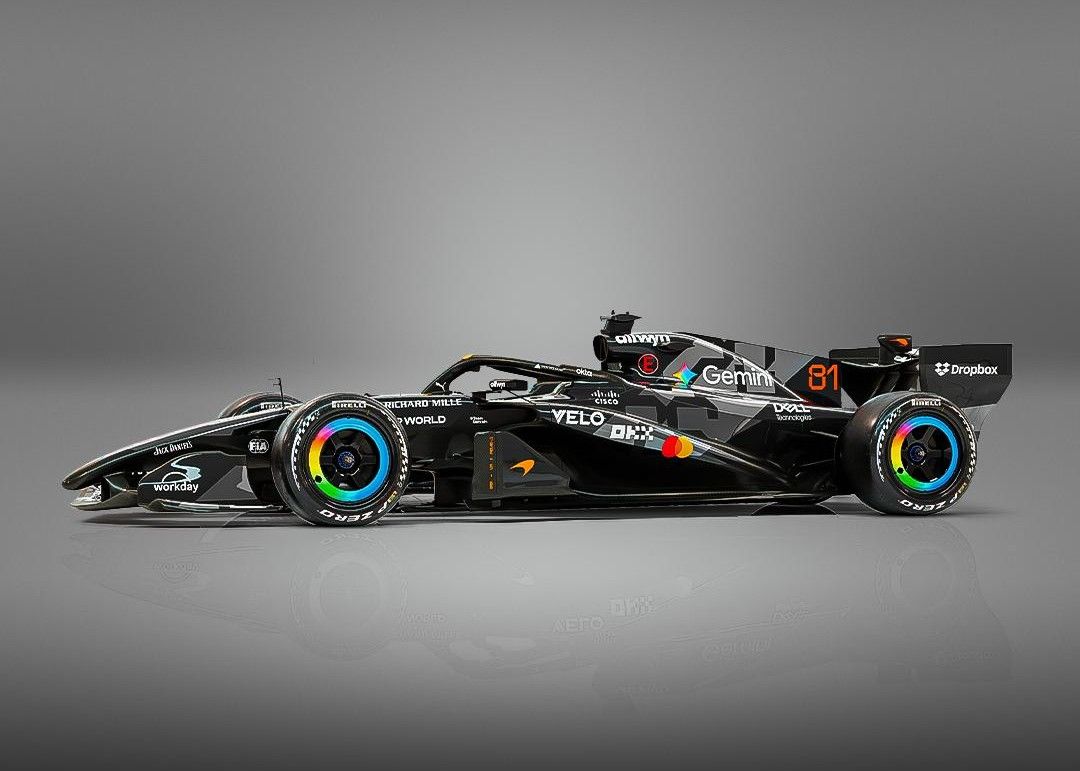
McLaren has begun preparations for the new era of the Fórmula 1 with an enigmatic visual approach to the Circuito of Barcelona-Catalunya. The Woking team presented the MCL40A model, designed under the new regulations, with a mostly black livery for the first week of private testing. The strategic choice aims to hide crucial aerodynamic details, while the Lando Norris and Oscar Piastri pilots begin to adapt to the profound technical changes that will define the category from now on.
This testing phase, which takes place confidentially between January 26th and 30th, is essential for teams to validate new concepts without pressure from the media. With a ban on public access and limited press coverage, engineers have the freedom to experiment with innovative solutions for hybrid power units and active aerodynamics systems, which represent the biggest challenges of the new regulation.
The rules implemented are considered the most revolutionary of the last decade, marking a turning point for the sport. The category seeks a more sustainable future with the introduction of 100% ecological fuels and greater dependence on electrical energy, in addition to reducing the weight and dimensions of cars. Esses Initial tests on Barcelona are the first practical step towards understanding the behavior of single-seaters in real track conditions.
Testing livery = unlocked 🖤🔓pic.twitter.com/PpTcWjneBO
— McLaren Mastercard Formula 1 Team 🧡 (@McLarenF1)January 26, 2026
Provisional visual identity and sober colors in Barcelona
McLaren’s decision to temporarily ditch the iconic papaya orange in favor of a black and gray palette has a strictly functional purpose. Essa strategy, common in pre-season, serves as a camouflage to make it difficult for rival teams to analyze aerodynamic details, especially in a year of such significant regulatory changes. The sober paintwork hides the lines and contours of the chassis, protecting the innovations developed in the Woking factory over months. The expectation is that the definitive visual identity, with the official colors and sponsors, will only be presented to the public at the global launch event scheduled for February 9th. Até there, the total focus is on performance and data collection, leaving marketing in the background. The minimalist look highlights the complexity of the MCL40A’s design, where every carbon fiber surface has been optimized by the technical team led by Andrea Stella to extract maximum performance within the new rules.
New painting rules and combating excess carbon fiber
Comissão of Fórmula 1 established a new guideline for the season that aims to rescue the visual identity of the teams, which in recent years had been presenting increasingly darker cars. The practice of leaving large areas of the chassis exposed carbon fiber to save weight was limited. From now on, it is mandatory that at least 55% of the external surface of single-seaters be covered by paint or stickers, ensuring that the cars are easily distinguishable on the track and on television. Essa measure was met with some resistance from engineers, who argue that every gram of paint can impact the vehicle’s balance and performance. However, Federação Internacional of Automobilismo (FIA) maintained its position, prioritizing the spectacle and visibility for sponsors. McLaren, by using a predominantly dark paintwork for the tests, is already demonstrating that it complies with the new rule, covering the majority of the fairing and avoiding visible carbon, in line with the new aesthetic and technical requirements.
Development strategy and absence on the first day on the track
Strategically, McLaren chose not to participate in the first day of activities in Barcelona. Andrea Stella, team leader, explained that the decision was made to maximize the time spent working on the simulator in Woking. The team believes that refining data and electronic mapping in a controlled environment is more valuable in the early hours than racking up track mileage, especially with the complexity of the new power units. Essa conservative approach aims to avoid basic mechanical problems that could consume precious testing time. Enquanto McLaren was absent for a day, the Williams team took an even more drastic measure, announcing that it would not participate in the entire first week of activities due to delays in its production line, highlighting the challenges faced by smaller teams.
Testing schedule and the path to the first grand prize
The first secret testing session ends on Friday, January 30, and will be crucial in providing initial telemetry data to factories. Essas information will be the basis for the adjustments and developments that will be implemented in the following weeks. After a brief break, the teams will return to the track for a second testing window, scheduled to take place between February 11th and 13th. Esta second phase will be open to the public and the press, functioning as a general rehearsal before the official start of the season. The championship promises to be one of the longest in history, which will require exceptional reliability from the new components. The results obtained in Barcelona can define the hierarchy of forces not only for the beginning of the season, but also for the development cycle of the coming years.
Technical expectations on the power of new hybrid engines
The heart of Fórmula 1’s new cars has undergone a complete overhaul. The 2026 engines eliminate the complex MGU-H system, responsible for recovering energy from turbo heat, simplifying the power unit architecture. In contrast, the MGU-K system, which recovers kinetic energy from braking, had its power tripled, delivering around 350kW (approximately 470 horsepower) of electrical energy. Essa change will radically transform the dynamics of racing, especially overtaking, with drivers having to manage the available energy much more actively. Intelligent battery management will be a determining factor in success, as improper use can leave the car vulnerable on the straights. The transition to 100% sustainable fuels also required a complete redesign of the combustion chambers to maintain efficiency and performance. Especialistas believe that the team that masters the burning of this new fuel will have a significant competitive advantage at the start of the season.
Impact of active aerodynamics on pilots’ handling
One of the most visible innovations in the 2026 cars is the introduction of active aerodynamics, both on the front and rear wings. Esse system will allow cars to change their aerodynamic profile during the lap: on straights, the wings will adjust to a low drag mode, maximizing final speed; in curves, they will return to a high downforce configuration to guarantee grip. Embora the system is automated, it adds a layer of electronic complexity that needs to be perfectly reliable. Tests in Barcelona are essential to stress these components and ensure that the activation is instantaneous and synchronized, as a failure in response time could cause a sudden loss of control and result in serious accidents.
The strategic role of Lando Norris in leading the project
With the renewal of his contract, Lando Norris consolidates himself as the centerpiece of the McLaren project. Sua experience and sensitivity to providing accurate technical feedback are vital to guiding engineers in fine-tuning the chassis and suspension, ensuring the car is built around your driving preferences.
Team logistics in Barcelona during pre-season
The choice of Barcelona for pre-season testing is strategic, as the circuit offers a varied combination of high, medium and low speed curves, simulating different calendar challenges. The logistics of transporting all the equipment from the factories to Espanha is a complex operation that requires months of planning. The lower temperatures of the Spanish winter are ideal for testing the limits of new engine cooling systems, a critical point in the new regulations, without the risk of overheating found in places like Bahrein.