
Criminal retaliation turns buses into barricades and closes roads in Madureira, north zone By Carolina Costa
5 min read
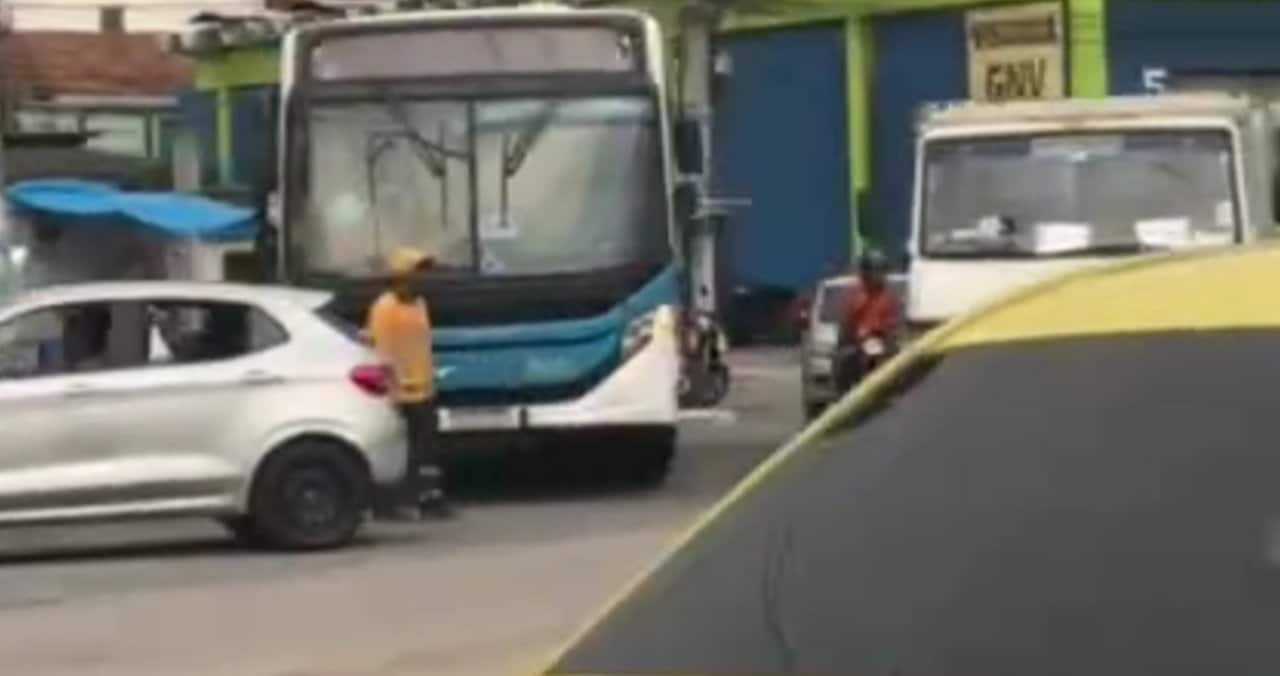 |
On the afternoon of last Tuesday, January 27th, Zona Norte of Rio of Janeiro was the scene of a series of public security incidents, culminating in the hijacking and use of fourteen buses as barricades in Madureira. Criminosos removed the keys from public transport vehicles, creating a significant blockage on important roads and drastically affecting the routine of residents and the transport system.
The road obstruction tactic, which involved vehicles positioned at Estrada of Barro Vermelho, at Rocha Miranda, and at Avenida Edgar Romero, at Madureira, was confirmed by Rio Ônibus. Essa action represented a direct response to an Polícia Militar operation in the region, intensifying instability and traffic chaos.
At least 26 bus lines were forced to divert their routes, impacting thousands of passengers who depend on public transport daily. The situation required the intervention of the authorities to reestablish order and normality on the streets of the capital of Rio de Janeiro.
Escalation of violence and urban blockades in Zona Norte
The series of bus hijackings and the subsequent erection of barricades represent a worrying episode in the urban security of Rio of Janeiro. The action, concentrated in Madureira, one of the most populated regions with an intense flow of vehicles, paralyzed the daily lives of many, creating scenarios of tension and uncertainty for those traveling through the area.
The blockades, which prevented free movement on crucial stretches such as Avenida Ministro Edgard Romero, direction Madureira, required a quick response from security forces. The traffic disruption not only delayed passengers, but also generated widespread fear about the escalation of criminal actions in response to police operations.
Operation Barricada Zero: The context of police action
The event that triggered the criminal retaliation was an operation by the 9th Batalhão of Polícia Militar (BPM) of Rocha Miranda, in support of “Operation Barricada Zero”. Esta The initiative’s main objective is to dismantle organized crime and remove the various barricades illegally erected in Rio’s communities, which make it difficult for police to enter and control access for residents.
During the 9th BPM’s action, seven men were detained, highlighting the authorities’ continuous efforts to combat organized crime. The seizure of three pistols and the removal of approximately 10 tons of illegal barricades highlight the magnitude of the challenge faced by security forces in territorial control and law enforcement.
“Operation Barricada Zero” is part of a broader strategy by the state government to regain control of areas dominated by criminal factions. Essas actions aim not only to dismantle the groups’ defense infrastructure, but also to restore citizens’ freedom to come and go, often hampered by the constant presence of obstacles and the surveillance of criminals.
Impact on public transport lines and alternative routes
The hijacking of the fourteen buses had an immediate and profound impact on the Zona Norte public transport system. With 26 lines affected, passengers traveling to work, school or various appointments faced significant delays and the need to seek alternative routes, which were often longer and more expensive.
The buses involved in the barricades belonged to lines essential for mobility in the region, such as 298, 712, 737, 774, 775, 685, 918 and 639. The temporary stoppage of these services not only caused logistical disruption, but also generated apprehension among system operators and users, who find themselves hostage to conflicts that go beyond their routine.
Rio Ônibus, an entity that represents transport companies, confirmed the removal of vehicle keys, an act that aims to immobilize them and use them as instruments of coercion and blocking. The rapid mobilization to divert routes and, subsequently, to reestablish services, demonstrates the complexity of transport management in a scenario of instability.
Mobi-Rio, responsible for operating the BRT, also reported that, after the blockages, services between stations Manaceia and Vicente of Carvalho were gradually resumed. Coordination between different transport instances is crucial to minimize the impact of these events on the lives of the thousands of users who depend on these services daily.
Hostage rescue and significant seizures
Amid the police operation that triggered the acts of retaliation, an app driver who was being held hostage by armed criminals was rescued by agents from Grupamento of Ações Táticas (GAT). The rescue took place in the Faz Quem Quer community, highlighting the complexity and risks involved in police raids in high crime areas.
The release of the hostage demonstrates the importance of specialized tactical action in confrontation and kidnapping scenarios. The presence of armed criminals and the retention of civilians increase the severity of operations, requiring precise planning and execution to ensure the safety of those involved and the success of the mission.
The tactic of barricades in Rio’s security scenario
The use of vehicles, especially buses, as barricades is a recurring tactic of criminal groups in Rio of Janeiro, with multiple objectives. Primeiramente, serves as a form of protest or immediate retaliation against police actions, aiming to demonstrate power and cause public disorder. Secondly, these blockades make it difficult for security forces to pursue and move, giving criminals time to flee or reorganize their defenses.
The choice of bus is not random; These are large, heavy vehicles that can effectively block entire roads, in addition to causing a great visual and media impact. The practice generates chaos in traffic, paralyzes public transport and amplifies the feeling of insecurity among the population, putting pressure on authorities and challenging state control over the territory. Essa strategy is a direct manifestation of the territorial war that plagues several communities, where factions seek to impose their authority and respond to any external intervention. The constant need for operations to remove these obstacles consumes police resources and diverts focus from other security priorities.
Repercussions for public safety and mobility
The events of Madureira and Rocha Miranda highlight the ongoing challenges faced by security authorities in Rio of Janeiro. The ability of criminal groups to orchestrate large-scale retaliation, using public assets as a means to their ends, requires a coordinated and strategic response that goes beyond the immediate unblocking of roads, focusing on prevention and intelligence to dismantle these networks.