Iga Swiatek criticizes exaggerated exposure at the Australian Open after Gauff’s elimination in Melbourne

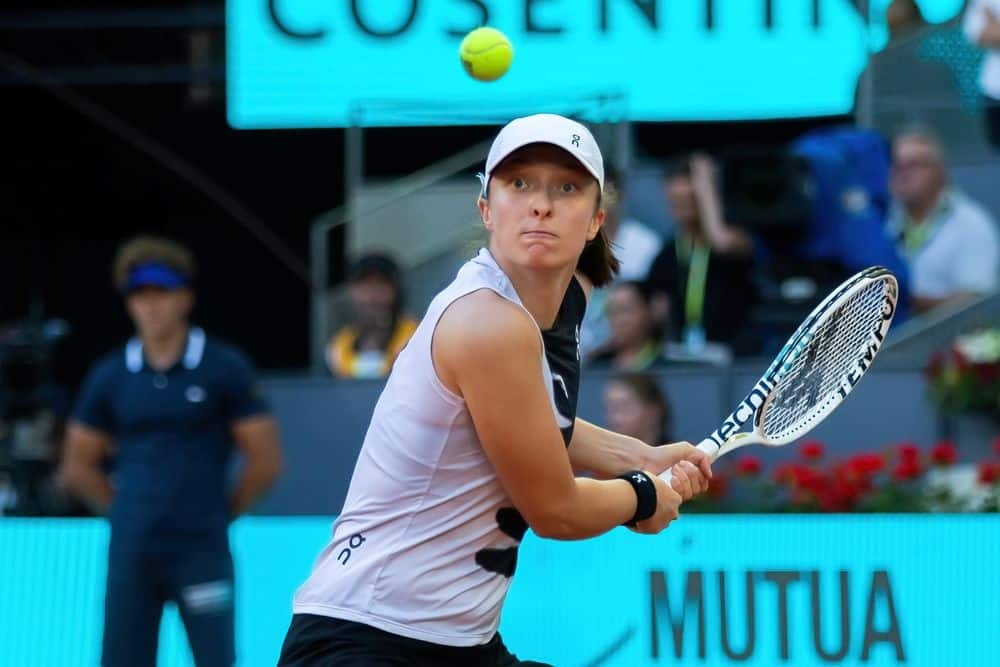
Iga Swiatek used strong terms to describe the feeling of constant surveillance, comparing the situation to the treatment received by animals in a zoo.
The controversy gained momentum after Gauff was filmed destroying a racket in a moment of technical privacy, sparking debates about the limits of journalistic coverage and entertainment. Swiatek was also a victim of this exposure recently, when a video of her forgetting her credential and being blocked by security went viral as a meme on the internet. The athlete emphasizes that the role of tennis players is to be observed during matches and press conferences, but that behind-the-scenes moments should be preserved by the tournament organizers.
- Constant exposure in the locker rooms directly affects the mental focus of high-performance competitors.
- Other athletes, like Amanda Anisimova, admitted to changing their usual behaviors to avoid the cameras.
- The support of legends like Serena Williams reinforces the need to review indoor filming protocols.
- The Australian Open organization has not yet issued an official statement regarding the changes to the media guidelines.
living and learning.
—Coco Gauff (@CocoGauff)January 28, 2026
but still will keep trying to move forward.
also, im a real person with real feelings… i care a lot & im trying my best. thank you to those who understand that🧡💜pic.twitter.com/Bn8NntiyRK
Discomfort with excessive surveillance in Melbourne
The Polish tennis player highlighted that the high-pressure environment of an Grand Slam requires athletes to have places of refuge to process defeats and emotions. Segundo Swiatek, the presence of cameras in traditionally reserved areas transforms the pain of defeat into entertainment content without the consent of those involved. Ela argues that gamers’ humanity is being set aside in favor of clicks and digital engagement on social platforms.
The incident with Coco Gauff served as the trigger for dissatisfaction that was already growing among the main names on the WTA circuit. Swiatek reinforced that, although he understands the public’s interest, there is an ethical line that separates sports journalism from the invasion of privacy. The Polish player believes that players are losing the right to be themselves off the court, which can impact their mental health in the long term.
Reactions and support from the international tennis community
The case of Gauff not only generated criticism, but also a wave of solidarity among former players and professional colleagues on the world circuit. Serena Williams, one of the biggest winners in history, used her official profiles to validate Coco’s reaction, stating that passion and hatred for defeat are legitimate feelings. Williams even joked about the situation, offering to teach the young American more effective techniques for destroying rackets, alleviating the weight of public criticism.
In addition to Serena, Amanda Anisimova revealed that his post-game routine has been drastically altered to avoid the scrutiny of prying lenses in the halls of Anisimova reported that, after his defeat by Jessica Pegula, he felt the need to quickly hide so as not to have his vulnerability exposed to the world. Esse pattern of behavior indicates that the problem is structural and affects several players who are just looking for a moment of calm after the end of their professional commitments.
Sports results and the semi-final scenario
While protests over privacy dominate the headlines off the court, the competition continues with important definitions in the tournament’s women’s section. Iga Swiatek ended its participation in the quarterfinals after being overcome by Kazakh Elena Rybakina in straight sets, with partials of 7/5 and 6/1. Rybakina’s performance was dominant, especially in the second set, where the precision of her serves prevented any reaction from the former world number 1.
With this result, Elena Rybakina advances to a high-level clash against the current ranking leader, Aryna Sabalenka, in one of the most anticipated semifinals of the year. The match is scheduled to take place on Thursday, at 4:30 pm Melbourne local time, promising a duel of powerhouses from the back of the court. The tournament also sees the success of Brazilian women, with Luisa Stefani securing a place in the doubles semi-final alongside Gabriela Dabrowski, keeping the interest of the South American public high.
The impact of social media on athletes’ careers
The controversy over privacy highlights how the dynamics of social media have altered the relationship between professional sport and its spectators. Vídeos short, focused on moments of error or fragility, become viral within minutes, often decontextualizing the reality of the physical and psychological effort required. Swiatek enfatizou que o trabalho do tenista deve ser avaliado pelo que é entregue durante os pontos disputados, e não por deslizes cotidianos ou reações emocionais em áreas internas.
The Polish woman recalled that being treated as a “meme” may be fun for the public, but it is unnecessary and disrespectful for those who dedicate their lives to sport. The demand for a more professional environment and less focused on visual sensationalism seems to be the new direction for elite athletes’ demands. Para Swiatek, respect for human dignity must prevail over any need to generate viral content for the tournaments’ official channels.
Need for new behind-the-scenes guidelines
Expectations now rest on how Federação Internacional of Tênis and the organizers of the four Grand Slams will respond to these scathing criticisms. Jogadores suggest that areas such as locker rooms and physical recovery zones be maintained as camera-free zones, with no exceptions for behind-the-scenes broadcasts. Protecting the athlete’s image in moments of vulnerability is seen as an essential step towards the fair modernization of sport.
Without concrete changes, the climate of tension between professionals and the media production team tends to increase in the next events on the calendar. Swiatek made it clear that silence is no longer an option and that Coco Gauff’s defense is, in fact, a defense of the entire category. The integrity of the sporting environment depends, according to the complaints, on a healthier balance between transparency for fans and basic respect for individuals.
Historical context of complaints in the circuit
Historically, tennis has had a complex relationship with the media, but the current level of technological monitoring is unprecedented in the history of the sport. In the past, locker room incidents have been reported by journalists, but the immediate visual evidence carries a different weight to the reputation of the players involved. Swiatek’s outburst refers to previous discussions about mental health, started by athletes like Naomi Osaka, who also questioned media obligations.
The evolution of sport into a fully connected era requires that privacy rights be renegotiated to ensure the focus remains on athletic performance. The “animals in the zoo” criticism resonates as a warning for organizers not to cross the line between promoting sport and exploring intimacy. The debate is far from over, but the voices of Swiatek, Gauff and Williams guarantee that the topic will be a priority in the next meetings of the players’ association.