
15-year-old becomes a doctor in quantum physics and begins research to extend life with artificial intelligence By Beatriz
4 min read
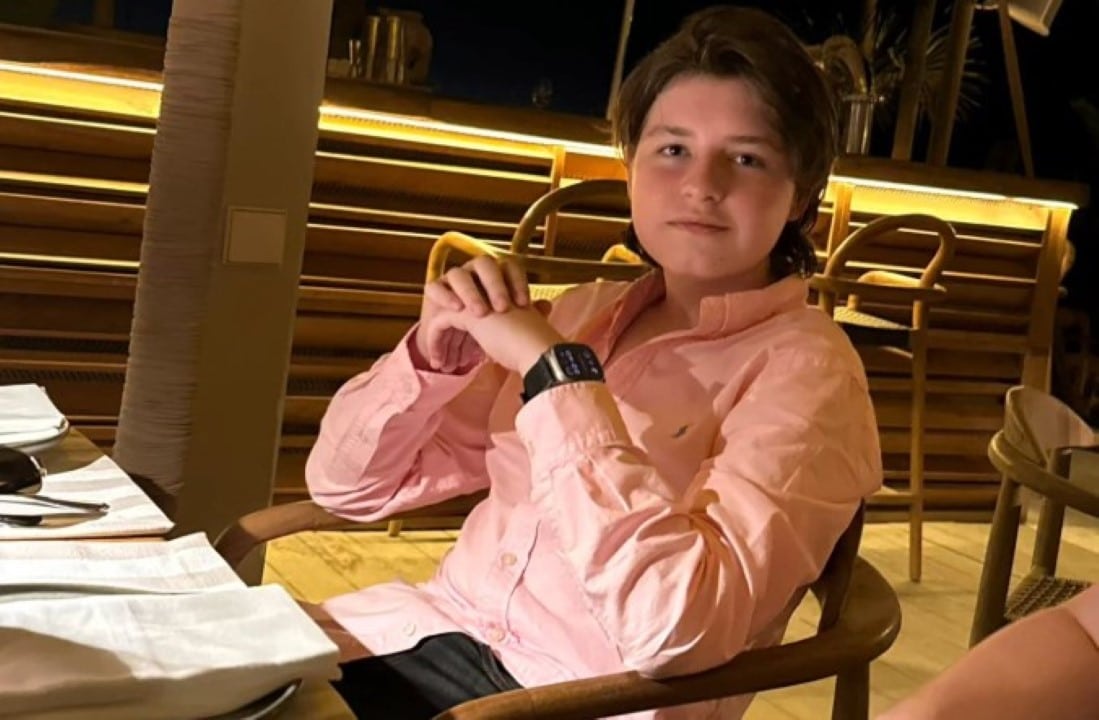 |
Laurent Simons, a 15-year-old Belgian, successfully defended his doctoral thesis in quantum physics at Universidade of Após the achievement, the prodigy announced plans to apply knowledge in medicine and artificial intelligence to prolong human life.
The trajectory of Simons stands out for academic conclusions at unusually early ages. X__NM1____ The master’s degree in quantum physics was also completed at this stage, focusing on elementary particles and extreme states of matter.
Simons has an IQ estimated at 145, a rare level in the world population. Sua Photographic memory contributes to the rapid processing of complex information in advanced fields of science.
Early academic trajectory
Laurent Simons began his formal studies quickly since childhood. X__NM1____
At the age of eight, he completed high school. Then, at age 12, he obtained an undergraduate degree in physics at the same Universidade as Antuérpia, reducing a standard three-year course to 18 months.
The master’s degree in quantum physics came soon after, with initial research on black holes and Bose-Einstein condensates. Essas achievements occurred under strict academic supervision, with standard assessments from the Belgian institution.
Doctoral thesis details
The thesis defense took place in November 2025, according to records from Universidade of Antuérpia. The central theme involved Bose polarons, impure particles in extreme quantum environments such as superfluids and supersolids.
These concepts explore collective behaviors of atoms at temperatures close to absolute zero. Simons’s work contributed to the understanding of quantum interactions in exotic states of matter.
Academic supervisors assessed the research as advanced and innovative. The committee applied criteria identical to those for conventional doctoral candidates, confirming the validity of the degree obtained.
The thesis was developed in a standard university environment, without extraordinary accelerations beyond the researcher’s individual pace.
Transition to medicine and AI
Simons moved to Alemanha after the defense, where he began a second doctorate in medical sciences with an emphasis on artificial intelligence. The program is independent of the previous one in physics, as stated by its parent, Alexander Simons.
The current focus integrates quantum knowledge with biology and advanced computing. Ele seeks practical applications to increase human performance and combat cellular aging.
The motivation came at the age of 11, after family losses. Desde then directs efforts towards solutions that benefit humanity in general, not just individual cases.
Preliminary research involves computational modeling of biological processes. The interdisciplinary approach combines theoretical physics with machine learning tools.
International interest and family stance
Technology companies in Estados Unidos and China have expressed interest in Simons’s work. Propostas included integration into high-level research centers, but were refused by the family.
Parents prioritize balance between intellectual development and emotional well-being. Alexander Simons highlighted the importance of preserving childhood alongside scientific achievements.
- Refusal of external offers maintains the focus on traditional academic training.
- Family avoids excessive exposure to protect privacy.
- Emphasis on real contributions to medicine guides future decisions.
Context of academic prodigies
Cases of early doctorates occur rarely in modern academic history. Simons joins the few documented examples of findings at adolescent ages with full institutional oversight.
Your progression follows accredited European university channels. Universidade of Antuérpia confirmed the application of the same standards as other candidates.
Studies on superfluids advance understanding of macroscopic quantum phenomena. Aplicações potentials include quantum computing and advanced materials.
Longevity research with AI is growing globally. Abordagens interdisciplinary programs are gaining ground in European and American institutions.
Practical applications of research
Knowledge in Bose-Einstein condensates allows simulations of complex systems. Simons applies these models in biological contexts to map aging processes.
Artificial intelligence helps analyze large volumes of genetic and cellular data. The combination aims to identify precise interventions in organic deterioration mechanisms.
Initial studies in the new doctorate explore interfaces between quantum physics and molecular biology. Resultados preliminaries can contribute to regenerative therapies.
German institutions offer advanced infrastructure for these projects. Colaborações Interdisciplinary teams facilitate the integration of specialized teams.
Perspectives on current quantum physics
Quantum physics evolves with experiments at ultra-low temperatures. Condensados of Bose-Einstein, discovered in the 1990s, allow direct observation of quantum effects on a larger scale.
Polarons represent impurities in quantum collective media. Comportamento in supersolids reveals unique properties of matter.
Advances in this area impact emerging technologies. Quantum Computadores depend on precise control of similar states.
Young researchers bring innovative approaches to established fields. Contribuições Early learning accelerates progress on challenging topics.
Simons’s work exemplifies the potential for accelerated training when supported by solid institutions. Adequate Supervisão guarantees quality equivalent to that of traditional trajectories.


