
Carrascal’s expulsion complicates Flamengo’s search for a comeback against Corinthians in the Supercopa Rei decision By Luís Henrique Costa
6 min read
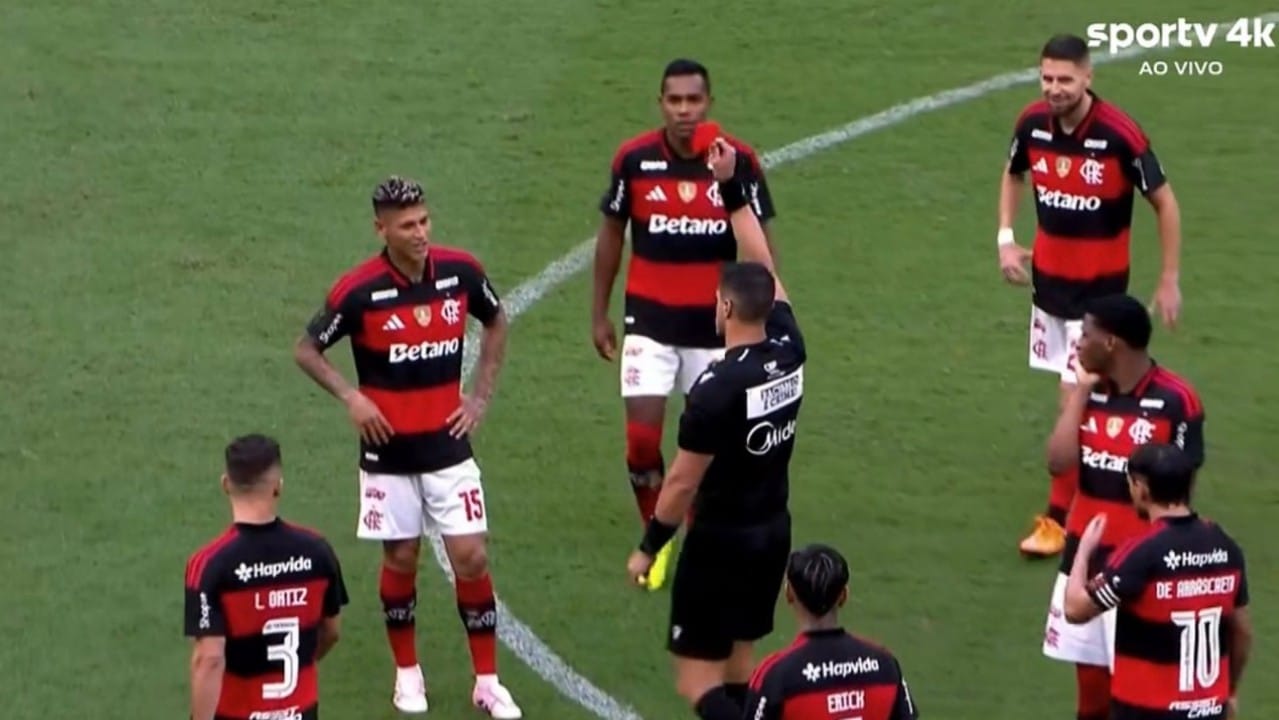 |
Supercopa Rei’s decision on Estádio Mané Garrincha took on dramatic contours at the beginning of the second half. Flamengo returned to the field with the difficult mission of reversing the 1-0 score in favor of Corinthians and, to make matters worse, with just ten players. The numerical disadvantage was the result of the expulsion of midfielder Carrascal, after a VAR review, a move that completely changed the dynamics of the match.
Corinthians, with the advantage on the scoreboard and one more player, seeks to manage the result and explore the spaces to guarantee the first major trophy of the season. On the other hand, the red and black team demonstrates resilience and tries to reorganize itself tactically to overcome the obstacles and seek a heroic draw in Brasília.
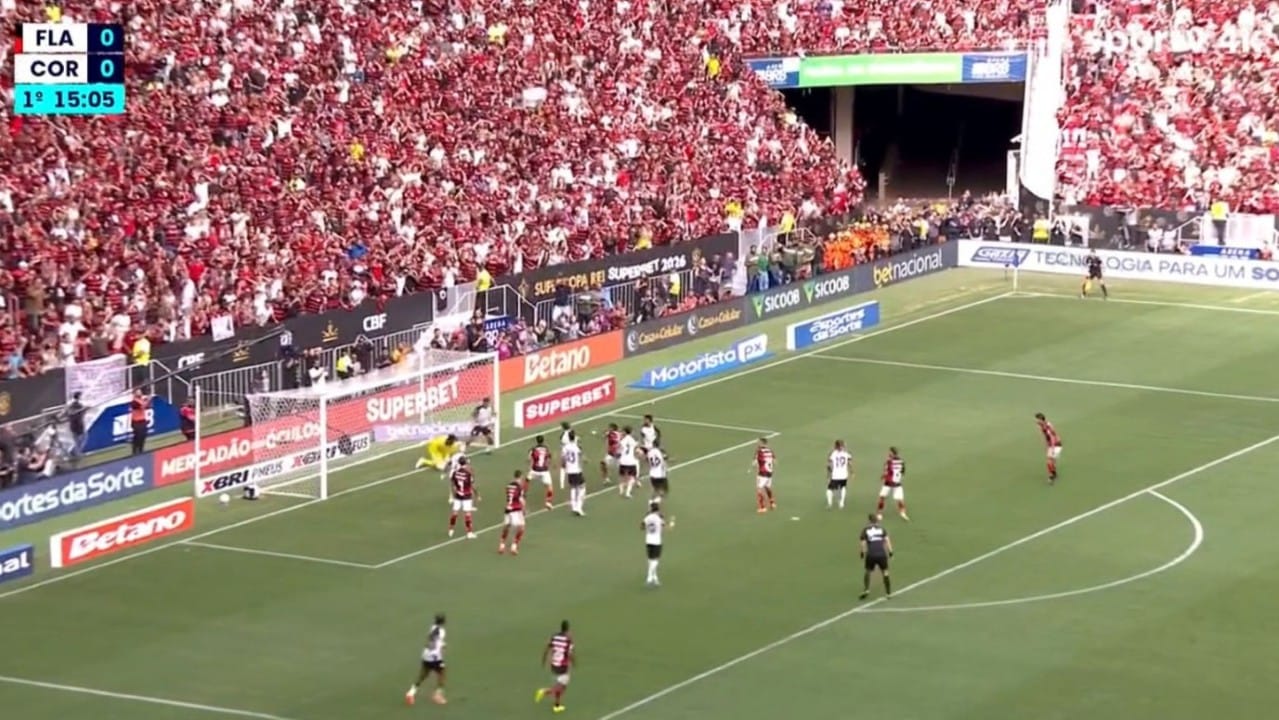
The goal that gave the São Paulo team a partial advantage was scored by Gabriel Paulista in the first half, in a set piece play. The match, which was already tense, increased its level of intensity, testing the physical and mental preparation of both squads under the strong heat of the federal capital.
The move that changed the game: the expulsion via VAR
The most controversial moment of the final occurred in the final moments of the first stage, but its consequences were only applied when returning to the second half. Referee Rafael Klein was called to the VAR monitor to re-evaluate a play between Carrascal and Breno Bidon. Analysis of the images revealed a touch of the Colombian player on the Corinthian athlete’s face.
The decision to apply a direct red card generated immediate protests from Flamengo players, who questioned the refereeing criteria. The expulsion forced coach Filipe Luís to rethink his entire strategy for the complementary stage, transforming what would have been a search for a draw into a challenge to overcome.
Red-black pressure marks the beginning of the final stage
Despite the numerical inferiority, Flamengo was not intimidated and started the second half putting pressure on Corinthians in its defense field. The Rio team looked for quick moves down the flanks and invested in set pieces to try to surprise the opposing defense. The aggressive stance made it clear that the team would not surrender.
In the first few minutes, this pressure almost resulted in a goal. In a rehearsed free kick, Arrascaeta found Erick Pulgar, who headed the ball hard. The ball capriciously exploded onto the Hugo Souza goalkeeper’s crossbar, in a move that raised the red-black fans present at Mané Garrincha and served as a warning to the Corinthians team.
Corinthians, in turn, tried to pace the game, valuing possession of the ball and waiting for the right moment to counterattack. The Dorival Júnior team showed defensive organization to contain the opponent’s initial momentum, betting on the solidity of its system to maintain the important advantage it had built.
How Corinthians built the early lead
The first half was characterized by tactical balance, with both teams studying each other and looking for gaps. Flamengo had greater control of ball possession, but found it difficult to break through Corinthians’s defensive block, which was positioned in a compact and efficient manner.
The São Paulo team, more pragmatic, was lethal when they had the opportunity. Aos 25 minutes, after a short corner kick, Matheuzinho crossed to Gabriel Paulista. The defender anticipated the marking and finished first, with no chance for goalkeeper Rossi, opening the scoring in the decision.
In addition to the goal, Corinthians created other dangerous situations by exploiting the speed of their attackers. In a fulminant counterattack, Memphis Depay was free at the edge of the area and finished with a cross, forcing Rossi to make a spectacular save to avoid the second goal, keeping Flamengo alive in the match.
Physical intensity was a hallmark of the first stage, with fierce competition for the ball in all sectors of the field. A hydration break was necessary to alleviate the wear and tear of the athletes, highlighting the demanding conditions of the confrontation in Brasília.
Behind the scenes of the final: virus in Corinthians and the expectation for Paquetá
The atmosphere leading up to the final was full of particularities for both sides. Corinthians faced an unexpected problem: a strong virus that affected around 26 members of the delegation, including players and coaching staff. Coach Dorival Júnior revealed the situation, explaining that some important athletes did not even participate in the last training session before the trip, which created uncertainty about the physical condition of part of the squad for such an exhausting match.
On the Flamengo side, great expectations revolved around the possible debut of Lucas Paquetá. Considerado the most expensive signing in the history of Brazilian football, the midfielder was listed for the match after participating in just two training sessions with the group. Sua’s presence on the bench represented a powerful weapon that Filipe Luís could use, especially in a scenario of adversity such as the one that resulted from the expulsion of Carrascal.
Supercup Rei: the first major trophy of the season
The Supercopa Rei is traditionally the tournament that opens the calendar of major national football decisions, pitting the champions of the Campeonato Brasileiro and the Copa of the previous season face to face. Winning the trophy not only adds an important title to the club’s gallery, but also serves as an injection of confidence for the rest of the year, validating the planning and work of the coaching staff.
The current edition proves to be a spectacle of emotions, with twists and turns, refereeing controversies and plays of high technical quality. The confrontation between Flamengo and Corinthians, two of the biggest fans in the country, raises the status of the competition even further, transforming the Mané Garrincha pitch into a true stage for gladiators in search of glory.
Previous analysis of the confrontation numbers
The statistics that preceded the duel indicated a slight theoretical favoritism for Flamengo, especially with regard to offensive volume. The Rio team reached the decision with a higher average number of shots in previous competitions, suggesting a more purposeful stance in attack. Contudo, football often shows that pre-game numbers are just a guide, and the reality on the field can be very different.
In terms of discipline, both teams had low card averages, which contrasted sharply with the direct red card applied to Carrascal, an event that became the turning point of the match. The Corinthians goal, which came from a corner, also defied the statistics that indicated that this type of play was infrequent for both teams, proving the importance of taking advantage of every opportunity in a final.
What to expect from the Flamengo tactic with one less
With one less player and behind on the scoreboard, Flamengo’s mission becomes Herculean. Filipe Luís’s strategy will need to be impeccable, combining offensive courage with defensive responsibility to not give up any more space to Corinthians. The entry of fast and skilled players from the bench can be an alternative to surprise the opponent, looking for individual plays that can break the marking lines. The ability to overcome and the support of the fans will be essential fuel for the red and black team in the final minutes, in an attempt to take the decision to penalties or achieve a historic turnaround.