Google has begun releasing access to Project Genie, an experimental tool that converts text or image prompts into interactive 3D virtual environments. The platform is initially only available to subscribers of the Google AI Ultra plan in the Estados Unidos. Qualified Usuários can generate varied scenarios and navigate them in real time using basic controls.
The system uses the Genie 3 model, developed by Google DeepMind, to maintain visual and physical consistency during exploration. The tool generates new elements of the environment as the user moves, offering experiences that last several minutes without significant interruptions. Control occurs via keyboard arrow keys or direct movement commands.
The Project Genie represents an advancement in the company’s generative world models. Ele eliminates the need for advanced programming skills to create immersive prototypes. The initiative opens up possibilities in areas such as game development and educational simulations.
Evolution of genie models
The Genie line started in 2024 with a model capable of generating playable 2D environments from unlabeled videos from the internet. Essa initial version demonstrated the feasibility of creating dynamic worlds without direct supervision of actions. The focus was on learning latent representations of movement and interaction.
Genie 2, presented in December 2024, expanded capabilities for more detailed three-dimensional scenarios. Ele started to accept conceptual images and drawings as input, generating realistic variations of environments. The improvement in generalization allowed for greater diversity of results.
The current version, Genie 3, introduced real-time interactivity at a rate of 20 to 24 frames per second. The model incorporates memory from previous interactions to maintain prolonged coherence. Essa technical base supports the prototype released in Google Labs.
Technical functioning of the tool
The process begins by entering a text prompt that describes the desired environment or uploading a reference image. The system generates an initial 3D sketch that serves as a starting point. Opções controls include first or third person view.
As the user navigates, the model predicts and creates new sections of the world in an autoregressive manner. Ele processes actions in real time and adjusts visual elements to maintain continuity. Refinamentos are possible through additional prompts during the session.
The tool allows you to remix previous creations, combining characteristics from different worlds. Usuários can change specific aspects, such as lighting or objects present. The final result can be exported as a demonstration video.
- Descriptive textual prompts to define the initial theme;
- Images or sketches as a visual basis;
- Commands to adjust physics or scale;
- Integration of specific artistic styles.
Practical creation examples
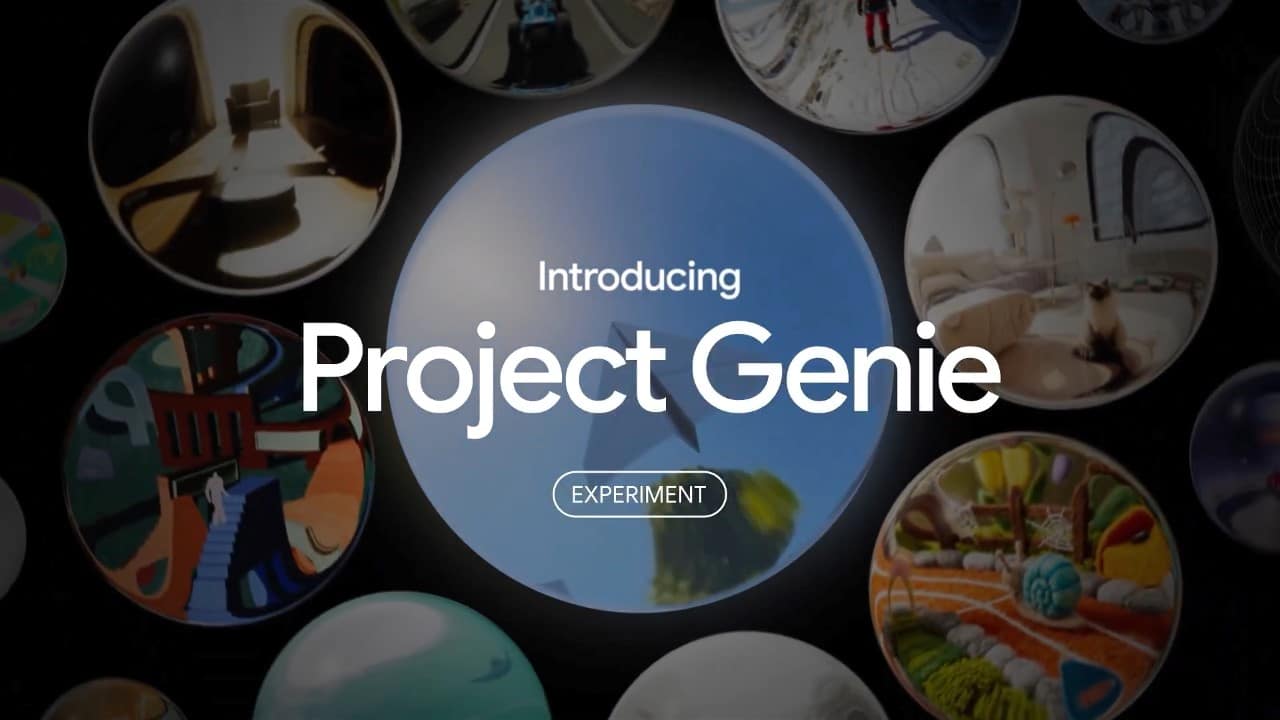
Users have generated scenarios ranging from natural landscapes to fantastic environments. Exemplos include planets with visible rings and irregular terrain explored by vehicles. Outros involve impossible architectural structures, such as hanging castles or islands with inverted waterfalls.
The tool reproduces different visual styles when requested in the prompt. Mundos underwater environments with detailed fauna appear with accurate descriptions. Cidades Futuristic neon lights and flying vehicles are also common among early tests.
Transitions between areas maintain visual fluidity during navigation. Elementos as lighting and shadows remain consistent. Prolonged Sessões demonstrate the environment’s capacity for infinite expansion.
Applications in different sectors
Game developers use Project Genie for rapid prototyping of levels and mechanics. The creation of test environments speeds up the process without the need for traditional manual modeling. Equipes validate narrative concepts before investing in full production.
In the educational field, teachers simulate historical sites or scientific phenomena for immersive classes. Estudantes explore ancient civilizations or complex ecosystems interactively. Customized Ajustes adapt content to the specific curriculum.
Training artificial intelligence agents benefits from the infinite worlds generated. Algoritmos receives varied data to learn navigation in unfamiliar environments. Isso contributes to advances in robotics and autonomous systems.
Areas such as architecture and interior design also explore the tool for preliminary visualizations. Clientes navigate space proposals before physical construction. Interactivity facilitates real-time adjustments during presentations.
Limitations observed in the prototype
Current access is restricted to subscribers of plan Google AI Ultra in Estados Unidos. Usuários from other regions await gradual rollout expansion. Maiores 18 years old with an active subscription is eligible to participate.
Sessions are limited in duration to preserve visual quality and consistency. Ambientes with multiple interactive agents still faces technical restrictions. The focus remains on single-player experiences.
Accurate reproduction of readable text depends on explicit specification in the prompt. Locais real data from the physical world vary in fidelity depending on the training data used.
Available customization features
Users set the camera perspective at the beginning of creation and can change it during exploration. Modo in first person increases the feeling of total immersion. Visão in third person facilitates overview of large areas.
Characters receive detailed customizations via textual prompts. Opções include vehicles, animals or human figures with specific characteristics. Movimentos automatically adapt to the selected type.
Element Remix allows you to combine parts of previous worlds into new creations. Usuários select favorite components for quick integration. Isso speeds up successive design iterations.
Export of videos recorded while browsing is available for sharing. Demonstrations help with gathering feedback or professional presentations. The function records complete sessions with high quality.
- Changing climatic conditions;
- Addition of specific objects;
- Global scaling adjustment;
- Combination of multiple visual styles.
Requirements and access process
The tool integrates directly into the Google Labs environment. Qualified Assinantes access via standard browser with a stable internet connection. Não there is a requirement for specialized hardware in addition to the basic ones.
The rollout started in January 2026 for users in Estados Unidos. Instruções guides assist in the first creation of the world. Participantes provide feedback that directs future updates.
Google plans gradual expansions to other regions and subscription plans. Collecting usage data contributes to technical refinements. Project Genie consolidates advances in generative world models accessible to selected audiences.
