
New Mercedes W17 for F1 revealed with compact design and full focus on new electric motor By Thiago Lemos
5 min read
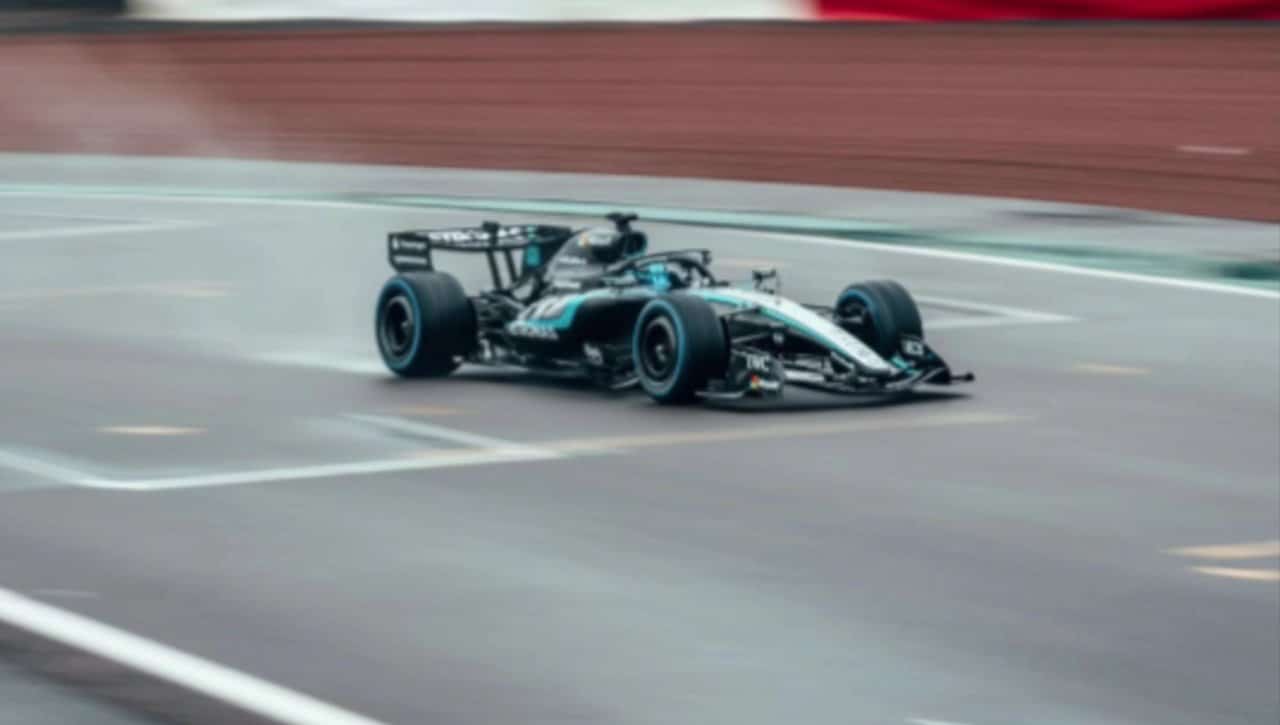 |
The Mercedes-AMG Petronas officially began its preparations for the new era of the drastically different.
The event was attended by drivers George Russell and rookie Andrea Kimi Antonelli, who were joined by the team leader, Toto Wolff, and the technical director, James Allison. The presentation focused on the engineering aspects of the project, which sought innovative solutions to the challenges posed by the new rules, especially with regard to power unit integration and aerodynamics.
The development of the W17 was centered on two fundamental pillars: the reliability of the new power unit, which now divides its power equally between the combustion engine and the electrical system, and the adaptation to the use of 100% sustainable fuels. The team highlighted that the transition required complete re-engineering to ensure efficiency and durability from the first tests.
Technical innovations and compact design of the new single-seater
The W17 design is a direct response to the requirements of the Federação Internacional of Automobilismo (FIA) for 2026, resulting in a chassis that is noticeably more compact and aerodynamically optimized for drag reduction. James Allison, the brains behind the technical concept, explained that reducing the car’s overall dimensions, including a shorter wheelbase, was a priority to improve agility on low and medium speed circuits. Essa change aims to provide a faster response when changing direction and optimize airflow towards the rear of the vehicle, a critical area for generating downforce. The deeper integration between the energy recovery system (ERS) and the structural components of the chassis was also a key point, seeking an ideal weight balance that favors the car’s dynamics. The team invested thousands of hours in computational fluid dynamics (CFD) simulations to refine every surface of the W17, ensuring the design not only complies with regulations but also lays a solid foundation for development throughout the season.
The power unit and the reliability challenge
The heart of the W17 is its new power unit, which represents a paradigm shift in the Fórmula 1. With power split 50% to the internal combustion engine and 50% to the electrical system, power management and reliability have become the main focuses of the engine engineering team in Brixworth.
Toto Wolff emphasized that in the early stages of a new regulation, durability is more important than maximum performance. Mercedes focused its efforts on ensuring that every hardware component, from the engine to the batteries and transmission, could withstand the intensity of a full season without critical failures.
Before hitting the track in Barcelona, the power unit underwent an extensive dynamometer testing program. Esses tests simulated the most extreme racing conditions to validate the internal architecture of the engine and the cooling system, which needed to be redesigned to deal with the heat generated by the greater electrical demand.
The immediate objective in pre-season testing is not to set record lap times, but rather to accumulate mileage and check the interaction between the chassis and the new powertrain. Success in these early laps serves as a foundation for engineers to gradually unlock the car’s performance potential.
Strategic partnership and the role of new fuels
Petronas, Mercedes’s long-time technical partner, played a crucial role in the development of the W17. The company was responsible for creating a 100% sustainable fuel and new lubricants that meet the FIA’s strict environmental standards without compromising performance.
The chemical composition of the new gasoline directly influenced the design of the combustion engine, requiring adjustments to the ignition map and thermal management. Essa synergy between the chassis team, the engine team and Petronas was essential to overcome the technical challenges posed by the new fluids.
Track performance and expectations for the pre-season
Although the W17 has already completed its first laps on the Spanish circuit, the Mercedes adopts a cautious stance in relation to its true competitive potential. Toto Wolff stated that although initial durability data is promising, lap times at this early stage are not conclusive, as rival teams often hide their true pace.
The shakedown process, which consists of the first check of all the car’s systems on the track, was completed successfully, without any critical failures being recorded. Tanto Russell and Antonelli reported that the car’s handling is an improvement compared to previous models, with greater stability under braking and a more predictable response in curves.
The team will now focus on refining the interaction between the pilot and the new electronic systems over the next few weeks. The objective is to reach the season-opening Grande Prêmio with a competitive and well-adjusted package, capable of fighting for the top positions from the start of the championship.
Adaptation of drivers to the new driving concept
George Russell and Andrea Kimi Antonelli took an active part in the development of the W17, spending long hours in the team’s simulator in Brackley. Virtual work allowed them to adapt in advance to the behavior of a smaller, more agile car, which requires a different driving style.
Antonelli, in its debut year, highlighted the impressive response of the instantaneous electric torque, which demands millimeter precision on the accelerator to avoid loss of traction. The more experienced Já Russell is focused on leading technical development on the track, providing detailed feedback to engineers on suspension adjustments and aerodynamic setup.
Hybrid engine development strategy
The Mercedes designed the engine’s internal architecture to facilitate quick repairs and fine-tuning during race weekends, optimizing available track time. Strict thermal management is essential, as the majority of electricity generates intense heat in rapid charge and discharge cycles during a ride.
Success in accumulated mileage in Barcelona is seen as a fundamental pillar. With the basic reliability validated, the engineering team can now direct its efforts towards gradually increasing aerodynamic performance and extracting more power from the hybrid unit.
Engineering perspectives on agility
The W17’s sleeker design is a functional necessity for the new era of the Fórmula 1. The team believes the agility of the new chassis will be a competitive advantage, especially on tight street circuits where precision on corner entry is crucial for a good lap time.