
Trump observes a gentler Petro following US operation against Maduro, eyes upcoming talks
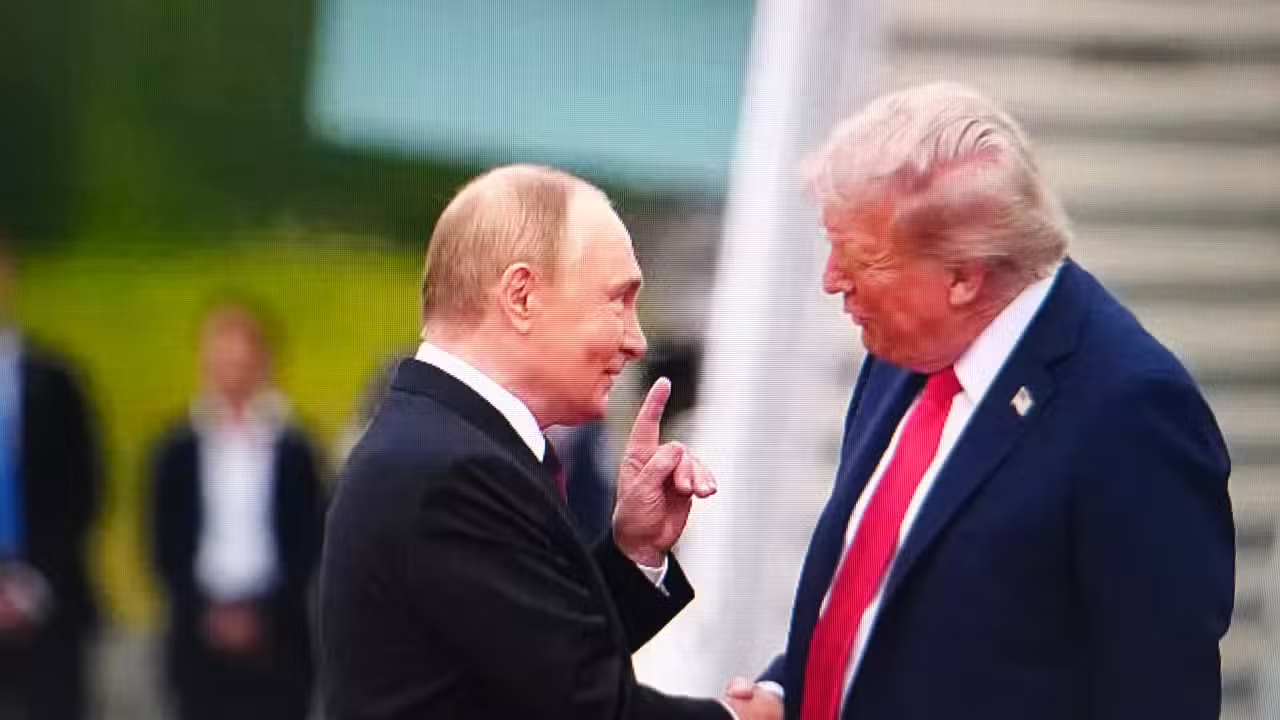
President Donald Trump remarked on Monday, February 2, 2026, that Colombian President Gustavo Petro has adopted a “very gentle” approach in recent months, a notable shift from his previous critical stance. Trump attributed this change to a recent United States operation targeting Venezuelan leader Nicolás Maduro, expressing anticipation for their meeting this week to discuss vital bilateral issues.
The surprising observation came as President Trump addressed reporters at the White House, highlighting Petro’s apparent change in attitude. “He was certainly critical before that. But, somehow, after the operation in Venezuela, he became very sympathetic. He changed his attitude a lot,” Trump stated, referring to the U.S. efforts concerning the Venezuelan dictator. The upcoming discussions between the two leaders are set to cover a range of pressing topics, particularly drug trafficking.

US-Colombia relations and the shift in demeanor
The relationship between the American and Colombian leaders has been fraught with tension and public exchanges of criticism in recent months. Trump previously lambasted Petro’s administration, asserting that Colombia was not adequately curbing drug production and illicit trafficking destined for the United States. These past disagreements underscored a challenging period for diplomatic ties.
However, a phone conversation between President Trump and President Petro in January 2026 marked a discernible shift. Following that call, Trump adopted a more amiable tone, signaling a potential turnaround from the earlier contentious exchanges. This change in rhetoric paved the way for the scheduled high-level meeting. The upcoming dialogue presents a crucial opportunity for both nations to re-evaluate their approaches and find common ground on critical regional challenges.
Key agenda for the Washington meeting
The primary focus of the meeting between President Trump and President Petro will be drug control efforts. Trump explicitly stated his intent to address the issue, noting, “because huge quantities of drugs come out of his country.” This reflects the longstanding concern of the United States regarding the scale of narcotics production and export from Colombia, a persistent point of contention between the two nations.
Beyond drug policy, President Petro’s broader agenda in the United States includes a variety of political, academic, and business engagements. These activities aim to reinforce Colombia’s international standing and pursue collaborative initiatives on several fronts. The extensive itinerary underscores the multifaceted nature of US-Colombia relations, extending beyond immediate security concerns.
* Drug Trafficking: A central topic, with a focus on strategies to reduce narcotics production and flow.
* Climate Change: Petro is slated to deliver a lecture on this critical global issue at Georgetown University.
* Trade and Sustainability: Meetings with business leaders from the cacao sector are planned to foster economic cooperation.
* Community Engagement: Petro intends to meet with members of the Colombian community residing in the United States.
Petro’s arrival and diplomatic engagements
President Petro arrived in Washington on Monday, February 2, 2026, to commence a series of intense communications with the U.S. government. His initial engagements included a meeting with John McNamara, the U.S. Trade Representative in Colombia. This early interaction sets the stage for broader economic discussions, underscoring the importance of trade relations between the two countries.
The Colombian leader also utilized social media to communicate his activities and broader political initiatives. On his official X account, Petro shared details of his schedule and called for a march in Bogotá on Tuesday, February 3, coinciding with his White House meeting. Such public engagement reflects his administration’s approach to domestic and international affairs, maintaining transparency with his constituents even while abroad.
Historical context of bilateral relations
The diplomatic history between the United States and Colombia has been complex, often characterized by periods of close cooperation interspersed with strategic disagreements. For decades, the cornerstone of this relationship has been anti-narcotics efforts, with the U.S. providing significant aid and resources to combat drug cartels and production. However, different administrations have brought varying perspectives and priorities to the forefront, leading to shifts in rhetoric and policy.
Past American administrations have consistently prioritized stemming the flow of illicit drugs, often pressuring Colombian leaders to intensify eradication and interdiction campaigns. President Trump, in particular, has been outspoken in his critiques when he perceives a lack of progress. The current apparent softening of tensions could signify a strategic realignment or a new phase of engagement, possibly influenced by evolving regional dynamics, including the situation in Venezuela.
Prospects for future cooperation
The meeting between Donald Trump and Gustavo Petro is anticipated to set a new tone for US-Colombian relations in 2026 and beyond. Despite historical friction and direct accusations regarding drug enforcement, the sudden shift in Trump’s assessment of Petro opens avenues for renewed dialogue. The two leaders are expected to tackle sensitive issues with a potentially more constructive approach than seen in previous interactions.
The Colombian Presidency confirmed a comprehensive agenda for Petro’s visit, extending beyond the high-stakes White House discussions. His participation in academic forums and business meetings underlines a commitment to fostering diverse areas of cooperation. This extensive engagement aims to strengthen not only political ties but also economic partnerships and cultural understanding, marking a critical moment for bilateral relations.
Addressing drug production challenges
Colombia remains a significant source of cocaine globally, a challenge that consistently dominates its relationship with the United States. Efforts to curb production have included crop eradication, interdiction, and alternative development programs for farmers. However, these initiatives often face complex socio-economic and security hurdles within Colombia. The U.S. perspective is frequently centered on the effectiveness of these measures in reducing the drug supply reaching American borders.
The upcoming discussions on drug trafficking will likely explore innovative strategies and renewed commitments from both sides. While Trump’s remarks suggest an appreciation for Petro’s recent demeanor, the core issue of drug output from Colombia will undoubtedly be a central, and potentially contentious, element of their private talks. A “good meeting,” as Trump hopes, would ideally lay groundwork for tangible progress on this front.
Veja Tambem em Últimas Notícias

トランプ大統領、主治医が「非常に良好」と評価し減量と運動強化を促す

Michael Schumacher’s enduring legacy: A look at his ongoing treatment and F1 impact in May 2026

NASA desvenda segredos do cometa interestelar 3I/Atlas após anos de observação profunda
ラオス奥地の水没洞窟、閉じ込められた住民から最初の1名が無事救出:残る4名の安否と困難な救助活動の全貌
全仏オープンで波紋、パラグアイ選手バジェホが女性主審への性差別発言で高額制裁金の方針発表
Corruption probes rock Spain’s Pedro Sánchez, jeopardizing his eight-year prime ministerial mandate
Israeli forces advance past Litani River amid U.S.-brokered cease-fire negotiations
Western Australia braces for severe cyclone-strength storm; icy blast to hit eastern states

Novos critérios e benefícios do programa bolsa família são anunciados para 2026

Michael Schumacher’s private health journey continues: F1 legend’s enduring legacy in May 2026

Cometa Interestelar 3I/Atlas, Nasa, Informações sobre o cometa, curiosidades