Barcelona’s own brand strategy results in 300,000 uniforms stranded in warehouse
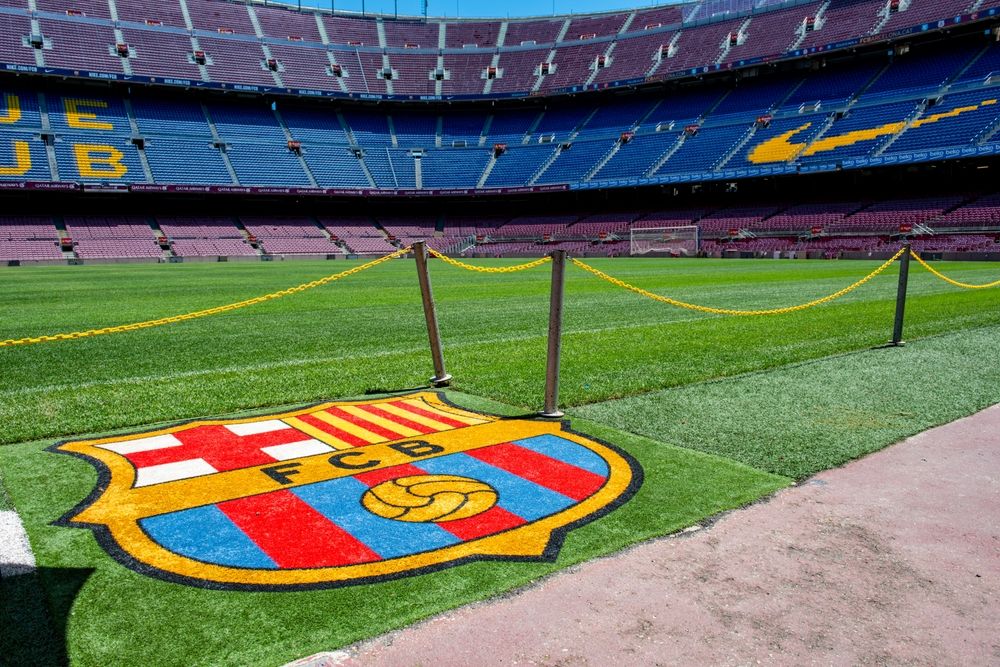
A bold negotiation maneuver by Barcelona resulted in significant logistical and financial losses. The Catalan club keeps approximately 300,000 pieces of its own brand uniforms in stock, an investment that reached the figure of 4 million euros, the equivalent of around 24.6 million reais. The production was a contingency measure during a period of tense negotiations with Nike, its long-time sporting goods supplier.
The intention of the board, led by president The pieces, which were never used in official competitions or sold, now occupy an industrial warehouse at Catalunha, representing immobilized capital at a delicate time for the club’s finances.
After resolving the impasse and renewing the link with Nike until 2038, the entire batch of copyright uniforms became obsolete. The situation exposes the risks of pressure strategies in high-level negotiations, where security plans can turn into substantial costs with no direct return, putting further pressure on the club to comply with the Spanish league’s strict financial control rules.
Welcome to our dressing room 🔵🔴pic.twitter.com/mHXB3SgUb5
— FC Barcelona (@FCBarcelona)February 3, 2026
The strategic maneuver behind production
The decision to manufacture a complete line of clothing was articulated directly by the leadership of Barcelona as a protection mechanism and, at the same time, a pressure tool. Durante the renewal talks, the club sought more advantageous terms, including greater control over global sales, royalties and licensing rights. The existence of a concrete plan B, with uniforms ready for distribution, strengthened the institution’s position at the negotiating table, showing that self-sufficiency was a real possibility.
This calculated move aimed to prevent teams, from professional football to youth teams, from running out of sporting equipment in a possible supplier transition. The board assumed the financial risk, believing that the investment would be justified, either through a new, more profitable contract with Nike, or through the creation of a new and profitable business unit. Contudo, with the officialization of the new agreement, the bet became a frozen asset, highlighting the complexity and high costs involved in managing an elite club.
Investment details and stock volume
The independent production project was comprehensive and meticulous, reflecting the seriousness of the club’s intention to internalize its merchandising operation. The investment of 4 million euros covered the manufacturing of around 300,000 items, which were not limited to just the men’s football team’s game shirts. The shipment was planned to cover the entire multi-sport structure of the institution, including equipment for women’s football, all training categories of the famous La Masia, and other sports such as basketball, rugby, volleyball and futsal. Além of the competition uniforms, training accessories and versions of the shirts aimed at children were produced, showing the breadth of the business plan that was being designed behind the scenes. The projected sales value for each shirt was 89 euros, which could have generated gross revenue in excess of 26 million euros if the entire stock had been sold successfully, transforming what is currently a loss into a source of significant profit.
The renewed deal that made the material obsolete
The outcome of the negotiations with Nike was positive from a contractual point of view, but it sealed the fate of the company’s own uniform stock. The renewal, announced at the end of 2024 and valid until 2038, was celebrated by the board as one of the most advantageous sporting equipment agreements in world football, guaranteeing a crucial financial injection for the club’s stability.
However, one of the fundamental clauses of the new contract reinforces the exclusivity of Nike as the sole supplier and distributor of licensed sporting equipment. Isso legally prevents Barcelona from selling, distributing or even using the 300,000 independently manufactured parts, making the entire batch an asset with no immediate practical or commercial use.
Logistical challenges and the uncertain future of the parts
Currently, the board’s main challenge is deciding what to do with the vast stock. The parts remain in an industrial warehouse, generating ongoing storage and security costs. Direct selling is out of the question due to contractual obligations with Nike, which could lead to heavy fines and a relationship crisis with the partner.
The alternatives under study are limited. One possibility would be to donate the uniforms to charities or social projects, an action that could generate a positive image return, but would not recover the financial investment. Outra, a more drastic option, would be the disposal or recycling of the material, which would represent the total absorption of the loss of 4 million euros.
Joan Laporta’s management needs to find a solution that minimizes financial and logistical damage, without compromising the new and profitable agreement. The existence of this stock is a physical reminder of the complex web of strategic decisions that shape the day-to-day life of a global football giant, where each false step can cost millions.
Financial impact for the Catalan club
Although the amount of 4 million euros tied up in inventory represents an accounting loss, the management of Barcelona argues that the new contract with Nike compensates for this amount in the long term. Signing bonuses and fixed annual payments, which exceed initial projections, are seen as the main source of mitigating the loss. Contudo, the episode raises internal debates about the efficiency of resource allocation in a period of financial austerity.
Technical quality and lost innovation
The club’s internal sources guarantee that the material produced independently had a high quality standard, compatible with the demands of high-performance sport. The development was supervised by the Barcelona innovation division, using cutting-edge fabrics and specific designs to optimize athletes’ performance in each modality.
Prolonged storage represents not only a financial loss, but also the obsolescence of a textile technology that could have positioned the club at the forefront of the sector. Over time, the properties of the materials degrade, making future use in professional competitions increasingly unlikely and consolidating the episode as a chapter of interrupted innovation.
Repercussions on the local supply chain
The decision to produce its own brand mobilized a network of textile suppliers in Catalunha and in other parts of Espanha. Pequenas and medium-sized companies invested in production capacity and hired labor to meet the club’s massive and urgent demand, envisioning a lasting partnership with a prestigious global brand.
With the sudden interruption of the project, these commercial partners were directly affected. The resumption of the exclusive contract with Nike meant the cancellation of future orders, leaving many of these companies in a delicate situation and forcing them to look for new customers to compensate for the loss.
The episode illustrates how the strategic decisions of a large sports institution can generate ripples of impact throughout the local economy. The expectation of strengthening the regional textile industry gave way to uncertainty, with the sector returning to the traditional model of dependence on large international conglomerates.
Barcelona, in turn, has returned to operating within the global supply chain of Nike, while local suppliers who participated in the project are now dealing with the consequences of a bet that, for them, did not materialize, serving as a case study on the volatility of commercial relationships in the football ecosystem.