
Mercedes W17 impresses drivers in Barcelona with agility and new engine for the Formula 1 season By Thiago Lemos
5 min read
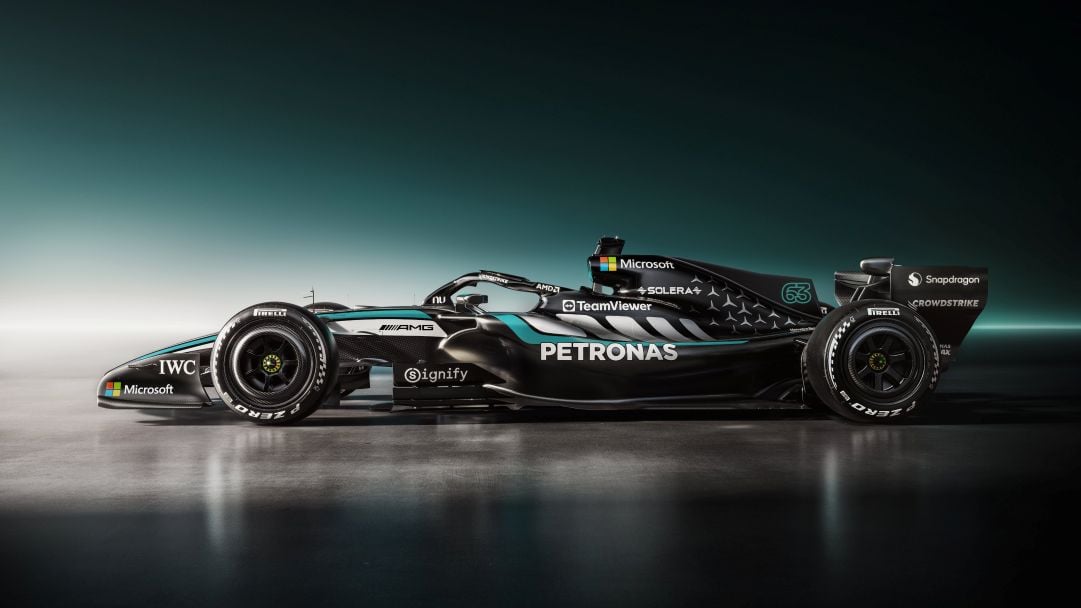 |
The Mercedes-AMG Petronas team has completed an important pre-season testing phase in the Circuito of Barcelona-Catalunya, in the Espanha, with the new W17 model. The drivers George Russell and Andrea Kimi Antonelli demonstrated great optimism with the initial performance of the single-seater, designed for the new technical regulations of the Fórmula 1.
On-track activities were crucial for collecting data on the new chassis and hybrid power unit. Changes in regulations brought a car with reduced dimensions and weight. The chassis now measures 3.4 meters in length, while the minimum weight has been reduced by 30 kilos. Além In addition, the tires are narrower, contributing to additional weight reduction and significantly altering the vehicle’s dynamic behavior when cornering.
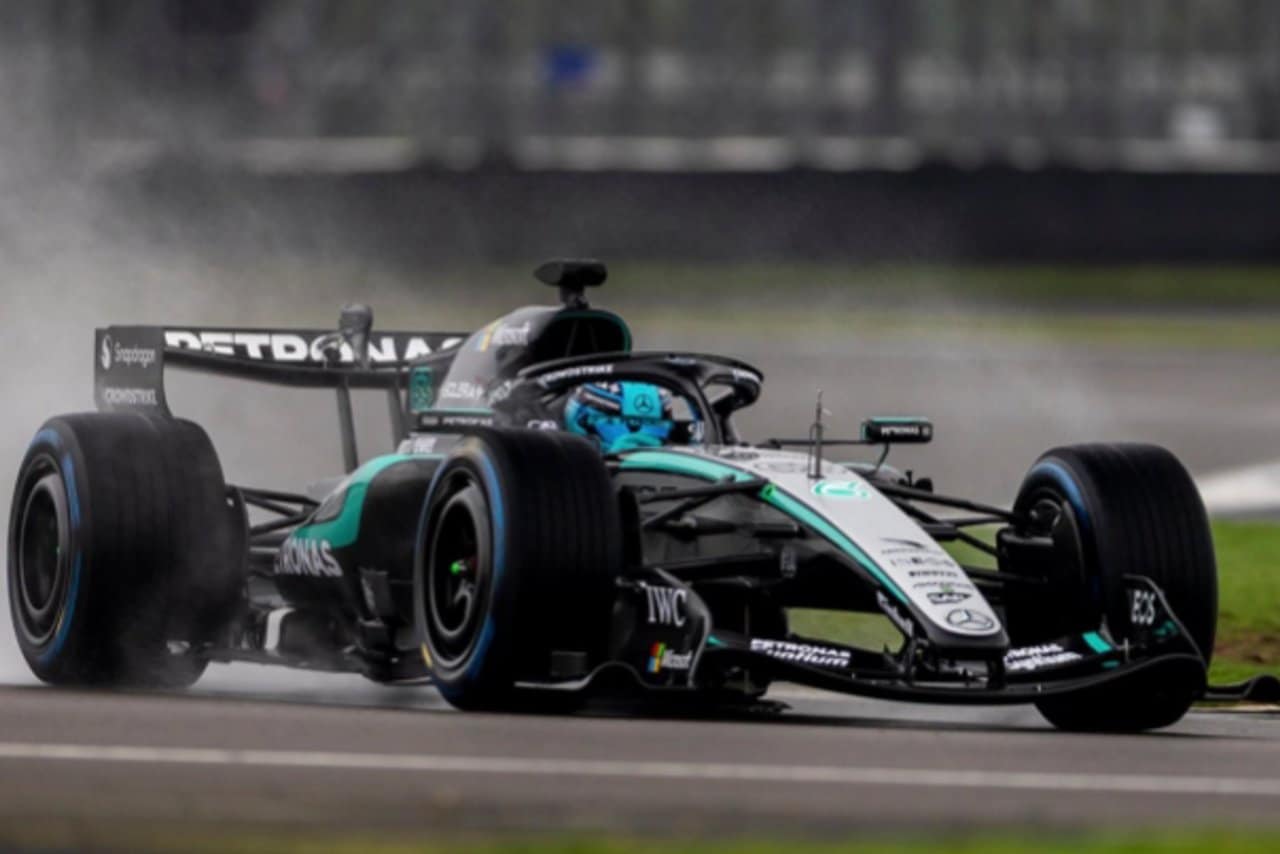
The new power unit, one of the central points of the regulation, now establishes an energy division of 50% for the combustion engine and 50% for the electrical system. Essa change requires a new approach from both engineering and drivers in managing energy throughout races, making strategy an even more determining factor in success.
Energy management as a key to success
Young driver Andrea Kimi Antonelli highlighted that power unit and battery management will be the main competitive differentiator. Segundo he, the efficiency of the power implementation software will determine performance both in qualifying laps, which require maximum power, and in managing pace during the race.
The ability to discharge electrical energy at the ideal moments during the lap can be decisive in gaining positions on the grid. Isso demands perfect synchronization between each athlete’s driving style and the car’s complex electronic settings, transforming each lap into an exercise in technical precision.
Antonelli explained that the torque application strategy will be essential to create overtaking opportunities. Não is just about raw power, but about how it is distributed intelligently in each sector of the track, allowing the pilot to have the resources to attack or defend himself more effectively.
Active aerodynamics and the end of DRS
One of the most talked about innovations is the introduction of active aerodynamics, which replaces the old Sistema of Redução of Arrasto (DRS). George Russell detailed how the new system works, which features a movable front wing with two operating modes. One mode is focused on maximizing downforce for greater grip and cornering speed, ensuring stability.
The second mode, in turn, is designed to reduce aerodynamic drag, which allows the car to reach higher speeds on the straights. Para Russell, this change made driving more intuitive and pleasurable, as the car responds in a more direct and predictable way, without the turbulence problems that affected previous models and made it difficult to fight for position.
The dynamics of wheel-to-wheel disputes
The simplification of the floor and the consequent reduction in the aerodynamic pressure generated by it resulted in a significant reduction in the so-called “dirty air”. Esse turbulent air flow was projected towards the car behind, making it difficult to approach. Russell confirmed that following an opponent closely has become considerably easier, especially on high-speed sections where chassis balance is key. Essa change promises races with more direct disputes on the track, as drivers are able to maintain proximity without losing grip on the front tires.
Another point celebrated by the technical team in Barcelona was the end of “porpoising”, the aerodynamic jumps that affected previous generation cars. The W17 has proven to be a stable platform, allowing engineers to work at lower heights above the ground without compromising performance or driver comfort. Russell even stated that the new model “looks more like a racing car” compared to the heavy and bulky vehicles used between 2022 and 2025.
The challenge of energy recovery
With greater dependence on the electrical system, energy recovery has become a critical point. Drivers will need to master techniques such as “lift and coast” (taking their foot off the accelerator before braking) and maximizing energy regeneration during braking to keep the battery charged. On circuits with few strong braking zones, such as Monza, it will be necessary to adapt the trajectories to ensure that there is enough charge to activate the maximum electrical power mode on the straights. High consumption in fast corners can compromise final speed if the recovery is not well executed, adding another layer of complexity to driving and race strategy.
Chassis agility and tire behavior
The weight reduction and shortening of the chassis resulted in a noticeably more agile car. Antonelli praised the W17’s predictability in direction changes, which gives the pilot more confidence in exploring the equipment’s limits. Essa agility is especially noticeable in the more winding sectors of the Spanish circuit, where quick response is essential.
However, this new configuration brings challenges. The electric motor’s instantaneous and brutal power delivery can accelerate wear on the rear tires. With narrower tires, the contact area with the asphalt is smaller, requiring careful traction management to avoid thermal degradation and ensure durability throughout a racing stint.
Acceleration and power strategy
Acceleration out of corners was described as “brutal” by both drivers, with the car impressively reaching speeds of up to 350 km/h before the battery completely discharged. On high-speed tracks, the racing strategy may involve easing off the accelerator momentarily, even on fast laps, to preserve the integrity of the electrical system and tires.
Learning about how one’s riding style affects battery sensitivity and durability will be a key focus for teams in the coming months of development. Adapting to this new technological paradigm will be essential to define the favorites for the title.
Expectations for the remainder of the pre-season
With the positive data collected in Barcelona, Fórmula 1 is now preparing for the next collective testing sessions in Bahrein, which will take place in Circuito of Sakhir. Desert conditions, with higher track temperatures, will serve as a crucial validation of the information obtained in Espanha. The Mercedes plans to introduce new aerodynamic upgrades to consolidate the performance of the W17.
The competitive season will officially begin with the Grande Prêmio of Austrália, on March 8, where the new cars will make their racing debut. Equipes rivals such as Ferrari and the newcomer Audi also showed progress, suggesting a balanced and unpredictable championship, marking the beginning of a new and promising era for the main category of world motorsport.