
Supermassive black hole releases record energetic jet years after destroying star By Maria
3 min read
 |
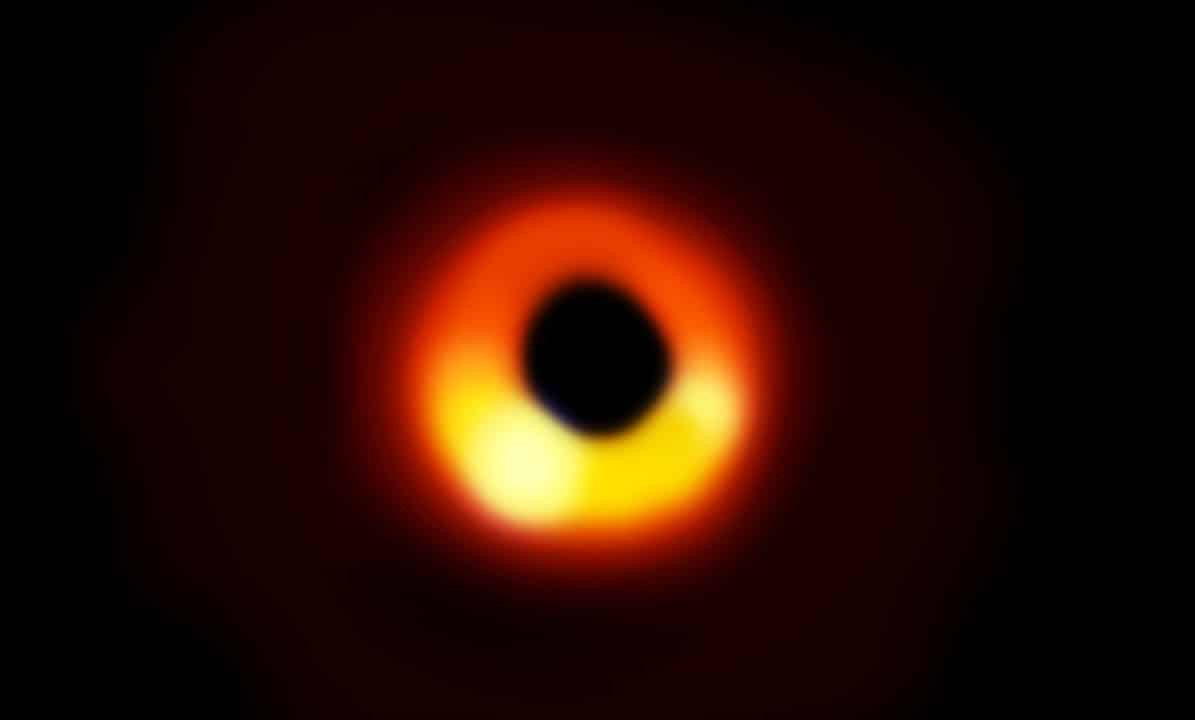
A supermassive black hole continues to expel material from a star it destroyed about four years ago. The event, known as AT2018hyz, records a continuous increase in radio wave emission.
Astronomers observe this phenomenon through telescopes like the Very Large Array. The energy released already surpasses popular fictional comparisons by trillions of times.
The process began when the star got too close to the black hole. Isso triggered a tidal disruption and formed a jet that gained intensity over time.
What is a tidal rip
Tidal disruptions occur when the gravity of a supermassive black hole stretches and tears apart a nearby star. Parte of material forms an accretion disk around the central object. Outra partly accelerates in relativistic winds or jets.
In the case of AT2018hyz, the jet appeared with a significant delay. Initial Observações did not detect strong radio emissions shortly after the destruction.
Characteristics of the observed jet
The AT2018hyz jet shows increasing brightness in radio waves. Medições indicate intensity 50 times greater than in previous years.
Researchers estimate that the peak will occur around 2027. The energy is equivalent to extreme cosmic events, such as gamma ray bursts.
- Current emission exceeds high-power fictitious sources a trillion times.
- Jet points in a direction that allows detailed observation of Terra.
- Expelled material reaches speeds close to that of light.
Observations and telescopes involved
Radio telescopes have been monitoring AT2018hyz since the initial discovery in 2018. Very Large Array has detected the increase starting in 2022.
Observatories like ALMA contributed data at multiple frequencies. Essas measurements confirm continued acceleration of brightness.
Comparison with other events
Tidal disruption events have previously recorded jets. However, the persistence and prolonged growth of AT2018hyz stands out.
Other cases show rapid declines after the initial peak. Aqui, radioactive emission continues to rise years later.
Implications for astrophysics
Studies on AT2018hyz help to understand the formation of jets in black holes. The emission delay challenges traditional accretion models.
Research indicates that internal processes in the material disc explain the phenomenon. Isso opens ways to understand the dynamics of supermassive objects.
The event occurs about 665 million light years from Terra. Observações continuous data provide valuable data on the evolution of such systems.
Recent Study Details
A study published in The Astrophysical Journal analyzes accumulated data from AT2018hyz. The astrophysicist-led research into Universidade of Oregon highlights the rarity of the case.
Models predict that the jet will maintain growth for longer. Observações at higher frequencies will test these projections in the coming years.
Jet formation process
When a star gets too close, gravitational forces deform it into an elongated shape. Parte of stellar gas falls toward the black hole and forms a hot disk.
Energy released in this disk accelerates particles into directional jets. In AT2018hyz, this mechanism activated with a notable delay.
The expelled material does not cross the event horizon. Assim, escapes before being permanently captured.
Energy released in perspective
Calculations show that the jet emits at least a trillion times more energy than certain fictional references. In some scenarios, it reaches a hundred trillion times.
This power places the event among the most energetic known. Supera many supernovae in prolonged radioactive glow.
Distance and location
AT2018hyz is located in a galaxy 665 million light years away. The distance allows safe and detailed observation.
The orientation of the jet facilitates direct detection. Caso Otherwise, the brightness may appear lower.
Planned future observations
Astronomers plan continued monitoring for years to come. Telescópios of new generation will help in capturing the expected peak.
Additional data will clarify whether the phenomenon represents a new class of events. Isso will refine theories about supermassive black holes.
Unique elements of the event
The continued release of energy years after the initial rupture sets AT2018hyz apart. Outros similar events show faster declining patterns.
The informal nickname “Jetty McJetface” reflects the jet’s prominence. Pesquisadores use the name to facilitate public communication.
- Radioactive glow has increased rapidly since 2022.
- Peak projected for 2027 maintains high expectations.
- Energy comparable to extreme cosmic explosions.
- Contributes to the understanding of accretion disks.
The phenomenon reinforces the dynamism of the universe on extreme scales. Observações like this expand knowledge about black holes and their interactions.


