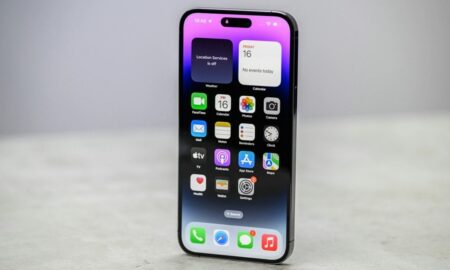
Apple’s secret deal: Japanese company owns the rights to the iPhone brand and receives annual royalties

A frequently asked questions (FAQ) page from a Japanese intercom company, Aiphone, went viral on social media by exposing a curious commercial reality: Apple pays a license to use the “iPhone” brand on Japão. The section of the website, which advised users with smartphone problems to contact Apple, was not an error, but rather the reflection of a million-dollar licensing agreement that has existed for years between the two technology giants.
Founded in 1948, Aiphone specializes in security and communication systems and has no relationship with the manufacture of cell phones. The episode, which generated confusion and interest online, brought to light the complex negotiation that allowed Apple to launch its most iconic product in one of the most strategic markets in the world, respecting the Japanese company’s pre-existing intellectual property rights.
The legal basis of the trademark conflict in Japão
Intellectual property legislation in Japão is governed by the “first-to-file” principle. Este system grants legal priority to the entity that first registers a trademark, regardless of when commercial use began. A Aiphone Co., Ltd. secured the registration of the name in the country long before Apple even developed its smartphone, which gave it total control over the use of the term in Japanese territory.
When Apple prepared for the launch of the iPhone at Japão in 2007, it was faced with this insurmountable legal barrier. The existence of prior registration forced the North American company to make a strategic decision: either rename its main product for the local market, which could fragment its global brand identity, or seek an agreement with the rights holder. The second option prevailed as the most viable.
Strategic negotiation to maintain the global brand
Faced with the impasse, Apple opted for a pragmatic solution and negotiated an agreement to license the use of the “iPhone” brand directly from Aiphone. Essa decision was crucial so that the Cupertino company could maintain the consistency and strength of its product identity on a global scale, avoiding the confusion that a different nomenclature could generate among Japanese consumers.
Although the exact values of the agreement remain confidential, there is market speculation that Apple pays significant annual royalties to Aiphone. Para the technology giant, this cost is treated as a strategic investment to consolidate its presence in one of the most important consumer markets on the planet, transforming a potential legal conflict into a lasting and beneficial commercial partnership for both parties.
The impact of the agreement on telephone operators
Licensing between Apple and Aiphone is not limited to the two companies, but also extends to the main telecommunications operators in Japão. Gigantes like NTT Docomo, KDDI and SoftBank are contractually required to include a footnote in all of their promotional materials, whether printed or digital, that mention the smartphone.
This statement explicitly informs consumers that “the iPhone brand is used under license from Aiphone Co., Ltd.”. Apesar often goes unnoticed by the general public, this mention is a constant legal reminder about the original ownership of the brand in the country and serves as public proof of compliance with the agreement, reinforcing the seriousness with which intellectual property rights are treated in Japão.
Other technology giants that adapted to the Japanese market
The situation faced by Apple is not an isolated case in Japão. The country’s rigorous trademark registration system has already led other multinationals to adapt their products to operate legally and avoid litigation. One of the best-known examples is game developer Capcom, whose acclaimed horror franchise “Resident Evil” is marketed in its home country under the title “Biohazard.”
Likewise, Logitech, a famous computer peripheral manufacturer, operates in the Japanese market under the name “Logicool”. The change was necessary due to a conflict with a pre-existing brand in the country. Esses cases demonstrate the importance of legal diligence and strategic flexibility for companies seeking to expand their operations globally, especially in markets with consolidated intellectual property legislation.
Who is Aiphone, the original owner of the brand
Far from being just a holder of a valuable intellectual property asset, Aiphone Co., Ltd. is a powerhouse in its own sector. The company is a world leader in the manufacture and development of intercom and security communication systems. Seus products are widely used in homes, commercial complexes, hospitals and industrial facilities in several countries, being recognized for the innovation and durability of its technological solutions.
Subtleties in communication to avoid confusion
To comply with the terms of the agreement and minimize confusion among consumers, Apple and its telecommunications partners at Japão have adopted a subtle distinction in the way the smartphone name is communicated. Enquanto the global pronunciation is commonly “Ai-fôn”, in Japão the “Ai-fon” articulation is encouraged, with an elongated vowel, to differentiate phonetically from the “Aiphone” brand.
This differentiation is formalized in marketing materials and on the operators’ websites. It is common to find notes that specify correct spelling and pronunciation, in a deliberate effort to educate the public and respect the integrity of the original Aiphone mark, ensuring that licensing terms are strictly followed.
Mutual Consequences of Unusual Partnership
For Apple, annual royalty payments represent a calculated operational cost, essential to maintaining the integrity of its brand on Japão. Do On the other hand, for Aiphone, this revenue became a substantial and continuous financial gain, derived from the protection of an asset that increased in value exponentially with the global success of the smartphone.
However, the agreement also imposes on Aiphone the ongoing task of managing public confusion, as evidenced by the recent virality of its FAQ. The company needs to constantly educate the market about the distinction between its communication systems and Apple’s smartphones, a communication effort necessary to preserve its own brand identity and avoid incorrect associations.