
Artist Bad Bunny didn’t burn the flag before the Super Bowl; image is creation of satirical AI

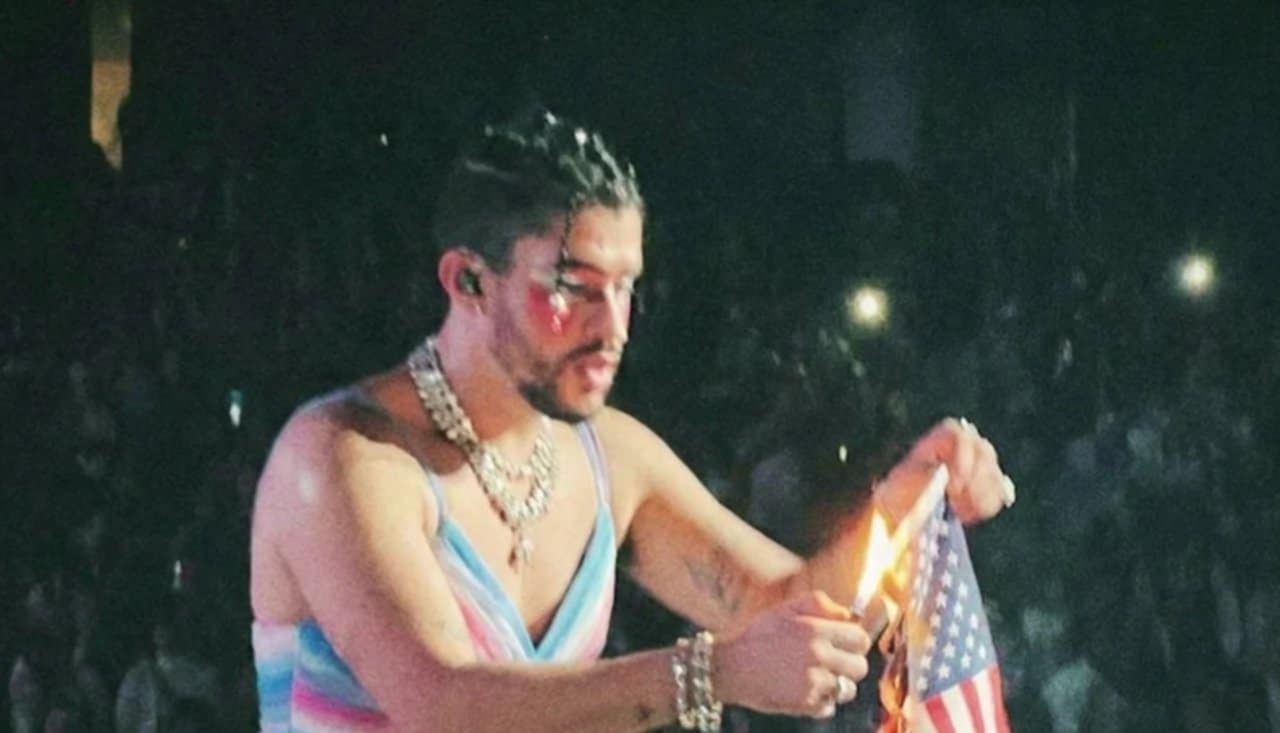
An image that went viral on social media, allegedly showing artist Bad Bunny setting a flag on fire during preparations for Super Bowl’s halftime show, has been categorically denied. The representation of the singer, in specific costumes and performing the act, is, in fact, a digital elaboration.
The propagation of the material began on an account owned by Facebook, which calls itself a producer of satirical content, specializing in “Ai funny Content & Master Meme Maker”. The page’s description clarifies that “100% Not Real everything is Satire”, indicating the fictional nature of its publications.
The veracity of the image was called into question through technological analyses, which identified digital watermarks of the SynthID type, a tool used to attest to the origin of content generated or significantly edited by artificial intelligence, specifically by Google platforms.
🚨 Este statement from there@MRE_Boliviaabout the Bad Bunny show on the Súper Bowl is fake
— ChequeaBolivia (@ChequeaBolivia)February 9, 2026
🔎 Through a statement, the Cancillería of the Estado Plurinacional ofpic.twitter.com/jabWuxaCPF
The circulation of the image and its satirical origin
The image in question appeared in a post on Facebook on February 8, 2026, accompanied by a provocative caption that stated: “Bad like most celebrities.” Esta description clearly aimed to ignite debates and generate engagement through controversy.
The account responsible for the post, identified as Qbanguy, has a profile that leaves no doubt about its intentions. By defining itself as the creator of “Ai funny Content & Master Meme Maker” and guaranteeing that “100%
The evolution of AI and the detection of deepfakes
The incessant advancement of artificial intelligence has allowed the creation of increasingly realistic images and videos, making the distinction between the real and the artificial an increasing challenge for the general public. The ability to manipulate visual elements with stunning precision has opened the door to both limitless creativity and the proliferation of deepfakes and misinformation, which can harm individuals’ reputations and undermine public trust in facts and events. In this scenario, tools like SynthID and verification platforms like Google Gemini become essential, offering a robust mechanism for identifying the synthetic origin of content, acting as a first line of defense against manipulation of perception through technology, and allowing journalists and the public to identify the authenticity of media quickly.
Digital markers and visual artifacts: proof of fraud
The detection of SynthID in the Bad Bunny image was a determining factor. Esta digital watermarking tool, developed by Google, is specifically designed to identify content generated or edited by its AI tools, acting as an invisible seal that confirms the synthetic origin of the material, crucial for digital transparency.
In addition to the watermark, a detailed visual analysis of the image revealed several “AI artifacts” that are common indicators of manipulation. Observando If you look closely at the hands of the person in the center and the members of the audience, it is possible to notice unnatural or fused fingers, a frequent feature in images created by artificial intelligence.
Other inconsistent details included the depiction of text and smartphone screens, which did not accurately reflect the scene they were supposedly recording. Adicionalmente, the flag shown in the image had only six red stripes, contrasting with the seven stripes on the real Estados Unidos flag, adding to the evidence of lack of authenticity.
Impact of misinformation on pop culture and major events
The fake image of Bad Bunny exemplifies how high-profile public figures in pop culture become frequent targets of artificial intelligence-generated misinformation. Their vast fan bases and constant media attention make these artists vulnerable to fabricated narratives, which can spread globally in a matter of hours and generate significant misunderstandings about their actions and stances.
Events of great magnitude, such as Super Bowl, which attract hundreds of millions of viewers and massive engagement on social media, are particularly susceptible to manipulation. The halftime show, one of the most anticipated moments, becomes fertile ground for the dissemination of false information, capable of diverting attention from the main event to unfounded controversies and artificial controversies.
The proliferation of deepfakes and digitally fabricated content poses a growing threat to public perception as the ability to discern between real and fake diminishes as AI technology advances. Isso can lead to decisions based on incorrect assumptions and an erosion of trust in traditional sources of information, impacting the way facts are understood and accepted by society.
The situation reinforces the crucial importance of maintaining healthy skepticism when faced with sensationalist or unusual content circulating online, as well as the need to seek out and trust verified news sources. Independent verification and consultation with renowned journalistic outlets are essential steps to combat the spread of misinformation and ensure that understanding of the facts is based on solid evidence.
The role of digital platforms in fact checking
Digital platforms face a growing and complex challenge in combating the spread of fake news and content generated by artificial intelligence. The speed at which this information circulates requires companies to continually invest in detection technologies and qualified moderation teams, seeking to balance freedom of expression with the responsibility of maintaining a healthy and trustworthy information environment for their users.
Initiatives such as the introduction of tags to identify AI-generated content, partnerships with fact-checking agencies and the implementation of algorithms that prioritize veracity over virality are important steps in this process. However, the constant evolution of AI tools and disinformation tactics requires continuous adaptation and robust commitment from platforms to mitigate negative impacts on the public sphere and perception of reality.
Consequences and importance of continuous verification
The episode of the fake image of Bad Bunny serves as a vivid reminder of the fragility of information in the digital environment and the need for constant vigilance on everyone’s part. The ability to discern the truth amidst a growing volume of artificially generated content is an essential skill for digital citizenship, requiring each individual to become an active verifier, contributing to the construction of a more robust and reliable information ecosystem.



