
UEFA unveils Champions League final ball with design inspired by Budapest’s culture and architecture By Thiago Lemos
5 min read
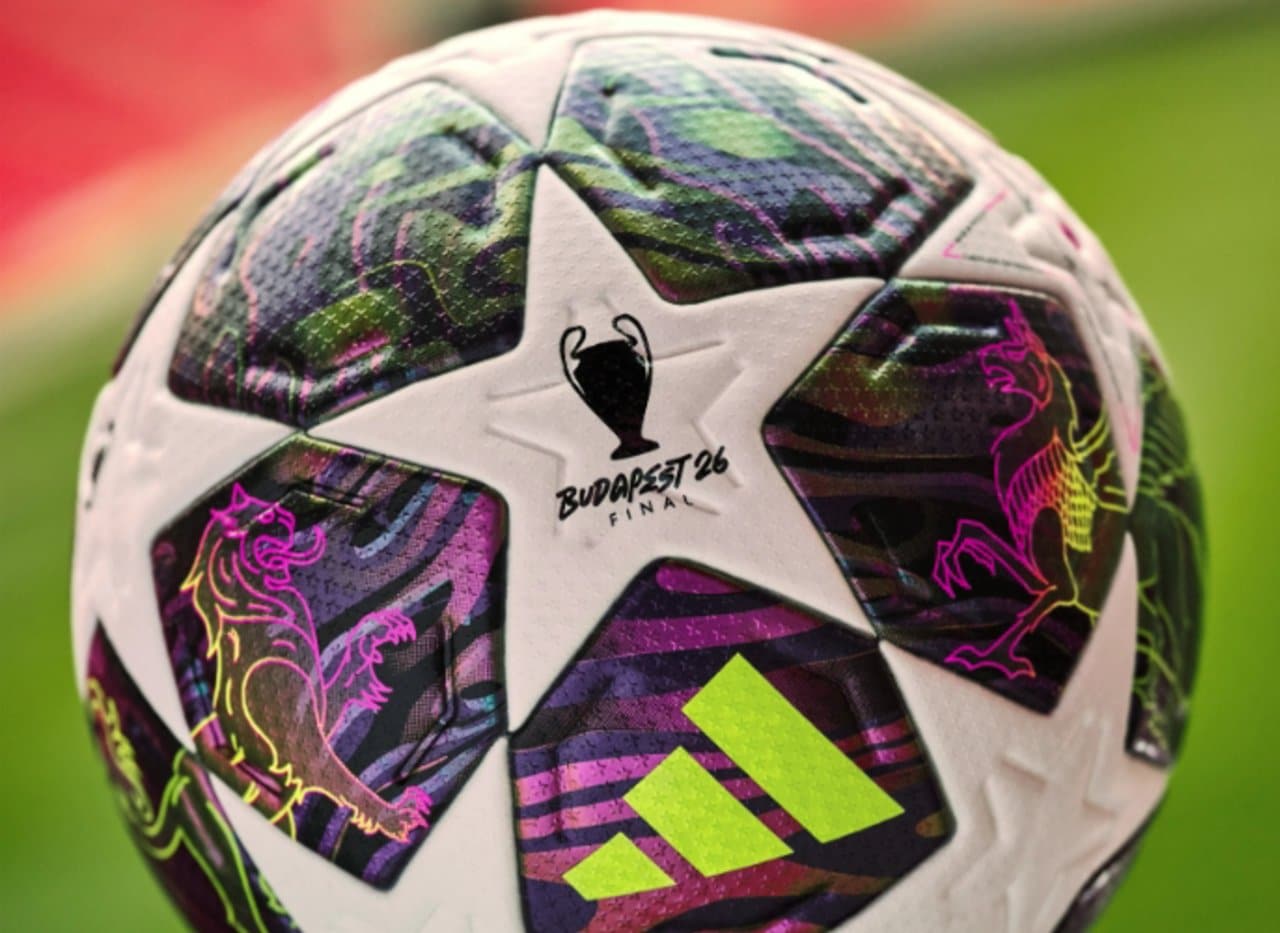 |
Uefa and Adidas officially presented the design of the ball that will be used in the Champions League grand final of the 2025/26 season. The launch event took place in Budapeste, capital of Hungria, the city that will host the decisive match on May 30, 2026, in the modern Puskas Arena. The new ball, named “Uefa Champions League Final Budapest 2026”, celebrates the rich cultural and architectural heritage of the host city.
The announcement was strategically timed to coincide with the start of the competition’s playoff phase, a time when the football world’s attention turns to the Europa’s flagship club tournament. Sports equipment is not just a gaming tool, but also a powerful symbol of the journey that teams will take towards the most anticipated clash on the continental football calendar.
Crafted for the big moments 😮💨
Introducing the 2025/26 UEFA Champions League Final ball ⚽@adidasfootball | #YouGotThis pic.twitter.com/rmwUunesnx
— UEFA Champions League (@ChampionsLeague)February 9, 2026
Developed with cutting-edge technologies, the ball incorporates visual elements that directly refer to the Hungarian identity, promising to stand out both for its performance on the field and for its innovative aesthetics. The color palette and graphics were meticulously planned to ensure maximum visibility during night games, optimizing the experience for players and spectators.
A tribute to Buda and Peste
The central concept behind the ball’s design is the duality of Budapeste, a city divided by the majestic Rio Danúbio. On one side, the historic hills of Buda; on the other, the vibrant and flat area of Peste. Essa union is represented through fluid graphics that evoke the curves of the river and the iconic architecture that borders its waters, creating a cohesive visual narrative.
The traditional stars of Champions League, the tournament’s main visual trademark, are maintained as a central element, but this time they appear in a classic white that contrasts with a background of metallic and deep purple tones. Esse finish gives the ball a dynamic effect, making its color appear to change depending on the angle of the light, a detail that enriches the visual experience in the stadium.
Symbols of strength and mythology in design
A striking difference of the Budapest 2026 model is the subtle incorporation of mythological figures deeply rooted in local culture. Leões and dragons, traditional symbols of power, strength and protection in the story of Budapeste, were integrated discreetly between the starry panels. Este detail seeks to reinforce the epic character and magnitude of the battle for the European title.
The designs were applied using a technique that does not compromise aerodynamics or surface texture, ensuring elite performance is maintained. Para complement the design, the Uefa, Champions League and Adidas logos appear in vibrant yellow, creating a high-contrast spot that aids in quick ball identification during high-speed play.
This color choice is not just aesthetic but functional, designed to help goalkeepers and defenders track the ball’s trajectory on powerful shots and crosses, especially under the Puskas Arena’s powerful spotlights.
Technological innovations for high performance
Adidas implemented its most advanced technologies in the construction of the ball. The structure has a seamless, thermally bonded surface, which provides a more predictable and precise flight path. Essa technique also significantly reduces water absorption, ensuring the ball’s weight and characteristics remain consistent even in rain.
The external texture was designed to optimize grip, offering players greater control when handling and passing, while also improving grip for goalkeepers in crucial saves. Aerial stability is maximized by the star panel shape, a signature of the brand for competition.
Internally, a high-performance air chamber ensures ideal pressure retention for longer, resisting the strongest impacts. Além Furthermore, the core of the ball is compatible with goal line technology and semi-automatic offside systems, providing accurate data to the refereeing team in capital plays.
Each component has undergone rigorous testing in the laboratory and in the field to certify that the equipment meets the highest standards required by Uefa for a final Champions League, where every detail can influence the result.
The teams’ journey towards Puskas Arena
While the design of the ball for the final generates expectations, the attention on the pitch is focused on the playoffs, the phase that defines who will qualify for the round of 16. Grandes clubs from the continent, such as Real Madrid, Juventus, Bayern from
The clashes in this phase are known for their high intensity and technical balance, testing the teams’ resilience and strategy. The reveal of the ball serves as a visual reminder of the ultimate prize, motivating players and coaching staffs to overcome the challenges of one of the most demanding calendars in world sport. The road to Budapeste is arduous and only the two best clubs will arrive to compete for the trophy.
Budapest prepares to host the event
The choice of Budapeste as the host city consolidates its position as one of the main stages for major sporting events in Europa. The Puskas Arena, opened in 2019, is one of the most modern on the continent, with cutting-edge infrastructure for athletes, press and more than 67 thousand spectators. The Hungarian government and the local football federation have already started logistical planning to receive the huge flow of fans from all over the world. The operation involves the coordination of transport, security and hospitality, aiming to guarantee a memorable experience for all visitors. The projected economic impact for the city is significant, with estimates of tens of millions of euros injected into the local economy through tourism, gastronomy and services. The Champions League final is not just a game, but a global event that puts the host city in the global spotlight for several days, promoting its image and culture on a planetary scale.
Technical impact for athletes on the field
The early release of the technical specifications of the official ball allows teams advancing in the competition to adapt. Clubs are provided with training units, allowing players, especially goalkeepers and free-kick takers, to familiarize themselves with the weight, texture and behavior of the ball in the air, a factor that could be decisive in a high-level final.