
Japanese railway company operated minimum station for years for high school student to get to school By Luís Henrique Costa
5 min read
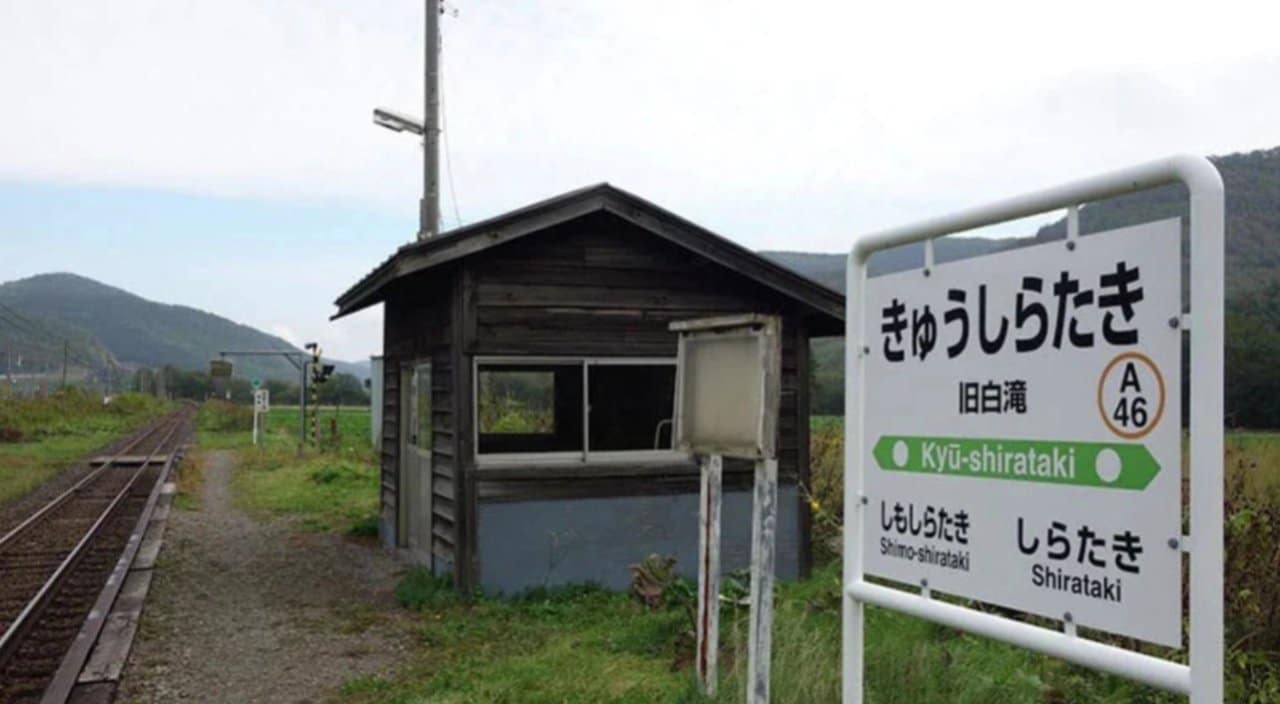 |
A railway station in a remote rural area of Japão has gained international prominence by maintaining operation for years despite extremely low usage. The decision, taken by the railway operator JR
Located on the island of Hokkaido, in the municipality of Engaru, Kyū-Shirataki station has emerged as a symbol of social commitment amid the restructuring of public services. The story, which captured global attention starting in 2016, highlights the adaptability of essential infrastructure in the face of demographic challenges in regions with low population density.
The focus of the decision was on Kana Harada, a student whose daily route to school included boarding and disembarking at that point. The maintenance of the station represented a measure to preserve uninterrupted access to education for young women, even in the face of economic considerations that pointed to its closure.
Railway restructuring and the context of Hokkaido
In the early 2010s, JR Hokkaido undertook an in-depth analysis of its operations, especially in rural areas. The island of Hokkaido, known for its vast landscapes and scattered communities, faced a continuous process of population decline, which directly impacted the economic viability of secondary railway lines.
This scenario resulted in many stations having a drastically reduced number of passengers, making them unsustainable. The operator, faced with this diagnosis, announced plans for the gradual closure of several points considered underused, including Kyū-Shirataki, Kami-Shirataki and Shimo-Shirataki, all located in the same region.
Administrative decision to guarantee access to school
During the process of evaluating the lines and stations, JR Hokkaido identified that, despite the minimum general flow, some stops were still vital for a specific group of users: students. These young people’s dependence on rail service to reach their schools in neighboring towns emerged as a crucial factor in the company’s deliberations.
The particular case of Kana Harada, a high school student, was central to the repercussion of the story. Seu daily route, which involved boarding at Kyū-Shirataki, became a concrete example of the need to keep the service active, with the main user being directly affected by the potential deactivation of the stop in question.
Given this finding, the operator chose to postpone the closure of Kyū-Shirataki. The primary justification was to avoid interrupting educational access for the student and other students who, although fewer in number, still depended on that specific point. Esta action demonstrated a prioritization of social needs to the detriment of a strict cost-benefit analysis and financial viability.
Although the story became popular as that of an “exclusive train” for a single passenger, records from the time confirm that it was a station with exceptionally low usage but still serving a small group. Kana Harada was, without a doubt, the most notorious user and regularly affected by the potential shutdown of the stop, becoming the face of this notable measure.
Adjust schedules and routine challenges
To meet the objective of maintaining school access, JR Hokkaido implemented significant adjustments to its programming. Stop times at Kyū-Shirataki were precisely synchronized with the start and end of the student’s classes, ensuring she had transportation options at crucial moments in the school day.
Despite the continuity of service, train supply remained restricted. Fontes at the time indicate that few trains stopped daily at the station, creating challenging logistics for users. In several versions of the story disseminated on digital platforms, the operation was described as limited to just one round trip and one return trip, although the frequency could vary slightly depending on seasonal demand or other operational factors.
This time limitation imposed considerable rigidity on Kana Harada’s routine. Precision was key, as missing one of the few available trains would mean a prolonged and complex journey to reach an alternative station or to return home, given the few public transport options and the scarcity of private vehicles in rural areas.
Global repercussion and clarification of history
The Kyū-Shirataki station saga reverberated worldwide, being widely publicized by various media and social media starting in 2016. The story was interpreted as a moving example of Japanese concern for its citizens and the value of education, even in scenarios of economic disadvantage and geographic isolation.
With the wide dissemination, however, important clarifications also emerged that helped to contextualize the narrative. One of the most debated points was the idea that an entire train would run exclusively for a single person. In reality, the trains that stopped at Kyū-Shirataki were part of the Sekihoku Main Line line, already in operation, and carried other passengers, including students from other locations who boarded at previous stations along the route.
Implications of limited operation and the student journey
Even though the train was not exclusive, maintaining a station with such minimal demand highlighted JR Hokkaido’s commitment to the local community. The “sole passenger” designation actually referred to Kana Harada’s regularity as the main daily user of that specific stop. The impact of the decision on the young woman’s life was undeniable, allowing her to continue her studies in a remote environment where transport alternatives were practically non-existent, thus guaranteeing her training and professional future.
Dependence on such a private service meant that the student needed to plan in detail for each trip, which often limited her options. The lack of flexibility in train schedules, for example, made it difficult for them to participate in extracurricular activities, school clubs or social events that extended beyond the regular class period. Cada additional commitment required a careful reconciliation with the limited transport schedules available, highlighting the necessary adaptations to adapt to this reality, but also the value of the sacrifice for their education.
Kyū-Shirataki’s legacy and the challenge of depopulation
The case of Kyū-Shirataki Station transcends mere curiosity and illustrates the complex demographic and socioeconomic challenges faced by the Japão, especially in its rural regions. Continuing population declines, driven by low birth rates and migration to large cities, and aging residents in remote areas, make maintaining transport infrastructure such as railways financially unsustainable in the long term. Public transport operators are constantly pressured to balance providing an essential service with the need for economic viability.
The end of the operation and the legacy for the region
Kyū-Shirataki Station ceased operations in March 2016, coinciding with Kana Harada’s high school graduation. The closure marked the end of a remarkable era and cemented the story as a case study in the role of public service in transforming communities. Kyū-Shirataki’s narrative remains a testament to the capacity for adaptation and commitment to individual well-being in the face of major structural challenges, inspiring discussions about the balance between market logic and social responsibility in the provision of essential services.